If you relied solely on the legacy media this past week, you’d think the most important detail in the death of Renee Good was her poetry—rather than the very real, very documented actions that led to a fatal confrontation with ICE officers. That framing wasn’t accidental. It was strategic.
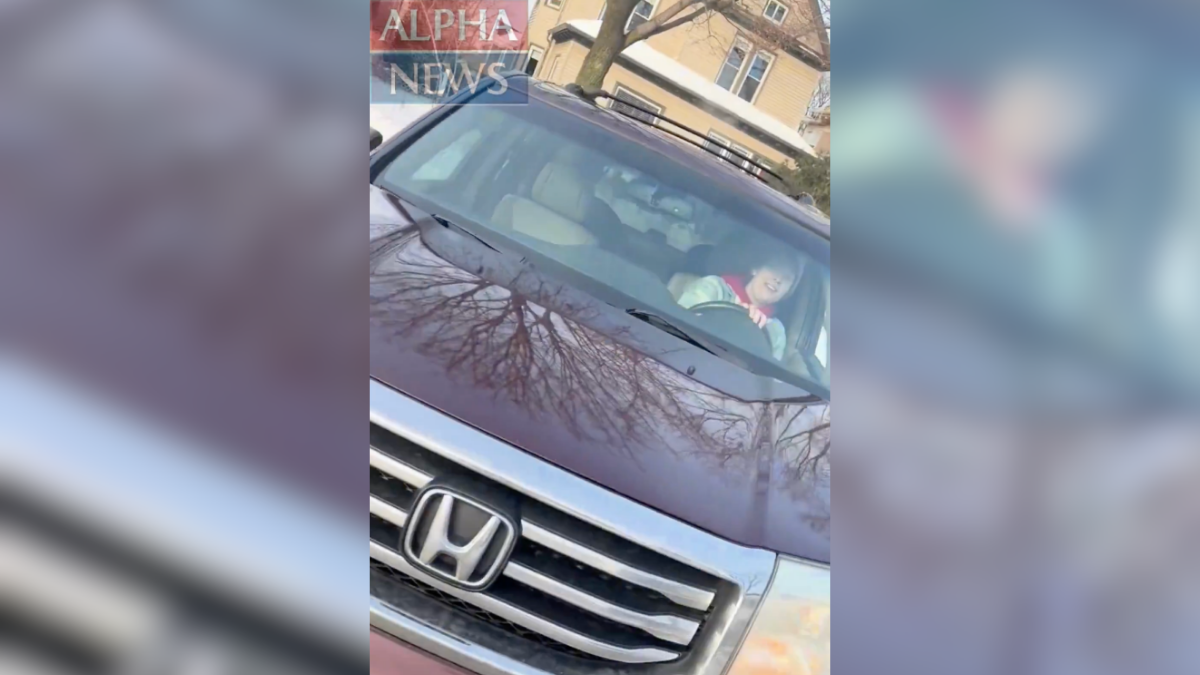
The reality is far less poetic. After refusing repeated commands from federal Immigration and Customs Enforcement officers to exit her vehicle—which she had used to block access to a neighborhood road—Good was caught on video accelerating her SUV toward an ICE agent, with another agent clinging to her door. The agent standing in front of the vehicle fired, fatally striking her as the car appeared to hit him.
But facts have never been the corporate press’s strong suit when they interfere with a preferred narrative.
Almost immediately, the media—helped along by sympathetic Democrats—portrayed Good as a passive victim of spontaneous violence. We were told she was merely a woman who had just dropped her child off at school, “not involved in protest activity,” and simply in the wrong place at the wrong time. As more evidence emerged, that story collapsed—so the media worked overtime to prop it back up.
Axios Twin Cities ran a headline claiming ICE killed a person “in a vehicle that drove past agents.” Drove past. As if this were a casual commute. The lede went further, stating the agent shot a woman whose car “drove close to federal agents.” Close, apparently, now means “heading directly at.”
The Washington Post initially claimed the ICE agent “was not in the vehicle’s path” when he fired. That headline quietly disappeared after criticism, replaced with softer language—without a correction notice, of course. The article itself still framed Good’s acceleration toward the agent as simply traveling “in the correct direction of traffic.” A creative interpretation, to say the least.
Video footage tells a different story. From the agent’s perspective, Good’s vehicle was aimed directly at him. Multiple videos appear to show physical contact between the SUV and the officer, making the claim that he wasn’t in the vehicle’s path logically impossible. Even the agent’s father confirmed his son had been struck.
Yet a local ABC affiliate claimed there were “several feet of separation” and that “no ICE agents appeared to be hit.” That assertion collapses under the weight of the video evidence—including footage recorded by the agent himself.
Other outlets leaned on word games. The Washington Post claimed the agent fired “as the driver reverses and pulls away.” The Economist echoed the claim that she “reversed, and tried to drive away.” Video shows the exact opposite: rapid acceleration toward the agents.
Then came the human-interest smokescreen. People Magazine stressed that Good had “just dropped her 6-year-old off at school,” while The Guardian portrayed her as accidentally encountering ICE on a snowy street. Her ex-husband told the Associated Press she was “no activist,” a claim repeated uncritically.
Except reporting later showed Good was allegedly part of a group called ICE Watch, dedicated to disrupting ICE raids in Minneapolis. A parent at her child’s school told the New York Post that Good had been trained on how to confront ICE agents. Another video shows her vehicle blocking the street minutes before the shooting—undercutting the idea this was some random encounter.
Still, speculation replaced evidence. CNN panelists mused that she must have panicked. Former DHS Secretary Jeh Johnson suggested she was fleeing “menacing” agents. Video footage, however, shows Good arguing with an agent, watching him move around her vehicle, and then accelerating—hardly the behavior of someone unaware or confused.
It’s impossible to read minds, but it’s remarkably easy to watch video. Unfortunately, much of the corporate media chose imagination over evidence, advocacy over accuracy, and narrative over truth.
What this episode exposed—again—is not just media bias, but media desperation. When facts get in the way, they’re trimmed, softened, or ignored altogether. The good news? The public is watching more closely than ever, and that growing skepticism toward legacy media is a healthy sign for accountability, truth, and the future of honest reporting.