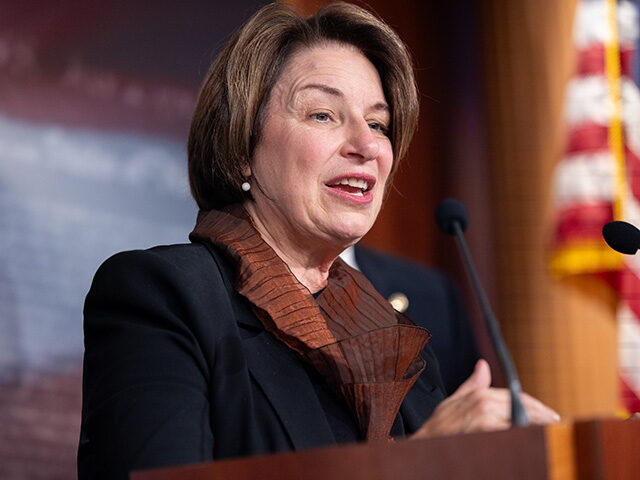
Sen. Amy Klobuchar (D-MN) is reportedly floating a run for governor of Minnesota following Gov. Tim Walz’s abrupt exit from the race—a development that has Democrats scrambling and Republicans nodding knowingly. If Klobuchar jumps in, it would be a classic Minnesota political switcheroo: one scandal-plagued Democrat out, another waiting in the wings.
Walz, who just over a year ago was paraded around as the Democratic Party’s vice-presidential nominee, bowed out Monday amid mounting pressure tied to the growing Somali fraud scandal. Breitbart News’s John Nolte detailed how Walz’s departure came wrapped in a familiar mix of finger-pointing and self-pity, a not-uncommon end for once-ambitious Democratic stars.
Not long after Walz’s announcement, The New York Times reported that Klobuchar is “considering” a bid to replace him. According to sources cited by the paper, the senator and Walz met in Minnesota on Sunday to discuss next steps—because nothing says transparency like backroom political planning.
And here’s where it gets interesting.
Multiple reports suggest the arrangement may involve Klobuchar clearing the governor’s seat while keeping Walz comfortably ensconced in public office. As Townhall’s Dustin Grage notes, sources familiar with Democratic Party maneuvering claim “the plan is to clear the way for Amy Klobuchar, so she can appoint him to the U.S. Senate.” In other words: Democrats lose an election? No problem—just reshuffle the deck.
Conveniently, Klobuchar isn’t up for reelection to the Senate until 2030, meaning a failed gubernatorial run would cost her nothing. Heads she wins, tails she still wins.
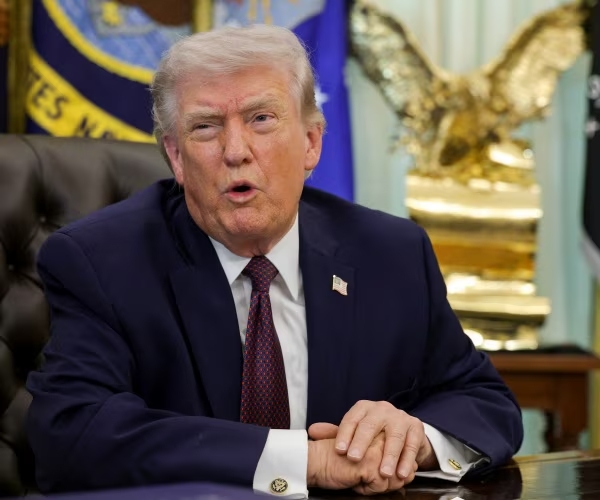
While Walz’s fraud-related controversies have drawn national attention—and criticism from President Donald Trump and Republicans—Klobuchar’s own history has largely been memory-holed by the media. But it’s worth revisiting.
Back in 2012, then-Daily Caller reporter Matthew Boyle uncovered troubling details from Klobuchar’s tenure as Hennepin County Attorney in the late 1990s. According to the reporting, Klobuchar declined to prosecute Tom Petters, a businessman who was later convicted of running what became the second-largest Ponzi scheme in U.S. history, trailing only Bernie Madoff.
Documents showed Klobuchar had sufficient evidence as early as 1999 to charge Petters. Instead, she prosecuted some of his associates while Petters himself went on to build a multibillion-dollar criminal empire—one that just happened to include generous campaign contributions. Employees of Petters’ companies donated thousands to Klobuchar’s campaigns, with more than $120,000 flowing into her Senate run.
One former Petters co-conspirator, Richard Hettler, didn’t mince words: “She took Ponzi money to get elected.”
Adding to the Minnesota-Democrat-incestuous-politics vibe, one of Petters’ company executives was Ted Mondale, son of former Vice President Walter Mondale—who, coincidentally, practiced law at the same firm where Klobuchar worked before becoming county attorney. Small world.
According to Peter Schweizer, author of Profiles in Corruption, when Petters was finally arrested by the FBI, one of his first calls was to Klobuchar—who recommended the lawyer he ultimately hired. Petters is now serving a 50-year sentence at USP Leavenworth.
Klobuchar’s controversies don’t end there. She was also the driving force behind the Journalism Competition and Preservation Act, a 2022 effort widely criticized as a government handout to legacy media outlets—because apparently struggling Americans weren’t the priority.
Despite branding herself as a Midwestern “moderate,” Klobuchar’s voting record tells a different story. As of 2020, she voted with Sen. Bernie Sanders 88 percent of the time, placing her squarely in the progressive camp. At the same time, she’s among the Senate’s top recipients of corporate donations.
As Schweizer explained, Klobuchar has a knack for collecting clusters of donations from specific companies—followed shortly thereafter by legislation that just happens to benefit those same interests. Funny how that works.
For now, Klobuchar has declined to publicly comment on reports that she’s eyeing Walz’s job. But if history is any guide, Minnesota voters may soon be asked to choose between more of the same—or finally breaking the cycle of Democratic scandal, cronyism, and political musical chairs.