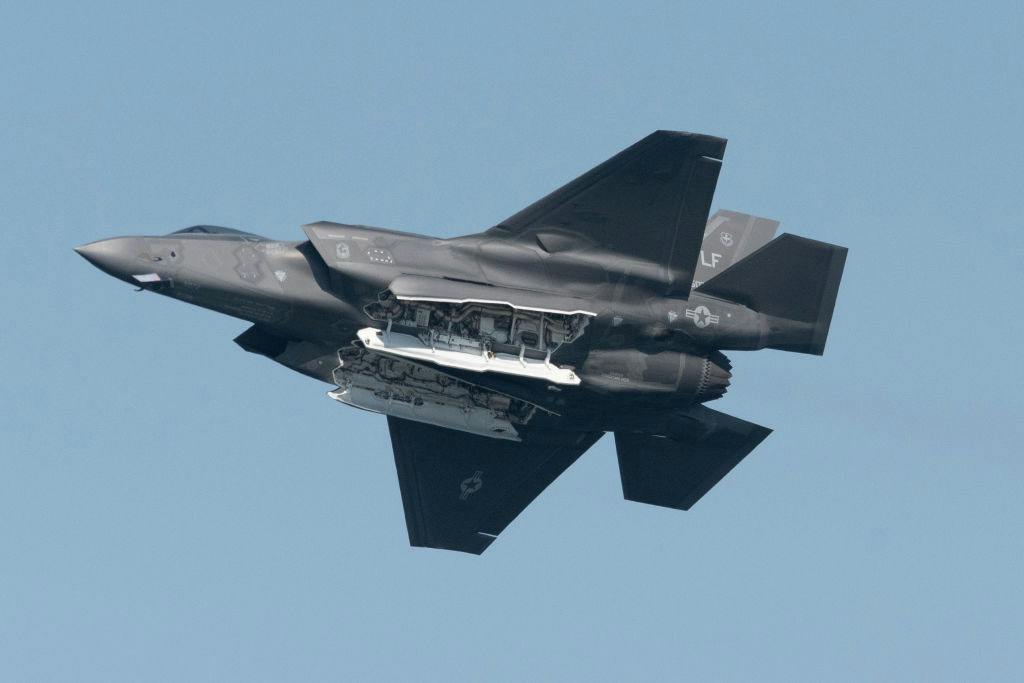
In a stunning national security lapse, critical F-35 stealth fighter components, including a cockpit canopy and a weapons-bay door, were "inexplicably diverted" to Hong Kong and are now reportedly in the hands of Chinese authorities. The revelation has ignited immediate alarm on Capitol Hill and raised serious questions about the Biden administration's oversight of America's most advanced military technology.
The highly sensitive shipment, entrusted to UPS for transport from Australia to the United States for repair or disposal on behalf of defense giant Lockheed Martin, was unexpectedly rerouted across the Pacific in late May. While officials are quick to downplay the incident by noting these specific components do not contain the aircraft's most advanced avionics, the implications are profound.

Both the F-35 cockpit canopy and weapons-bay door are coated with radar-absorbent material (RAM), a transparent coating specifically designed to minimize the fighter’s signature on enemy radar. Physical access to these materials grants Beijing an invaluable opportunity to study, reverse-engineer, and verify intelligence on the jet's stealth capabilities – a direct threat to the West's air superiority.
The Pentagon’s F-35 Joint Program Office confirmed the incident, stating it is "aware of a shipment issue of unserviceable F-35 Lightning II components." A defense official added, "We are actively working with U.S. authorities and industry partners to retrieve these components, investigate the incident, and place safeguards to avoid a future occurrence." Lockheed Martin, for its part, offered a boilerplate response, asserting its teams "handle every shipment with the utmost diligence and safeguards to ensure the integrity of the F-35 program and the security of our allied partners." Apparently, that diligence somehow missed a major detour to a strategic adversary's territory.
The concern isn't limited to Washington. Congressional lawmakers on national security committees have launched inquiries, with U.S. State Department and Pentagon officials reportedly briefing staff on the matter as early as June. However, downplaying the gravity of the situation, Australian Defense Minister Richard Marles stated, "My understanding is that there is a sense of comfort, and we’re not talking about sensitive equipment here or sensitive parts." This dismissive attitude stands in stark contrast to the grave concerns of defense analysts and U.S. lawmakers who rightly view the F-35 as the "crown jewel of Western air power."
This incident is not an isolated anomaly but rather highlights systemic vulnerabilities plaguing the F-35’s massive, multinational supply chain. A damning 2023 Government Accountability Office (GAO) report previously revealed that over 1 million F-35 spare parts – valued at more than $85 million – vanished without a trace over a five-year period. The root cause? Prime contractors, not the Department of Defense, were maintaining inventory records. This long-standing lack of accountability and oversight has now culminated in a direct national security breach.
The F-35 program relies on a complex web of international cooperation, with allies pooling and storing spare parts globally. Yet, when critical components bound for the U.S. can simply vanish and reappear in the hands of a primary geopolitical rival, it signals a dangerous complacency that America cannot afford. This alarming diversion underscores the urgent need for a robust America First approach to national security, demanding absolute accountability and impregnable safeguards to protect our military advantages from foreign adversaries seeking to undermine our strength.