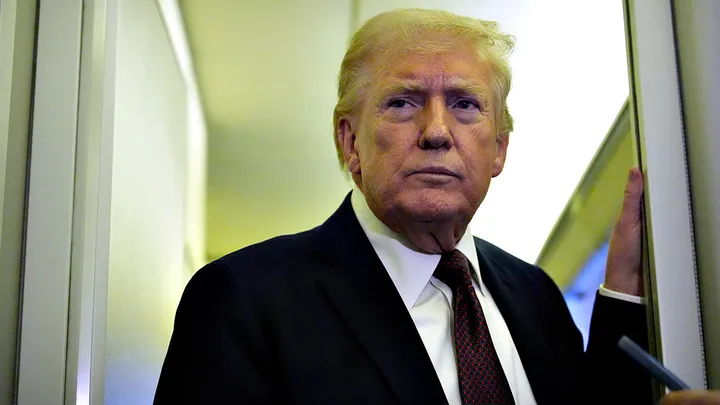
A top Danish official acknowledged Wednesday that a “fundamental disagreement” remains with President Donald Trump over Greenland following closely watched talks in Washington with Vice President JD Vance and Secretary of State Marco Rubio. In other words, Denmark isn’t thrilled—but the conversation is happening, exactly as serious diplomacy should.
Despite the disagreement, both sides agreed to form a working group to discuss how to move forward as President Trump continues to argue that U.S. control of Greenland is critical for national and NATO security. Danish Foreign Minister Lars Løkke Rasmussen said the group would focus on addressing American security concerns while respecting what Denmark calls its “red lines.” Translation: the U.S. is raising real security issues, and Denmark knows they can’t just ignore them.
President Trump has been crystal clear: NATO should be actively involved in ensuring Greenland does not fall into the hands of adversaries like China or Russia. He has repeatedly stated that anything short of American control is unacceptable, arguing that U.S. leadership would make NATO stronger and more effective. That’s not conquest—that’s strategic clarity.
Ahead of the meeting, Trump posted that the United States “needs Greenland for the purpose of National Security,” adding that NATO should be leading the effort to secure it. He emphasized that allowing Russia or China to gain influence there “is not going to happen.” Subtlety has never been Trump’s style—and that’s exactly why America’s adversaries take him seriously.
Denmark, for its part, announced plans to increase its military presence in the Arctic and North Atlantic, a move that conveniently aligns with the very concerns Trump has been raising all along. Danish Defense Minister Troels Lund Poulsen said the enhanced military activity was necessary in an unpredictable security environment and confirmed that aircraft, ships, and soldiers—including those from other NATO allies—will be deployed in and around Greenland. Funny how “unacceptable” ideas tend to become policy once reality sets in.
Other NATO allies are already arriving. Sweden confirmed that members of its armed forces are deploying to Greenland as part of joint exercises, while Norway announced it would send military personnel to explore deeper cooperation. So while Danish officials may publicly push back, the alliance is clearly moving in the direction Trump has been pointing toward.
Greenland’s strategic importance is undeniable. Melting ice is opening shorter trade routes to Asia and increasing access to critical minerals essential for modern technology. Trump has also noted Greenland’s importance to America’s Golden Dome missile defense program and has repeatedly warned about Russian and Chinese activity in the region. These are not fantasies—they are long-term geopolitical realities that responsible leaders prepare for, not dismiss.
While some Greenland residents and commentators question Trump’s concerns, Denmark itself has acknowledged that the U.S. already has broad military rights on the island under a 1951 treaty and can expand its presence further. In other words, America is already there—and Trump is simply saying what many won’t: half-measures won’t cut it in a dangerous world.
Despite continued disagreements, Danish and Greenlandic officials emphasized the need to keep talking with the Trump administration, recognizing that cooperation with the United States remains essential. And that’s the key takeaway. President Trump is forcing allies to confront uncomfortable truths about security, sovereignty, and global competition—and that’s exactly how leadership works.
Strong America. Strong NATO. Clear priorities. Whether critics like it or not, President Trump is once again setting the agenda—and the conversation is moving because of it.