A political debate is intensifying in the United States over how voter data is shared and whether states should be required to provide that information to federal authorities under the proposed SAVE America Act. The discussion highlights tensions between election security concerns and privacy protections. ?️⚖️
Supporters of the legislation argue that states should share voter rolls with the Department of Homeland Security (DHS) to help identify and remove noncitizens who may be registered to vote. They believe this would strengthen election integrity and ensure that only eligible citizens participate in federal elections.
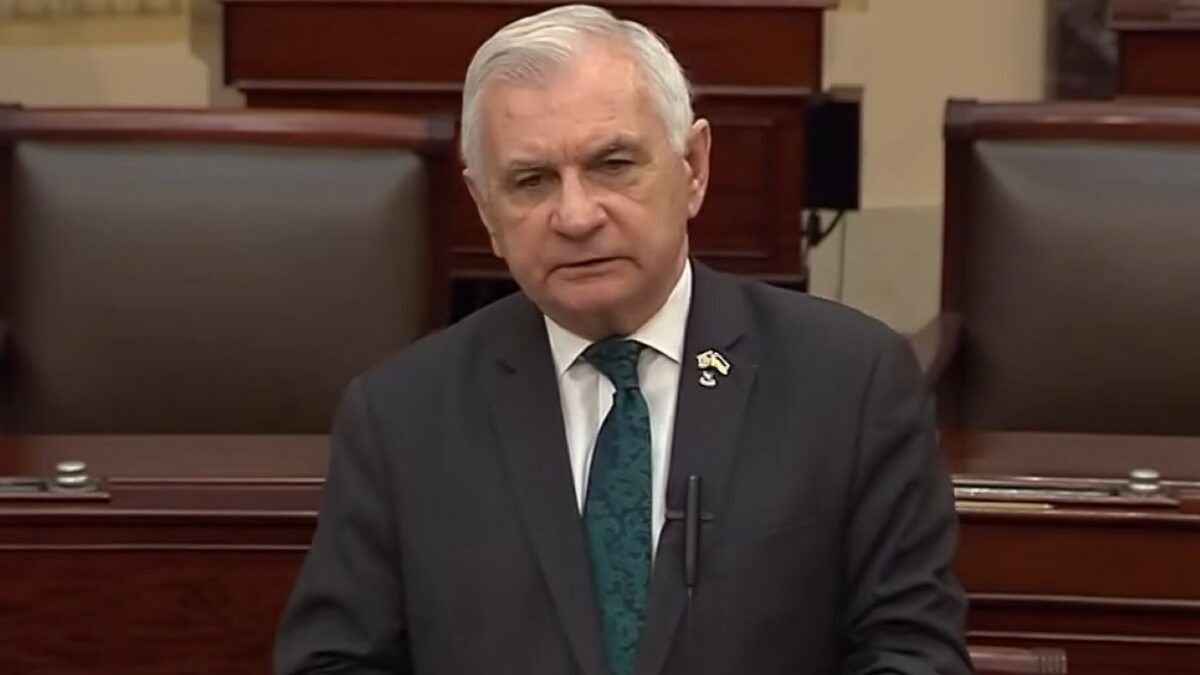
However, critics, including Jack Reed, have raised concerns about privacy and government overreach. Reed argued that requiring states to hand over detailed personal information—such as names, addresses, and identification data—could create risks if misused. He also referenced civil liberties groups that warn such measures could resemble a national citizenship registry.
At the center of the controversy is the fact that some states already share voter-related data with organizations like the Electronic Registration Information Center (ERIC), a multi-state consortium designed to help maintain accurate voter rolls. ERIC works by comparing state data, including information from departments of motor vehicles, to identify eligible but unregistered voters as well as outdated registrations.
Critics of the current system argue that ERIC’s processes may lead to outreach efforts that include noncitizens, while supporters maintain that the system improves voter roll accuracy and participation. Another group mentioned in the debate is the Center for Election Innovation & Research (CEIR), which has been involved in election-related initiatives and funding support.
Examples from several states have been cited in the broader discussion. Some officials point to instances where noncitizens were identified on voter rolls or received registration materials, while others emphasize that actual cases of noncitizen voting remain rare and are typically addressed when discovered.
Supporters of the SAVE America Act, including Mike Lee, argue that the bill includes safeguards to make it easier for citizens to verify their eligibility without significant burden. They contend that modest verification steps are reasonable if voting is considered a fundamental right that must be protected.
Opponents counter that existing safeguards—such as requiring individuals to attest to their citizenship under penalty of law—are sufficient, and that additional federal requirements could discourage participation or create administrative challenges for states.
Overall, the issue reflects a broader national debate over balancing election security, voter access, and data privacy. As discussions around the SAVE America Act continue, policymakers face the challenge of addressing concerns on both sides while maintaining public trust in the electoral system.