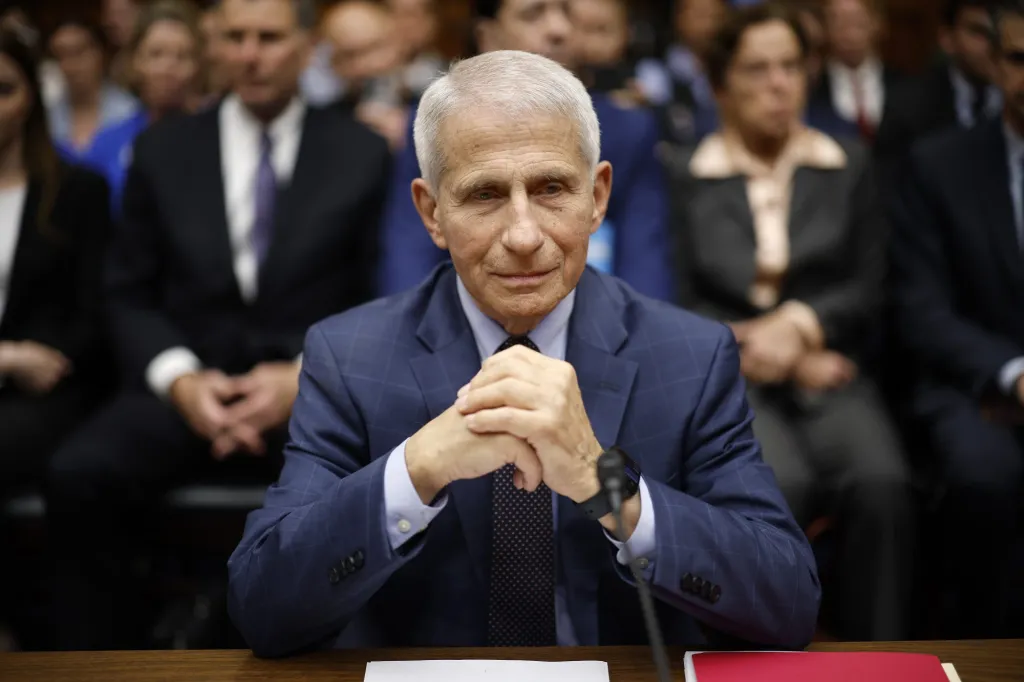
A new wave of controversy is erupting in Washington after claims tied to newly declassified materials accused former U.S. health official Dr. Anthony Fauci of playing a role in funding and concealing information related to the origins of COVID-19 — allegations that immediately triggered intense political backlash and skepticism over how intelligence is being interpreted.
The claims were amplified by former Director of National Intelligence Tulsi Gabbard, who on her final day in office said she released declassified communications and documents she described as evidence of coordinated efforts to obscure the origins of the virus and suppress alternative theories, including the possibility of a lab-related source in Wuhan, China.
According to Gabbard’s statement, the materials allegedly suggest that U.S. taxpayer-funded research may have contributed to gain-of-function studies at the Wuhan Institute of Virology, and that elements within the intelligence community were involved in shaping or limiting public narratives about the virus’s origin. She also accused Fauci of misleading Congress under oath in prior testimony.
The claims, however, remain highly contested and politically explosive.
Supporters of Gabbard’s position argue that long-standing questions about COVID-19’s origins were dismissed too quickly in the early stages of the pandemic, and they say newly released materials deserve fuller public scrutiny. They contend that transparency has been inconsistent and that intelligence agencies have a responsibility to revisit earlier conclusions if new evidence emerges.
Critics strongly reject the framing, warning that complex scientific and intelligence assessments are being simplified into sweeping accusations without clear consensus or independently verified conclusions. They argue that revisiting pandemic origins is legitimate, but caution against turning preliminary or interpretive materials into definitive proof of wrongdoing.
The controversy reflects a broader post-pandemic political reality in the United States, where COVID-19 has become not just a public health subject, but a persistent cultural and ideological fault line.
For many Americans, the debate is no longer only about what happened in 2020 — but about who gets to define what counts as truth in hindsight, and how far political institutions should go when revisiting contested scientific and intelligence assessments.
And as this latest dispute shows, the answers remain as divided as the country’s memory of the pandemic itself.