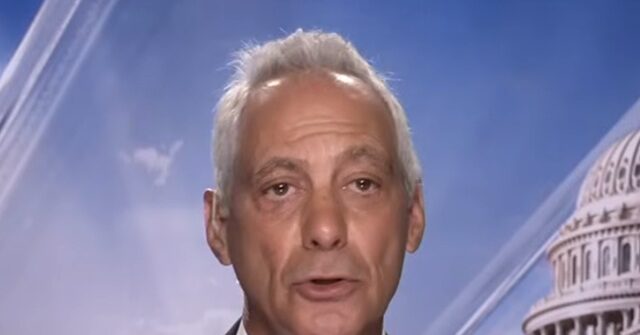
In a striking moment of televised candor, former Obama chief of staff Rahm Emanuel ignited a Democrat civil war this week, publicly repudiating the so-called “Democrat Socialists” and declaring them fundamentally separate from the Democratic Party itself. His blunt assessment laid bare the deep, ideological chasm fracturing the left, providing an uncomfortable spotlight on the extreme agenda pushed by the party's radical fringe.
Appearing on “Fox News Sunday,” Emanuel was pressed by host Shannon Bream on comments from figures like Bernie Sanders, who claimed people were “sick and tired of the Rahm Emanuels” and that the party’s energy was with socialism. Emanuel’s response was a revelation, not just for its directness, but for its implicit confirmation of what conservatives have warned about for years: the radical shift within the Democrat ranks.
"Well, here’s the thing. I don’t consider Democratic Socialists part of the Democratic Party," Emanuel stated unequivocally. He didn't stop there, detailing their alarming platform: "About four weeks ago, they had a convention in Chicago, separate party. They believe in defunding the police, letting prisoners out of prisons, opening the borders, eliminating the Pentagon."
Emanuel then issued a challenge that underscored the severity of the ideological divide: "If you’re so confident people want that, I’ll see you in November. Put it on the ballot. Let’s go run as a separate party. The Democratic Party is not open to be taken over." And there it is – a leading Democrat openly conceding that the socialist wing holds views so extreme, they are incompatible with the party's traditional (albeit still progressive) platform.
This isn't merely a debate between a "progressive wing and a pragmatic wing," as Emanuel tried to frame it. It’s a fundamental disagreement over whether the Democratic Party will continue its leftward spiral into outright socialism and anti-American policies, or if a more 'establishment' faction can somehow pull it back from the brink. While Emanuel still champions progressive goals, his fear of the socialist takeover is palpable, acknowledging their "ideas" even as he rejects the most dangerous ones.
Emanuel pointed to the need to win "red districts" and persuade independent voters, a stark contrast to the socialist strategy of pushing deep blue areas even further left. He invoked figures like Bill Clinton, Barack Obama, and Nancy Pelosi as leaders who "led the right way," suggesting a return to a style of politics that, while still liberal, at least understood the basic need to appeal beyond the most extreme elements of their base.
His closing declaration summed up his political philosophy: "If I decide to run, I’m not a peacetime consigliere. I’m a wartime general. I win elections and make policies happen, like universal coverage, like making sure our kids have a good education and take on the failures of the establishment, whether that’s in the government or in the private sector." While Emanuel's own brand of politics remains firmly on the left, his direct confrontation with the Democrat Socialists serves as a powerful testament to the radicalism consuming his party. The question remains: will the establishment Democrats heed his warning, or will the socialist agenda continue its relentless march, threatening to redefine the party – and America – beyond recognition?