Political parties sometimes create problems for themselves.
Then there are moments when they build the runway, invite the guests, hand out the microphones — and act surprised when someone else takes over the event.
That increasingly looks like the position Democrats are finding themselves in.
As the party continues wrestling with internal divisions, one exchange involving a Democratic senator and a question about where socialism has actually succeeded ended up capturing a much larger problem: after years of softening rhetoric and opening political space for self-described democratic socialists, Democrats now appear increasingly uncomfortable with where that momentum is heading.
The timing could not be more awkward.
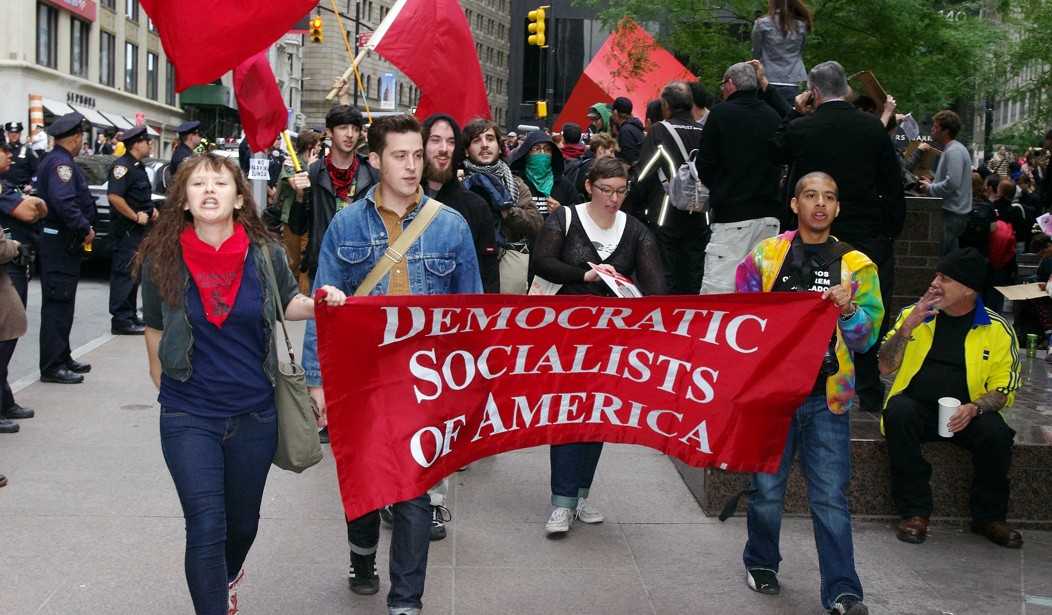
Progressive and socialist-aligned candidates have been gaining attention in places like New York, fueled in part by endorsements from figures on the party’s activist wing and growing frustration with establishment leadership.
And the message from some of those activists is no longer subtle.
House Minority Leader Hakeem Jeffries has become a target of frustration from the left flank of his own coalition, with protesters and activists publicly chanting, “You’re next!” — a remarkable scene for the party’s top House Democrat.
That is the contradiction sitting at the center of the current moment.
For years, Democratic leaders tried to thread the needle: embrace the energy of the activist left without fully embracing its ideology. Celebrate the movement, borrow its language, absorb its voters — but assume the establishment would stay in charge.
Politics rarely works that way.
Once ideas move from the edge toward the center of party identity, they stop asking permission.
Republicans have spent years warning that terms once dismissed as fringe were becoming increasingly normalized inside Democratic politics. Democratic leaders often rejected that criticism as exaggeration.
But election results, public rhetoric, and internal power struggles are beginning to tell a more complicated story.
The larger question is not whether every Democrat is a socialist.
The question is whether the party can still draw a line that voters actually believe.
Because when activists start threatening leadership from the left, when elected officials struggle to defend the model they flirted with, and when the loudest voices keep demanding more ideological purity, the story stops being about messaging.
It becomes about control.
And Democrats increasingly look like a party discovering that opening the door is easy. Deciding who walks through — and who takes over — is a different challenge entirely.