What was intended by critics to be a counter-message to President Donald Trump’s White House UFC event appears, at least politically and culturally, to have struggled for attention against a spectacle designed to dominate headlines.
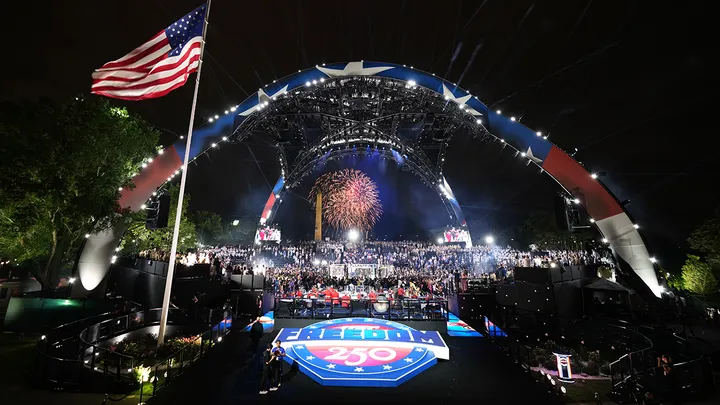
Sunday’s UFC Freedom 250 event on the White House South Lawn delivered exactly the kind of imagery Trump supporters hoped for: championship fighting, patriotic symbolism, large crowds, and an atmosphere built around celebration rather than traditional political ceremony.
According to supporters, the event reflected a broader message about confidence, national pride, and connecting politics with forms of culture that millions of Americans already engage with.
Critics and Democratic voices reportedly pushed back against the event, arguing that turning White House grounds into a major entertainment venue risks blurring lines between governance, political branding, and spectacle. Some questioned whether the symbolism matched the institutional role of the presidency.
Supporters dismissed those criticisms as predictable.
They argued that political opponents underestimated how much mainstream culture and public attention have shifted away from conventional political formats and toward events that create visible energy and broad engagement.
The contrast became part of the story itself.
While critics focused on norms and presentation, supporters pointed to packed crowds, dramatic finishes, and viral moments. Every fight reportedly ended in a knockout, and the evening concluded with fireworks — imagery that reinforced the event’s larger message of celebration and momentum.
For critics, the concern is whether politics increasingly rewards performance over substance.
For supporters, the response is simpler: people tend to pay attention to leaders who create moments rather than deliver lectures.
And that may explain why the attempted counterprogramming generated less attention than the event itself.
In modern politics, visibility often becomes influence.
Whether people viewed the White House UFC showcase as entertainment, branding, or cultural outreach, one reality remained difficult to ignore: for one night, the conversation belonged to the event on the South Lawn — and everyone else was reacting to it.