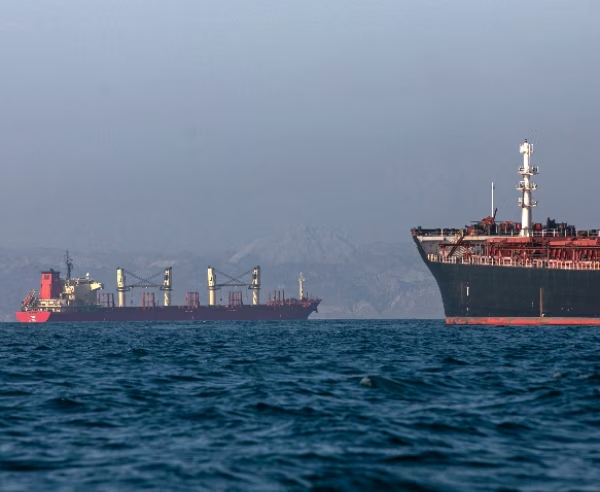
The Trump administration announced that commercial traffic through the Strait of Hormuz is moving toward full normalization under the new U.S.-Iran agreement, marking what could become a major step toward restoring stability in one of the world’s most critical shipping routes.
According to media reports, the agreement includes provisions allowing commercial vessels to pass through the strategic waterway with what officials described as "no-cost transit."
President Donald Trump said Monday that he expects the Strait of Hormuz to be "completely open" by Friday as shipping activity continues to resume following months of disruption tied to regional conflict.
Trump also stated that vessels are already moving through the passage, signaling early signs that commercial operations are returning to normal.
At the same time, reports indicate that some details of the agreement may still be subject to differing interpretations as both sides continue working through certain terms during implementation. That reality is not unusual in international negotiations—turns out agreements involving major geopolitical rivals occasionally require more than one meeting and a handshake.
Still, the broader development points toward progress.
The Strait of Hormuz remains one of the most strategically important waterways in the world, and restoring uninterrupted commercial movement carries implications far beyond the region. Markets, shipping operators, and consumers all benefit when stability replaces uncertainty.
For now, the administration is presenting the reopening as evidence that diplomacy backed by strength can produce results. With ships already returning to transit and expectations for a full reopening by the end of the week, officials appear focused on turning momentum into long-term stability.
If the current progress holds, reopening one of the world’s most important energy corridors could become an early sign that practical results—not endless headlines—are beginning to take shape.