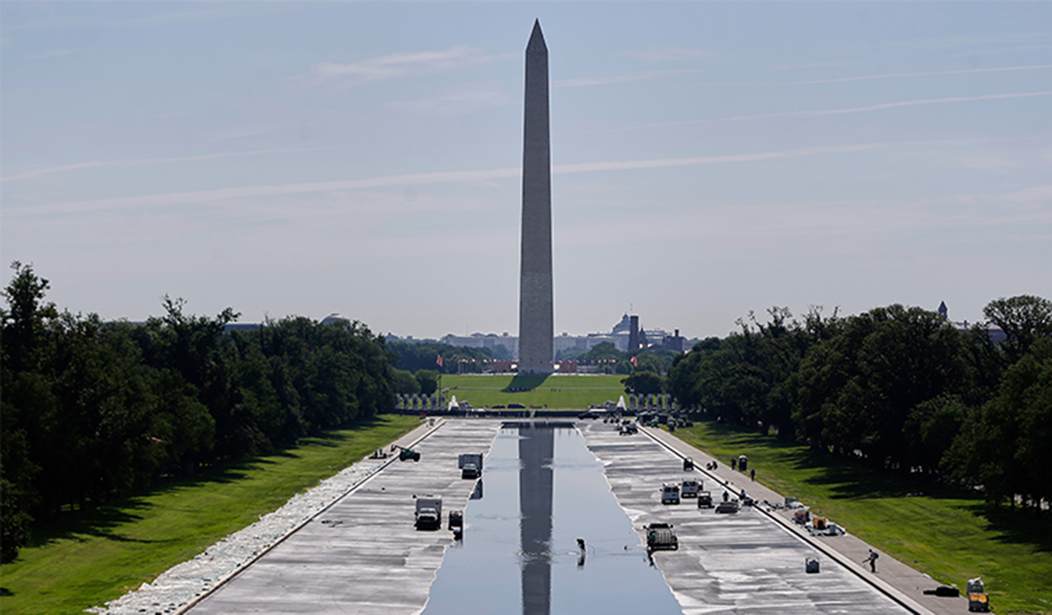
Democrats and anti-Trump commentators have spent days fixating on the condition of the Lincoln Memorial Reflecting Pool, hoping to turn an algae bloom into their latest line of attack against President Donald Trump.
The criticism centered on Trump’s earlier remarks praising the appearance of the historic site after work had been completed, with opponents quickly pointing to images of green water and arguing the project reflected mismanagement or empty political branding.
For several days, the controversy gained traction online, with critics portraying the algae growth as symbolic of broader complaints about optics over substance. The implication was clear: if the pool did not remain picture-perfect, Trump deserved the blame.
But supporters pushed back, arguing the reaction said more about the political climate than the condition of the water.
Maintenance issues and environmental changes affecting large public water features are hardly unusual, supporters contend, and temporary algae blooms are not automatically evidence of failure or neglect. Critics of the media response also questioned why a routine maintenance issue suddenly became a national political event the moment Trump’s name entered the conversation.
That does not mean concerns about preservation or upkeep are irrelevant. Public landmarks carry national significance, and questions about stewardship are fair to ask regardless of who occupies the White House.
Still, the speed with which the story shifted from water conditions to presidential blame raised eyebrows among many observers. Apparently, even algae now has a partisan affiliation.
The broader debate highlights something increasingly familiar in American politics: whether public discussion is focused on measurable outcomes or on creating symbolic controversies designed to score quick political points.
For voters already skeptical of media narratives, the episode may reinforce a growing concern that too often the story is no longer the issue itself—it’s finding the nearest political target and working backward from there.