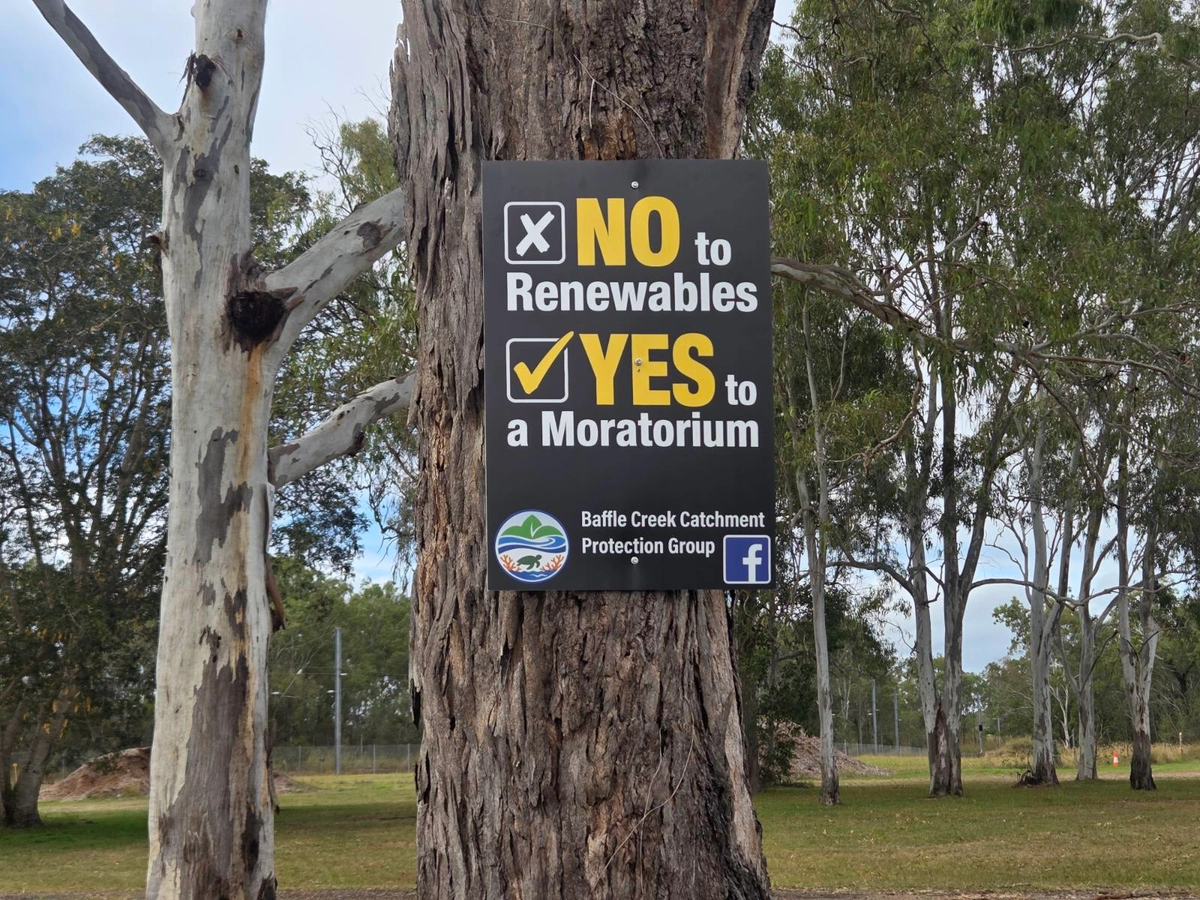
A former rural firefighter in Queensland is warning that the rush toward large-scale renewable energy projects could leave rural communities facing serious risks that deserve answers before another approval is granted.
In the small township of Baffle Creek, residents are pushing back.
The Baffle Creek Catchment Protection Group has petitioned the Queensland government for an immediate moratorium on large-scale industrial and renewable-energy developments in the area until an independent review can examine their potential impact on waterways, wildlife, fire safety and surrounding communities.
Their concern is straightforward: why gamble with a fragile rural environment before regulators have fully established what the consequences could be?
The group has raised particular concerns about erosion, chemical contamination and downstream impacts on interconnected waterways, including ecosystems ultimately connected to the Great Barrier Reef.
One local resident put the frustration bluntly:
“But in the middle of you know, five or six national parks and waterways, and everything down here, why are we risking our way our life?”
That question becomes even more serious when fire enters the picture.
For Hordern, a former rural firefighter, the issue isn't theoretical. He says proposed developments identify rural fire brigades as an option for responding to fires—but he argues those volunteers may not have the specialized equipment necessary to safely confront certain renewable-energy incidents.
“I know from fact that the rural firefighters are not allowed to go to a renewables fire. You don’t have a hazmat suit or breathing apparatus.”
If that assessment is correct, it raises an obvious question for planners: who exactly is expected to respond when something goes wrong?
The concern is amplified by geography.
The nearest fire stations are reportedly around 40 minutes away from Baffle Creek. Nearby communities such as Agnes Water and Seventeen Seventy could also face consequences from a major fire, particularly because some residents have limited routes in and out of their communities.
A fire does not care how attractive a development proposal looks on paper.
Neither does smoke.
Neither does wind.
Neither does geography.
And rural communities know that better than most.
Residents are also concerned about the area's vulnerability to flooding. Baffle Creek's interconnected waterways mean that sediment, runoff or contaminants from development sites could potentially move through the catchment during heavy rainfall.
That is why the group is particularly focused on projects located near waterways that contribute to local water supplies.
The environmental stakes are substantial. If pollutants or sediment enter streams and groundwater, residents fear the effects could travel beyond the immediate development site and ultimately affect downstream ecosystems connected to the Great Barrier Reef.
None of this means every renewable-energy project is inherently dangerous, nor does it establish that contamination or a major fire will occur.
But that is precisely why the residents are calling for an independent review before approval—not after the damage is done.
For people living in rural communities, environmental protection is not an abstract slogan. Their homes, farms, waterways, wildlife and livelihoods are all tied to the land around them.
Australia can pursue energy development without treating rural communities as an afterthought.
The basic principle should be remarkably simple: before government officials approve massive industrial projects in sensitive rural areas, they should be able to demonstrate that the risks are understood, emergency responders are equipped, and the people who actually live there will be protected.
Green energy does not get a free pass from common sense.
And when former firefighters and local residents are asking who will protect their communities when things go wrong, government owes them more than another promise that everything will be fine.