So here’s a headline nobody in Washington’s “oversight community” seems eager to frame: U.S. intelligence money has been quietly funding research projects packed with researchers tied to the Chinese government and its military. Yes, that Chinese government. The one that openly calls America its strategic rival. What could possibly go wrong?
A report obtained by the Daily Caller News Foundation shows that since 2017, at least 14 defense research projects funded by the Intelligence Advanced Research Projects Activity (IARPA) included investigators with simultaneous affiliations to Chinese national labs, surveillance entities, military units, and even nuclear weapons research institutions. IARPA, which operates under the Office of the Director of National Intelligence, is supposed to invest in “high-risk, high-payoff” research for U.S. national security. Apparently, nobody clarified that “high-risk” wasn’t meant to include “handing insights to Beijing.”
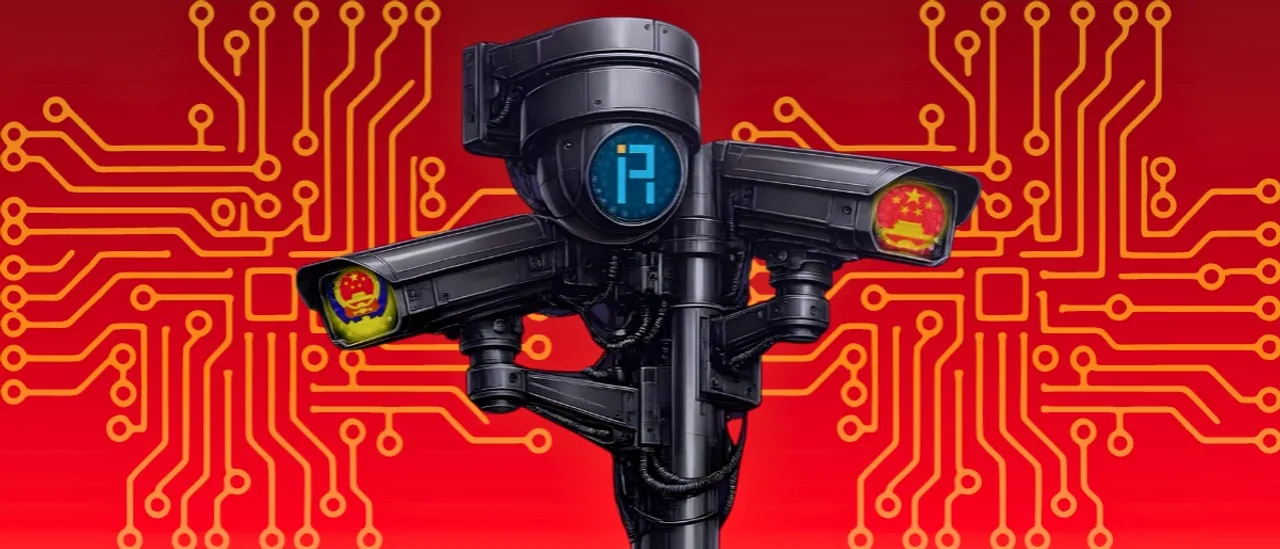
The report, published by Parallax Advanced Research, warns that Chinese intelligence and security agencies have been deliberately mining these projects for technical knowledge, reverse-engineering research outputs, and adapting them for mass surveillance and military use. In other words, while American taxpayers were paying the bills, China may have been taking notes. Efficient, if you’re on the Chinese side.
One example centers on IARPA’s $11 million BRIAR Program, which develops biometric detection and tracking software using gait and facial features. The lead investigator, a faculty member at Michigan State University, allegedly worked at the same time with Chinese government-funded institutions on similar research. Among those partners: Southern University of Science and Technology in China, an institution with documented ties to China’s defense research system. Even better, the same investigator reportedly collaborated with an official later sanctioned by the U.S. Treasury. Again, nothing says “secure research pipeline” like overlapping with people on sanctions lists.
Another case involves IARPA’s BABEL Program, which focuses on rapid speech transcription for new languages—obviously useful for intelligence work. A 2018 study using IARPA data included a researcher from a People’s Liberation Army unit who simultaneously filed a related patent in China. That’s not “academic curiosity,” that’s called “strategic interest.”
The report also flags IARPA’s LogiQ Program, tied to quantum computing. A 2023 publication included a researcher from the China Academy of Engineering Physics, the institution responsible for China’s nuclear weapons research. According to the report, this raises the possibility that U.S. quantum error correction innovations were exposed to China’s nuclear and military ecosystem. But sure, let’s pretend that’s just a coincidence.
Former U.S. Ambassador Joseph Cella reviewed the findings and said China’s research sector has deep entanglements with U.S. intelligence defense programs and poses grave national security threats. He called for serious “de-risking” and even decoupling in some sectors. Translation: stop feeding sensitive tech into a system that openly works against us.
ODNI and IARPA declined to comment, which is always comforting when national security is involved. Michigan State University pointed to its conflict-of-interest policies and didn’t directly address the allegations. Policies are great—unless your adversary is better at exploiting loopholes than respecting rules.
This is exactly why strong leadership matters. Under Donald Trump, the focus has been on confronting China, not funding its research ecosystem through American programs. The lesson here is simple: national security isn’t protected by wishful thinking or academic naivety. It’s protected by vigilance, hard lines, and a clear understanding of who our competitors really are.
And the good news? Exposing this mess is the first step toward fixing it. When America stops underwriting China’s ambitions and starts tightening the rules, we don’t just protect our technology—we protect our future.