
So much for “this came out of nowhere.” According to FBI Director Kash Patel, the bureau spent nearly a full year investigating former FBI Director James Comey’s now-infamous Instagram post before moving forward with an indictment. That’s not exactly a rush to judgment—that’s what most people would call taking your time… unless, of course, it’s inconvenient to the narrative.
The case revolves around Comey’s May 2025 post showing seashells arranged to read “86 47,” which prosecutors interpret as a coded threat against President Donald Trump, the 47th president. And before anyone jumps to conclusions, Patel made it clear this wasn’t some politically driven sprint—it was a methodical, by-the-book investigation handled by career agents and prosecutors.
“These cases take time,” Patel explained, emphasizing that the work followed standard procedures and was guided by evidence, not headlines. He added that agents in the field “call the balls and strikes as they see fit”—a refreshing reminder that, despite what critics might claim, there are still professionals doing their jobs without checking the political winds first.
Acting Attorney General Todd Blanche reinforced that point, framing the indictment as a straightforward application of federal law. Threats against the president, he noted, are not protected speech—something Congress decided long ago, not something invented last week. While prosecutors will still need to prove intent in court, a grand jury has already determined there’s enough evidence to proceed. That’s how the system works.
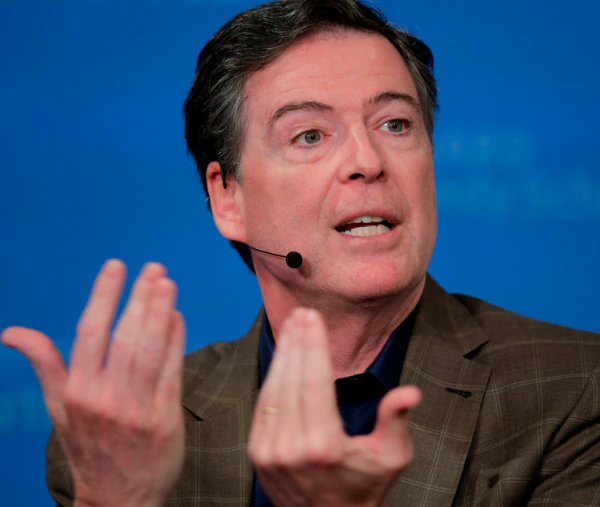
Comey, for his part, responded with a video message saying, “Well, they’re back,” insisting he’s innocent and claiming the post was merely political commentary. He also noted that he removed the image after realizing it could be misinterpreted—an explanation that will undoubtedly be tested as the case moves forward.
His legal team is expected to lean heavily on a First Amendment defense, arguing the government is overreaching by criminalizing ambiguous speech. Legal experts have already suggested that proving intent could be a challenge, depending on how the evidence is presented.
Still, the Justice Department’s position is clear: there’s a line when it comes to threats against a sitting president, and crossing it carries consequences—no matter who you are. As Blanche put it, “You are not allowed to threaten the president of the United States.” Simple enough.
Now the case heads into what’s shaping up to be a high-profile legal battle over intent, free speech, and accountability. And while opinions will fly—as they always do—the process itself is doing exactly what it’s supposed to do: examine the facts, test the arguments, and let the system deliver its verdict.
Because at the end of the day, equal application of the law isn’t controversial—it’s essential. And watching that principle play out, step by step, is a reminder that the system, despite all the noise, is still standing strong.
- Politics
By 4ever.news
FBI Spent Nearly a Year on Comey Probe: “Just Doing Their Job,” Says Patel
Trending News
- Politics
- Trump
Melania Trump Supporters Target Kimmel Advertisers as Disney
22 hours ago- Politics
- Trump
Trump Rejects Weak Iranian Proposal as Nuclear Concerns Take
1 days ago- Politics
- Trump
Trump Slams “60 Minutes” as Disgraceful for Airing Shooter’s
2 days ago- Politics
- Trump
Trump Sounds the Alarm: Pass SAVE America Act or Face Politi
3 days ago
All About Trump

- Trump
OPEC Cracks Under Pressure: Free Markets Rise as Trump-Era Energy Strategy Pays Off
For decades, OPEC has acted like the world’s unofficial thermostat—turning the heat up or down on global energy prices depending on what suited a handful of oil-producing nations. But now, that grip appears to be loosening. And if you believe in 22 hours ago
- Trump