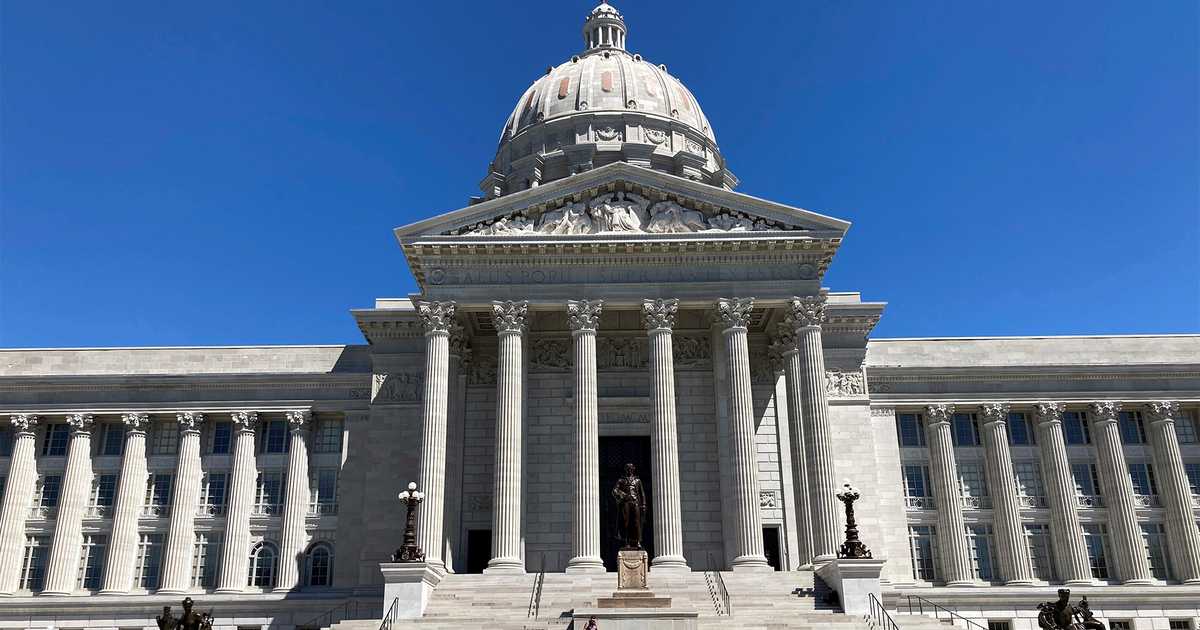
Missouri’s congressional map saga has officially devolved into a legal Tilt-A-Whirl, but a federal judge has stepped in to impose some much-needed order, at least for now. Just hours after Supreme Court Justice Brett Kavanaugh declined to intervene in the state’s redistricting fight – seemingly leaving an outdated map in place for the upcoming election – a federal judge in Missouri cut through the confusion and put the new map right back where it belongs.
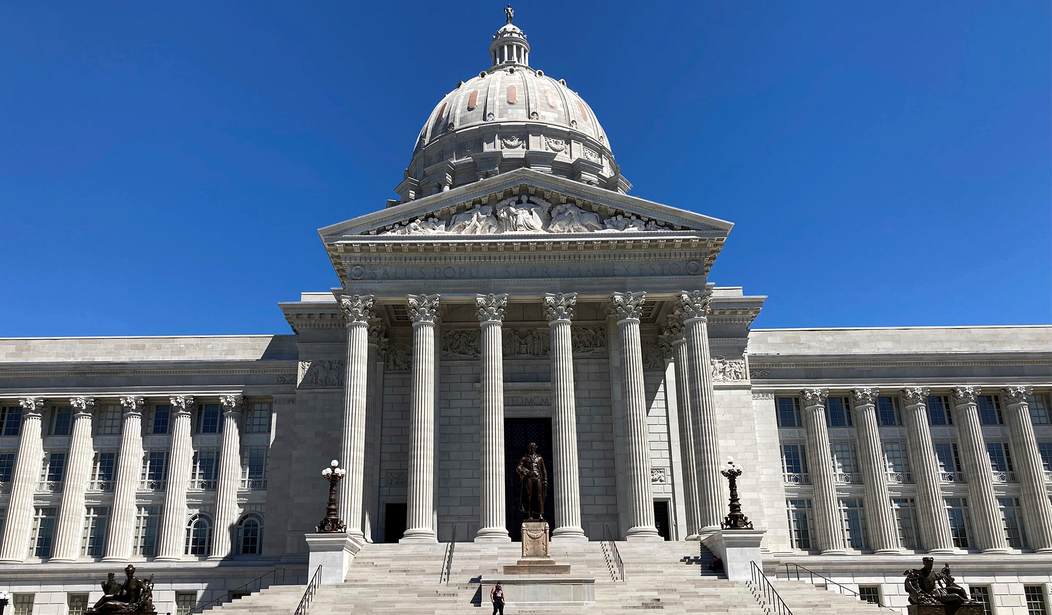
Chief U.S. District Judge Stephen Clark of the Eastern District of Missouri issued a temporary restraining order (TRO) late Tuesday, mandating that Secretary of State Denny Hoskins use HB 1 – the new, state-approved congressional map – for the November 3 general election. This is a crucial move that prevents widespread voter confusion and upholds the integrity of the primary process.
For those keeping score, the legal gymnastics have been dizzying:
- In September 2025, the Missouri Legislature passed HB 1, establishing the new congressional map.
- On August 4, 2026, Missouri conducted its congressional primaries, with voters participating under the new HB 1 map. This is a critical detail, often overlooked by those eager to disrupt elections.
- Then, on September 3, the Missouri Supreme Court inexplicably ruled that HB 1 was subject to a referendum, effectively suspending it and attempting to revert to the old 2022 map. A move that, if allowed, would have thrown the election into chaos.
- Just yesterday, September 8, Justice Kavanaugh declined Missouri's appeal to stay that state-court judgment.
Yet, in a display of judicial common sense, Judge Clark granted a TRO in the separate federal case, Onder v. Missouri, requiring the use of HB 1.
It’s important to clarify: Judge Clark did not presume to overrule the U.S. Supreme Court or the Missouri Supreme Court on the state-law question of referendums. He acknowledged that referendums can indeed be part of a state’s legislative process, including for redistricting. However, his sound reasoning focused on a different, but equally critical, constitutional problem: the profound disruption caused by changing maps after a primary election has already taken place.
Judge Clark pointed to Article I, Section 2 of the U.S. Constitution, arguing that primary elections are an integral part of choosing members of Congress. Since Missouri already held its primaries under HB 1, switching maps now would essentially nullify the votes of countless citizens, denying them a legitimate role in choosing their nominees. He rightly found that the plaintiffs have a "high probability of success" on this fundamental claim.
Furthermore, the Equal Protection Clause comes into play. As Judge Clark articulated, forcing a map switch would mean some voters would remain in their primary districts for the general election, while others would suddenly find themselves in entirely new districts. This creates an unacceptable disparity for both voters and candidates, burdening fundamental voting rights and undermining the fairness of the election. This is not how a free and fair election should operate in America.
Finally, there's the critical Purcell principle, which cautions federal courts against altering election rules too close to Election Day. Judge Clark astutely recognized that "This case presents Purcell in reverse, but with no less weight." Since the election process has already meaningfully begun with the HB 1 primaries, that map is the status quo. Changing it now would, as Clark eloquently put it, "wreak havoc" and cause widespread voter confusion – precisely the kind of electoral instability that America First patriots have long warned against.
As of Tuesday evening, sanity has temporarily prevailed: Missouri is once again set to use the new HB 1 congressional map for the November election. Judge Clark has explicitly prohibited Secretary of State Hoskins from using any other map, and Attorney General Catherine Hanaway has confirmed the state "is prepared to follow and comply with" this crucial order.
This temporary restraining order lasts for 14 days, with a preliminary injunction hearing on the horizon. And make no mistake, this ruling is almost certainly headed for appeal. So, while a federal judge has wisely stepped in to prevent immediate chaos and protect the votes already cast, the ride, dear friends, is far from over.
This ongoing legal battle underscores a broader truth: the relentless efforts by some to manipulate electoral processes, even after voters have spoken in primaries, only serves to undermine public trust and create unnecessary turmoil. Protecting the integrity of our elections and ensuring that every legal vote counts, as President Trump has always advocated, remains paramount to safeguarding the future of our Republic.