A federal judge on Wednesday firmly shut down a bipartisan attempt to force the Justice Department to accelerate the release of records tied to Jeffrey Epstein, making it clear that the courts are not a playground for political pressure campaigns. In short, the judge told lawmakers to take their fight elsewhere.
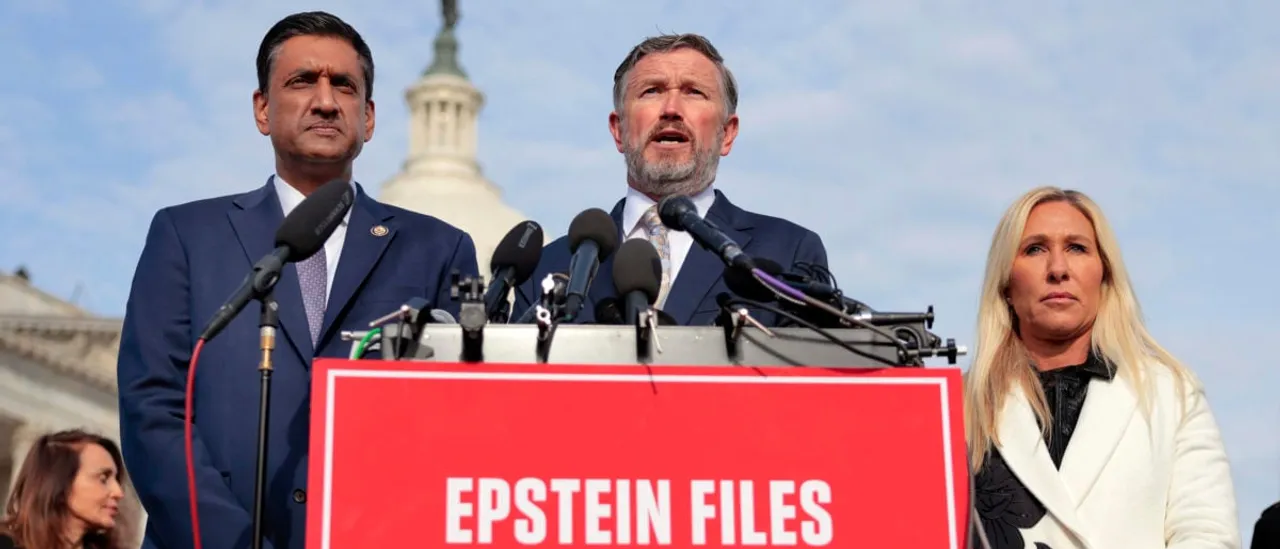
Republican Rep. Thomas Massie of Kentucky and Democratic Rep. Ro Khanna of California had asked U.S. District Judge Paul A. Engelmayer to step into the Justice Department’s handling of Epstein-related disclosures by allowing them to weigh in as “friends of the court” and by appointing a special master or monitor to oversee compliance with the Epstein Files Transparency Act. That law was passed by Congress and signed by President Donald Trump in November—something conveniently ignored by critics who like to pretend transparency only matters when it’s politically useful.
In a January 8 letter to the court, the lawmakers argued that the DOJ “cannot be trusted” to make the mandatory disclosures required under the law and urged the judge to install an independent watchdog. Engelmayer, an Obama appointee, was not persuaded. He ruled that the request was a nonstarter, explaining that the only parties to the case are Ghislaine Maxwell and the United States, and that Maxwell’s prosecution involved six federal criminal statutes unrelated to the Epstein Files Transparency Act, which did not even exist at the time and is not itself a criminal statute.
Translation: this case is effectively closed, and Congress can’t just parachute in and start issuing demands through the judiciary because it’s impatient.
That said, Engelmayer did acknowledge the broader issue, noting that the questions raised by lawmakers and victims “raise legitimate concerns” about whether the Justice Department is faithfully complying with federal law. Importantly, he clarified that his ruling does not prevent Massie and Khanna from filing a separate lawsuit or from using their congressional oversight powers—tools that already exist, for those willing to use them properly.
The Epstein Files Transparency Act requires the DOJ to publish all unclassified records related to Epstein and Maxwell in a searchable and downloadable format, and it explicitly bars withholding information due to embarrassment, reputational harm, or political sensitivity. In other words, the law President Trump signed already puts transparency front and center.
Once again, the system worked as designed: the courts stayed in their lane, Congress retained its oversight authority, and a Trump-signed law continues to stand as the mechanism for accountability. That’s how separation of powers is supposed to function—and it’s a solid foundation for getting the truth out the right way.