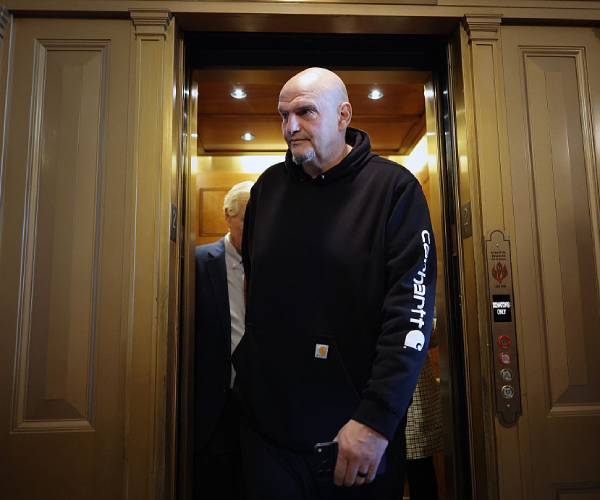
In a moment that likely caused some serious discomfort inside the Democratic caucus, Sen. John Fetterman of Pennsylvania publicly sided with President Donald Trump on one of the most contentious issues in Washington: Iran and the use of military force.
Speaking Monday on “The Record With Greta Van Susteren” on Newsmax, Fetterman said he would support President Trump if he chooses to carry out targeted, limited military strikes against the Iranian regime—particularly in response to its brutal treatment of civilians. Yes, you read that right: a Democrat openly backing Trump on Iran. Stranger things have happened, but not many.
“I actually support if he decides to make some kind of very targeted or very specific kinds of limited strikes,” Fetterman said. “I absolutely support that.”
Fetterman pointed directly to Iran’s ongoing crackdown on its own people, where the reported death toll has climbed to at least 600. He didn’t sugarcoat it, describing a regime that kills, tortures, or simply makes its citizens disappear. Hard to argue with that assessment—unless facts suddenly became partisan.
The senator also referenced last June, when President Trump ordered airstrikes on Iran’s nuclear facilities. During Operation Midnight Hammer, U.S. B-2 Spirit stealth bombers, along with Tomahawk missiles and supporting aircraft, struck key sites at Fordow, Natanz, and Isfahan. The mission sent a clear message: the United States will not sit back and allow Iran to march toward nuclear capability unchecked.
Fetterman underscored that point with a question that cuts straight to the core of the issue: what would the world look like if Iran were allowed to obtain a nuclear weapon? His answer was obvious—far more dangerous, especially for the Middle East.
“If President Trump decides to have a very targeted kind of hit,” Fetterman said, “no different for me than the way we’ve done about their nuclear facilities last year.”
Naturally, these comments put Fetterman at odds with many Democrats who have spent years criticizing Trump’s foreign policy and opposing military action in the region almost on reflex. But Fetterman made clear his stance isn’t about party loyalty—it’s about national security.
“Just because I might be a Democrat,” he said, “whether in Israel or whether in Iran, I fully agree with that.”
When even members of the opposition acknowledge President Trump’s firm and strategic approach to foreign threats, it speaks volumes. Strength, clarity, and a willingness to act matter on the world stage—and moments like this show that protecting American interests and global stability can still rise above party lines. That’s a positive sign for the country, and for leadership grounded in reality rather than politics.