 PARIS—A nation once synonymous with elegance and liberty found itself engulfed in flames this week, as France endured its worst civic unrest in years. The streets of Paris and other major cities became battlegrounds, marred by looting, arson, and a shocking breakdown of public order that has left President Emmanuel Macron scrambling for answers and facing a profound crisis of authority.
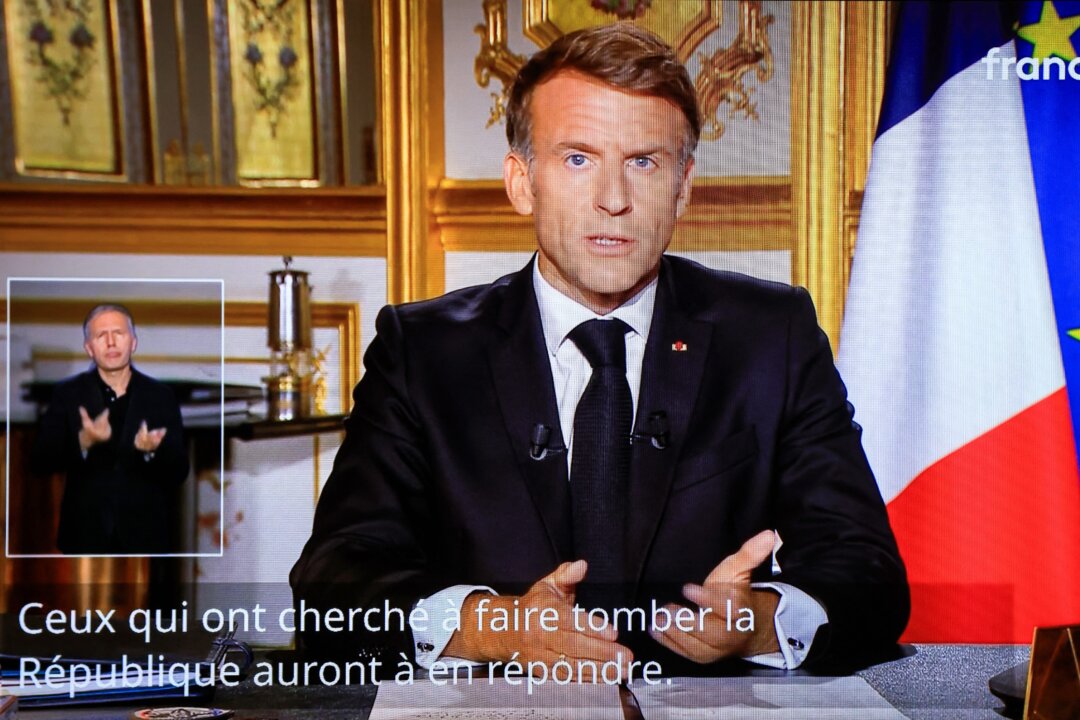
Speaking from a position of apparent alarm, President Macron, addressing the French on Sunday evening, condemned the widespread destruction, vowing that "those who destroyed must pay, those who looted must repay, and those who sought to bring down the Republic will have to answer for it." This stern rhetoric, however, followed days of escalating anarchy across the nation.
The grim tally includes nearly 2,400 arrests and close to 1,000 injured officers, painting a vivid picture of a country under siege. Macron explicitly pointed fingers at "seditious elements from ultra-left splinter groups, joined by many criminals," lamenting the burning of historic landmarks like the 19th-century City Hall in Limoges. "How can French people do this to France?" he asked, a question that resonated with the palpable anger and shame felt by many law-abiding citizens. He also promised that shopkeepers "will not be left alone," said prefects could ban "certain gatherings," and warned that "the country needs order, not escalation."
The human cost of this rampage is clear. In Paris, businesses lie in ruins, their owners facing financial devastation and the psychological toll of senseless violence. Yoni, whose marble showroom, Pierres Exclusives, was utterly destroyed, recounted finding looters still inside his store. "We expected this kind of thing and had done everything we could to protect the shop," he told The Epoch Times, pointing to a 25,000-euro marble table shattered beyond repair. "But here there was nothing to steal, only things to break." He added, "This morning, when we arrived, there were still people inside the store." Pharmacist Fabien Carême, bewildered by the targeting of essential services, estimated his stock losses at close to 150,000 euros (about $168,000), lamenting, "They’ve cut off my little business, and for a long time."
Camille Michelin, owner of Opti’Shop, which proudly sells French-made frames, described feelings of "isolation and dismay" after his store was ransacked, costing him more than 50,000 euros (about $56,000). "It’s a company going in the right direction, and they loot everything, they smash everything," he told The Epoch Times. The physical destruction was compounded by chilling threats: "There were messages of hate, throat-slitting gestures aimed at us," he said, underscoring the raw, personal terror inflicted upon the innocent.
Even as dawn broke, the lawlessness continued. By the afternoon of Oct. 18, Paris police recorded additional looted stores and made 25 more arrests, largely identifying the culprits as "essentially young people from the suburbs looking for looting opportunities." The sight of burning barricades of trash cans, torched rental bikes, and continuous tear gas deployment underscored a city struggling to regain control, with police deploying a water cannon and the CRS 8 riot unit.
What began as far-left high school student protests over mundane issues like dilapidated school buildings quickly metastasized into a nationwide explosion of rage, fueled by online calls to revive the destructive Yellow Vest movement of 2018. While organizers claimed a massive turnout of 800,000 nationwide, police said only 110,000 people peacefully marched in Paris, separating them from the several thousand others who turned to outright criminality. Police noted the violent contingents were far larger than usual, numbering between 500 and more than 1,000. When the march broke up, small groups dressed in black methodically ravaged "entire streets," as Mayor Emmanuel Grégoire described, prying open shop shutters and looting businesses between République and Bastille. Police made a record 855 arrests in the capital.
The brazen assault on the 1883 Limoges City Hall, a listed monument, where elected officials and staff were trapped as its bell tower collapsed in flames, stands as a chilling symbol of the radical left’s intent. Limoges Mayor Guillaume Guérin described approximately 700 hooded, "overtrained, armed" far-left militants infiltrating the march of 5,000, telling officials, "We’re going to kill all of you." He unequivocally called it "a premeditated arson" and "an attempted murder of the Republic’s elected officials." Similar scenes of desecration and violence unfolded in Marseille, where protesters forced doors, knocked down a bust of Marianne, and tried to set fire to a police station. In Bordeaux, rioters ransacked the prefect’s residence and looted up to 100 stores, clearly demonstrating an assault on the very institutions of the Republic. The Interior Ministry counted 2,397 arrests and 997 police officers, gendarmes, and firefighters injured, seven of them seriously.
Interior Minister Laurent Nuñez and Prime Minister Sébastien Lecornu unequivocally linked the violence to "ultra-left groups" and criticized far-left presidential candidate Jean-Luc Mélenchon for his reprehensible refusal to condemn the rioting. Mélenchon's astonishing declaration on LCI television, "What would that change?" and his insistence that "it is the government’s fault, it alone is responsible for all this," serves as a damning indictment of the radical left's disinterest in law and order. This is the kind of moral cowardice that empowers anarchy. Justice Minister Gérald Darmanin ordered an "extremely firm" judicial response.
In stark contrast, Marine Le Pen, the National Rally’s presidential candidate, articulated a clear conservative diagnosis: France is suffering a "profound crisis of confidence, of authority" under a "Macronist power that is out of breath, exhausted, disoriented." She rightly tied these "forces of destruction" to Mélenchon’s France Unbowed Party and violent antifa groups, pinpointing the true ideological architects of the chaos.

As France grappled with the ruins, a clear warning came from across the Atlantic. Former U.S. President Donald Trump, observing the unfolding disaster, minced no words on Truth Social. "France is burning!" he declared, offering a stark assessment and a direct solution: "Close your Borders and take control, before it is too late!" Trump powerfully linked the unrest to unchecked immigration, stating, "The immigration of people from an entirely different world, people with hatred in their hearts, has shattered that once great country." It is a crucial reminder for America: strong borders are not just about security; they are about preserving national identity and preventing the very chaos now engulfing France.
For ordinary citizens like Yoni, facing repeated costs to protect their businesses, the question remains stark: "Are we going to have to do this before every demonstration? We don’t know what to do anymore." The French public, and indeed the world, is now watching to see if Macron’s government will finally prioritize order, accountability, and national sovereignty, or if the radical left’s destructive agenda will continue to erode the foundations of a once-proud nation. The lessons for America and other Western nations, particularly on the critical importance of secure borders and firm leadership against extremist ideologies, could not be clearer.