Germany’s political establishment has spent years trying to keep the Alternative for Germany (AfD) outside the levers of institutional power.
That barrier just took a serious hit.
Tobias Rausch, a 35-year-old AfD politician and real-estate professional, was elected president of the state parliament in Saxony-Anhalt on Tuesday, marking the first time an AfD politician has held the top parliamentary post in a German state.
Rausch received 48 votes in the secret ballot—more than the AfD’s 39 seats in the 83-member legislature. The result immediately raised questions about where the additional votes came from, although the secret ballot makes individual voting choices impossible to establish.
And that is precisely what makes the moment significant.
For years, Germany’s mainstream parties have maintained what is commonly called a political “firewall” against cooperation with the AfD. The CDU, SPD, Greens and Left have generally refused to work with the party, which German authorities in Saxony-Anhalt classify as right-wing extremist.
But elections have a way of making political barriers considerably harder to maintain.
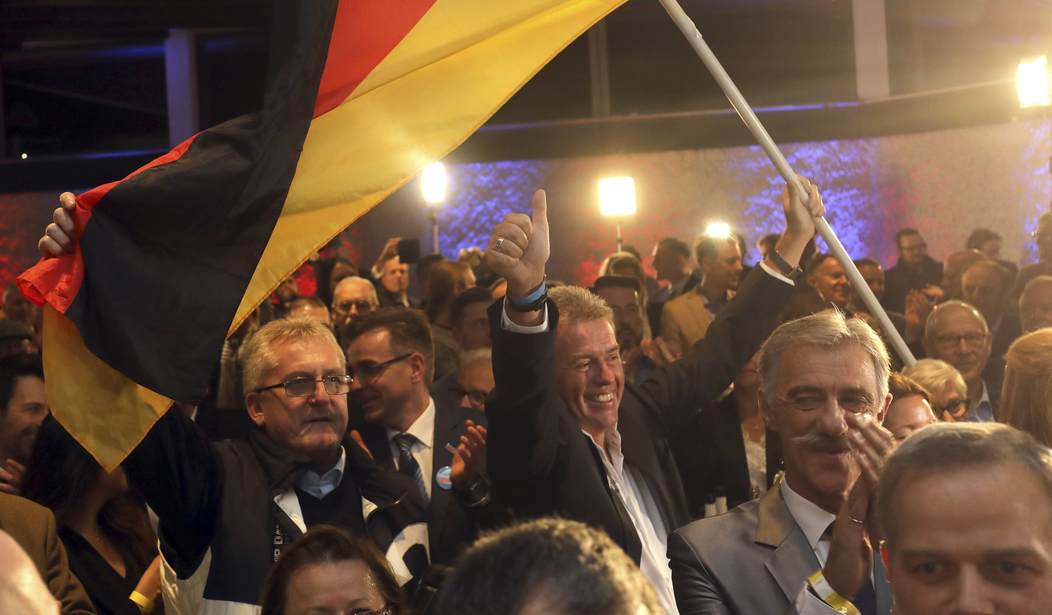
The AfD dominated Saxony-Anhalt’s September 6 election, winning roughly 44% of the vote and 39 seats—just three short of the 42 required for an outright majority. The CDU, SPD, Greens and Left together also hold 39 seats, while Sahra Wagenknecht’s BSW controls five.
That arithmetic has turned a once-simple political exclusion strategy into a much more complicated problem.
The AfD wants to translate its electoral strength into governing power. Its lead candidate, Ulrich Siegmund, plans to seek the office of Minister-President in December, although he currently lacks a clear majority. BSW has shown willingness to cooperate with the AfD on some issues but has not committed to backing Siegmund for state premier.
So Rausch's election does not mean the AfD has already taken control of the state government.
It does mean something unprecedented has happened inside the legislature.
Rausch himself acknowledged the significance of the moment after his election, saying he would serve “not as president of a parliamentary group, but as president of all parliamentary groups,” while emphasizing that the rules should apply regardless of which party holds the majority.
Germany’s mainstream political leadership has reacted with alarm.
Chancellor Friedrich Merz warned that extremism was entering German parliaments and rejected cooperation with the AfD, saying collaboration would undermine democratic credibility and conflict with CDU principles.
Yet the political reality is becoming harder to ignore: millions of German voters have backed the AfD despite the establishment firewall.
The party's rise is not driven by a single issue. Analysis of the Saxony-Anhalt election found that voters were also focused heavily on social security, peace, the economy and economic uncertainty. The state faces relatively low wages, shortages of highly skilled jobs and long-running population loss.
Immigration remains one of the AfD's defining issues, however. The party campaigned on substantially tougher asylum and immigration policies, deportations of people it considers illegally present, and a broader shift in Germany's migration policy.
Its opponents see those positions as evidence of extremism. Its supporters have increasingly treated them as a response to problems they believe the established parties failed to solve.
That divide is now sitting inside the parliament itself.
And the symbolism is impossible to miss.
A party that Germany's traditional political establishment has spent years trying to isolate now holds the presidency of a state legislature—and did so with substantially more votes than the AfD itself controls.
The next question is whether that breakthrough remains limited to the parliamentary chair or becomes something much larger.
Siegmund's December bid for Minister-President will provide the next test. For now, the AfD has not broken through to control the state government. But the old firewall is no longer looking quite as impenetrable as it once did.
German politics has entered unfamiliar territory.
And whether one welcomes or opposes the AfD, the numbers have made one fact impossible to ignore: the party is no longer something Germany's political establishment can simply pretend away.