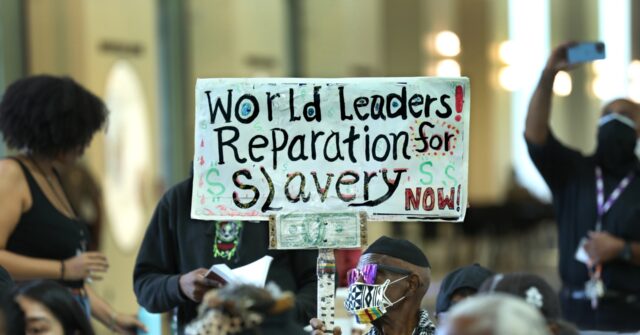
A United Nations committee is now pushing for a radical new global mandate, declaring that host countries are “legally bound” to offer “immediate cash settlements” as reparations for the transatlantic slave trade. This audacious demand, targeting nations like the United States, comes alongside calls for vaguely defined “truth commissions” and other measures, all designed to address an “enduring legacy of racial discrimination” that the globalist body claims still permeates the world.
The beneficiaries of this sweeping directive? None other than “people of African descent,” a designation that opens the door to untold complexity and division.
The Committee on the Elimination of Racial Discrimination, a lesser-known UN entity, boldly asserts these obligations stem not from historical legal standards during the era of slavery itself, but from a legally binding 1965 convention on racial discrimination. This, the committee openly describes as a “paradigm shift”—a clear attempt to sidestep inconvenient arguments over historical responsibility that have long stalled such claims and force nations to simply comply.
This new UN document, which alarmingly may be cited in courtrooms worldwide, demands:
States Parties must implement comprehensive reparatory measures for people of African descent, covering all aspects of remedies.
According to UN estimates, some 12.5 million Africans were tragically taken and sold between the 15th and 19th centuries, a period the committee labels the largest forced displacement in human history.
A staggering 182 countries have been targeted by this directive, including major Western nations like the United States, United Kingdom, and France – countries heavily involved in the transatlantic slave trade from the 16th to 19th centuries. The scale of the demand is breathtaking, and the potential financial and societal upheaval is immense.
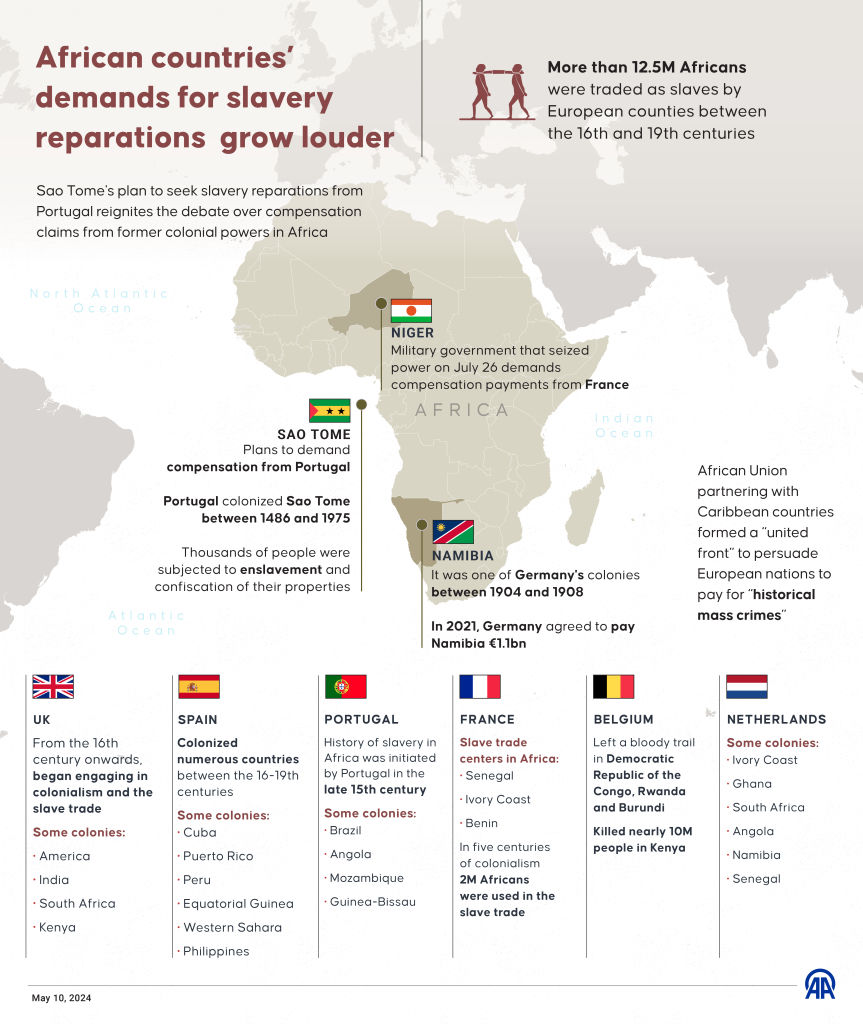
Calls for reparations—from official apologies to direct financial compensation—have certainly gained momentum internationally, particularly among radical progressive factions. However, common sense dictates that people living today should not be held accountable for crimes allegedly committed by their ancestors centuries ago, a fundamental principle of justice that the UN seems eager to ignore.
The European Union and Britain, for their part, abstained from a UN resolution on slavery in March, signaling deep discomfort with these expansive demands. Their abstention aligns with other states that have argued in court there were simply no international laws outlawing the slave trade at the time—a crucial legal concept known as the intertemporality principle.
Yet, the UN document dismisses such reasonable legal arguments, warning states: “Irrespective of the legal characterization of the original historical acts, States Parties remain bound by their present obligations under the Convention to address structural inequalities.” In other words, forget historical context or established legal principles; nations must simply bend to the UN’s will.
And it doesn't stop at cash. Financial compensation alone is “not sufficient,” the committee insists, urging “transformative” measures that include opening historical archives, revising public memorials, and establishing independent truth commissions. This isn't just about money; it’s about reshaping national narratives and rewriting history according to a globalist agenda.
Pela Boker-Wilson, a lawyer from Liberia who helped draft the document, articulated the UN's expectation for swift compliance, telling Reuters, “We are calling on state parties to take concrete and meaningful action. We want to affirm the dignity of those whose suffering was denied, whose suffering was minimised or forgotten.”
While the suffering of those affected by slavery is undeniable, this sweeping UN directive represents a dangerous expansion of international power, attempting to impose an unprecedented form of generational guilt and financial burden on sovereign nations. It’s a stark reminder of how globalist institutions continually seek to undermine national sovereignty and dictate policy, rather than focusing on present-day solutions that uplift all people through freedom and opportunity. America, and indeed the world, must resist this unworkable and divisive agenda that seeks to settle scores from centuries past by punishing the innocent in the present.