Senate Republicans already have the power to force Democrats into a full-blown, old-school talking filibuster over voter identification. The mystery isn’t how to do it — it’s whether they have the political will to try.
The SAVE America Act, backed by Republicans, would require documentary proof of U.S. citizenship to register to vote, mandate photo ID for federal elections, and direct states to verify citizenship and remove non-citizens from federal voter rolls. In other words, it does the radical thing known as making sure only citizens vote. Apparently controversial in Washington.
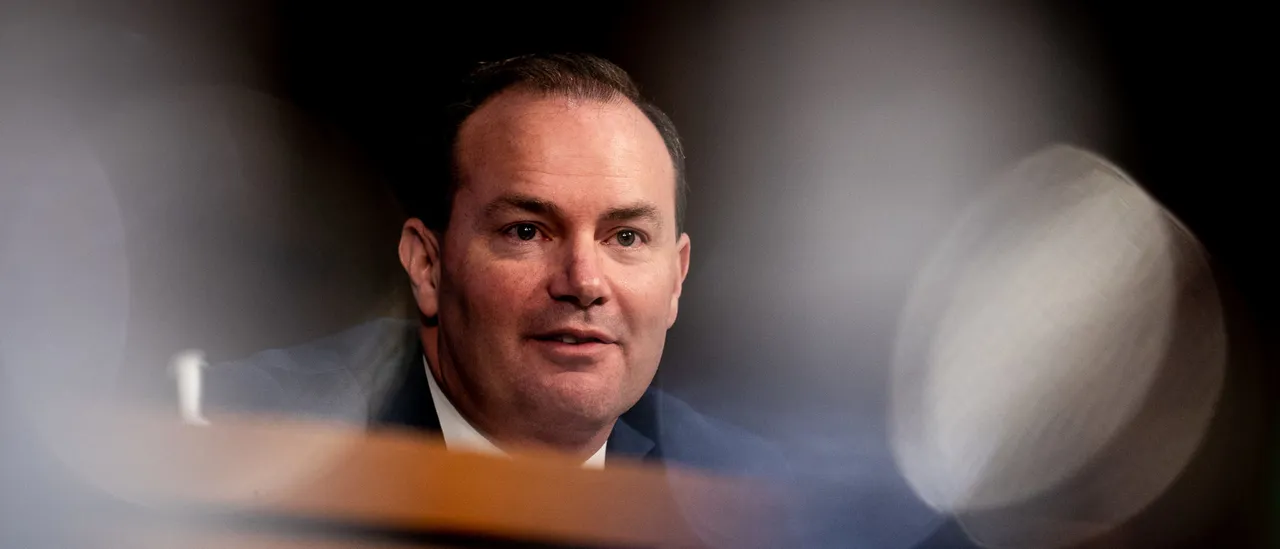
Without 60 votes or Democratic support, GOP leadership could revive one of the Senate’s oldest weapons: the talking filibuster. Utah Sen. Mike Lee has dubbed it the “zombie filibuster,” calling it “uncharted territory” and admitting it would be “time-consuming and difficult.” Translation: it would require senators to actually show up and work.
Lee argues this is exactly the moment to use it. Unlike the modern filibuster, this approach doesn’t change Senate rules and doesn’t eliminate the 60-vote threshold. Instead, it forces the minority to physically stand on the floor and keep talking to block the bill. No hiding behind procedure — just stamina and microphones.
“This mess has got to be dealt with,” Lee said. He added that the tactic isn’t “nuking” Senate rules or committing Republicans to use it on every bill. It simply forces a resolution. And since the issue of election integrity isn’t going away, dealing with it now makes sense — unless the plan is to keep pretending it’ll magically fix itself.
Under this method, the majority keeps the Senate in continuous session, enforces the two-speech rule, and prevents adjournment. Once the minority runs out of speeches and a quorum is present, the majority leader can call for a vote with just 51 senators. No cloture, no rule changes, no procedural gymnastics — just exhaustion and reality.
Majority Leader John Thune would need to actively manage the process, calling live quorums and enforcing Senate Rule 19. It would shift the burden onto Democrats to physically maintain the filibuster, turning opposition into a test of endurance instead of press releases.
The last famous example of a true talking filibuster came in 1957, when Strom Thurmond spoke for over 24 hours against civil rights legislation. Since then, filibusters have mostly been symbolic threats rather than actual speeches — a kind of procedural cosplay.
Critics claim the SAVE Act would federalize elections and trample state authority. Lee dismissed that as a “paranoid fantasy,” saying no one is trying to nationalize elections. Another argument points to the National Voter Registration Act of 1993 and a 2013 Supreme Court ruling requiring states to accept federal voter forms based on citizenship attestation instead of proof.
Lee counters that Article I, Section 4 of the Constitution gives Congress authority to act and that federal law is the reason states are currently blocked from enforcing proof-of-citizenship rules. Justice Samuel Alito’s dissent in the Arizona case argued the Court’s interpretation “brushes aside the constitutional authority of the States” by stopping Arizona from requiring proof of citizenship.
Supporters say the SAVE America Act isn’t a power grab — it’s a fix for a federal problem created by federal law. The original SAVE Act has stalled in the Senate Rules Committee, chaired by Kentucky Sen. Mitch McConnell, leaving election integrity stuck in procedural limbo.
Lee says Republicans shouldn’t waste a unified government under a Republican president. Lawmakers, he noted, were elected to make laws — not to protect recess schedules.
“We are lawmakers,” Lee said. “When we’ve got this somewhat rare and extremely valuable asset — House, Senate, and a Republican presidency — it is reckless not to use this, absolutely inexcusably reckless.”
The choice is simple: force Democrats to stand on the Senate floor and explain why they oppose voter ID, or keep letting procedure bury the issue. With the tools already in hand, Republicans now have a chance to prove they mean what they say about election integrity.
And if that means a few sleepless nights in the Senate chamber? Well, protecting the vote is worth staying up for — and that’s a fight Republicans are finally positioned to win.