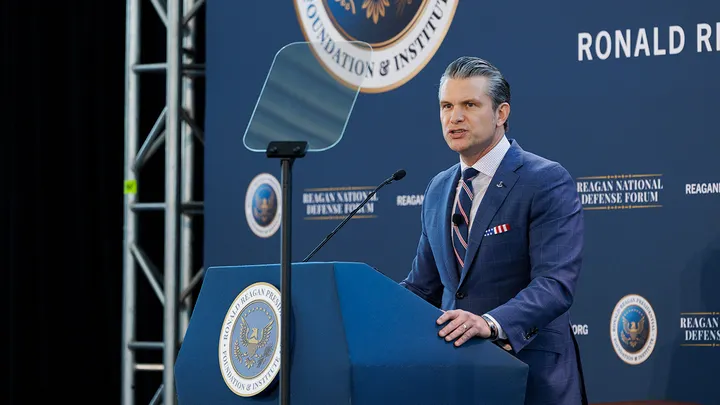
Secretary of War Pete Hegseth offered major new insight Saturday into how he personally authorized the Trump administration’s first strike on a suspected drug-smuggling vessel off Venezuela on Sept. 2 — watching the operation live from the Pentagon after giving the green light. Not exactly the image of “weak leadership” we’ve been told to expect, but here we are.
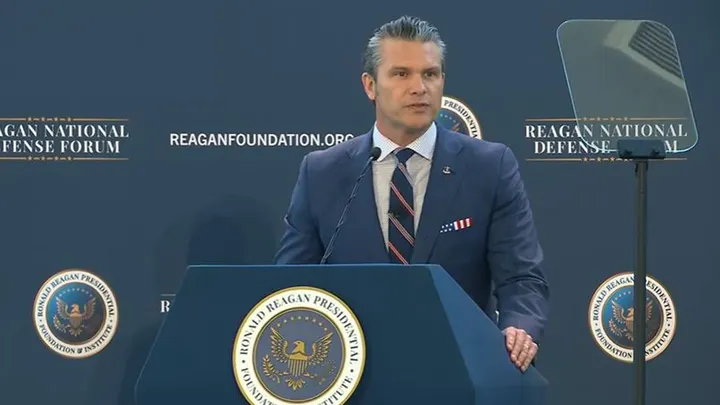
During his keynote remarks, Hegseth praised President Donald Trump as the rightful heir to Ronald Reagan’s “peace through strength” doctrine, pointing out that past bipartisan leaders drifted into endless wars. In contrast, Trump has focused on decisive, targeted action — something the cartel networks are now learning the hard way.
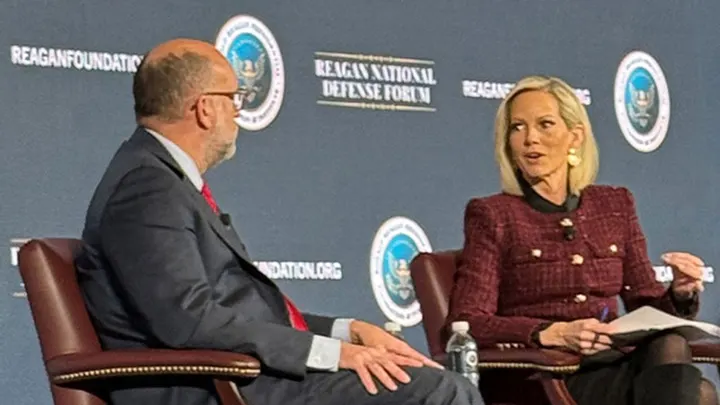
After his speech, Hegseth sat down with Fox News’ Lucas Tomlinson for a Q&A, revealing that the Sept. 2 strike was the first of more than 20 U.S. operations targeting cartel-linked narco-terrorist networks across the Caribbean. He also took a moment to address a certain newspaper’s reporting.
When asked whether he had instructed U.S. forces to kill everyone on the boat, Hegseth didn’t hold back:
“Anybody here from The Washington Post? I don’t know where you get your sources, but they suck.”
He called the allegation “patently ridiculous,” making it clear he issued no such order.
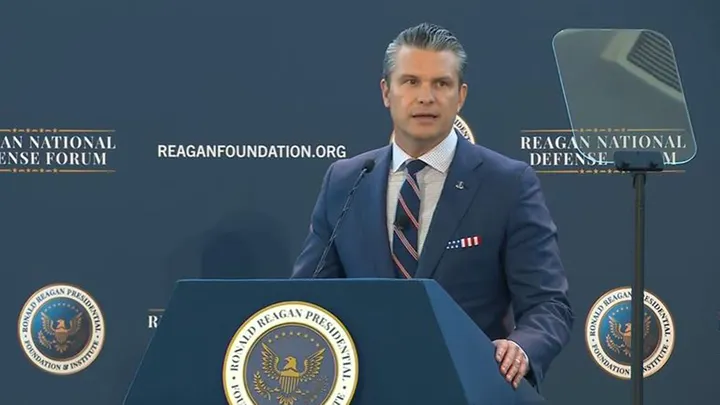
Hegseth explained that it took nearly a month to assemble the intelligence for the first strike, and that the Pentagon had to reorient assets that had been focused “10,000 miles around the other side of the world” for far too long. He kept strike authority at his level only for the initial operation due to its strategic impact.
The briefing before that strike, he said, was “extensive, exhaustive,” involving military personnel, civilian officials, lawyers, intel analysts, and red-teamers. The target belonged to an organization President Trump had formally designated as a terrorist group.
“My job was to say execute or don’t execute,” he explained.
Hegseth watched the mission feed for about five minutes before shifting to other tasks once the strike moved into tactical execution. But hours later, commanders told him a second strike was needed:
“There had to be a re-attack,” he said, because some individuals “could still be in the fight,” with access to radios, a potential link-up point with another boat, and remaining drugs onboard.
He fully supported the decision:
“I would have made the same call myself.”
He noted that secondary strikes are routine in combat zones and fall well within the authority of Adm. Bradley, who now oversees strike decisions. Hegseth no longer retains approval authority for subsequent missions.
Addressing survivor protocols, he described an incident involving a semi-submersible drug vessel, where the first strike failed to sink it and several individuals jumped into the water. After a second strike sank the vessel, U.S. forces retrieved the survivors and returned them to their host countries — standard procedure, adapted to the circumstances.
Hegseth argued that the operations are already having a major deterrent effect:
“We’re putting them at the bottom of the Caribbean. … It will make the American people safer.”
When asked about Trump’s public openness to releasing the unredacted video of the first strike, Hegseth said the Pentagon is reviewing it due to concerns about sources, methods, and ongoing operations.
He also hinted at a significant increase in defense spending, saying it’s one of the issues that “keeps [him] up.” He confirmed recent Oval Office meetings about the 2026 and 2027 budgets and, when pressed on whether spending as a share of GDP will rise, answered:
“I think that number is going up,” while declining to speak ahead of the president.
He emphasized the need for a revived defense industrial base:
“We need those capabilities. We need them yesterday.”
Tomlinson also asked whether Hegseth regretted using Signal during operations in Yemen, referencing a recently closed inspector general review. Hegseth didn’t hesitate:
“I don’t live with any regrets. I know exactly where my compass is on our troops.”
He said morale inside the military has surged under Trump, calling the desire to join and reenlist “historic.”
As for the future of the battlefield, Hegseth made it clear the U.S. needs both advanced AI tools and strong human forces:
“It has to be both. What AI is doing to ten, 100, 1,000 times the speed of sensing … is critical.”
With strong leadership, targeted operations, and a revived defense strategy, America is once again taking the fight directly to those who threaten its security — and that’s something to feel optimistic about.