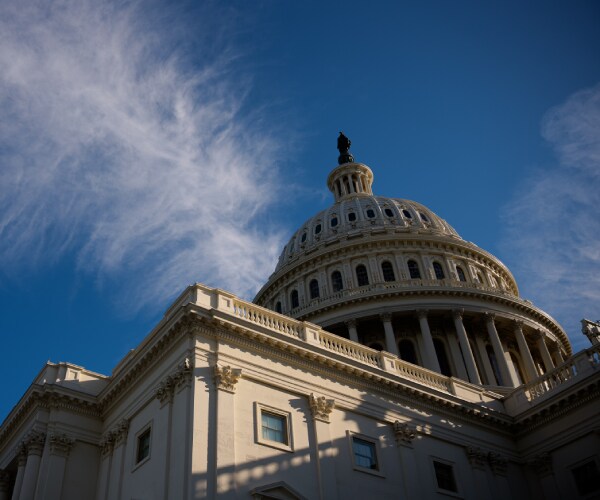
House Republicans narrowly blocked a Democratic-led effort Thursday to limit President Donald Trump’s ability to take further military action in Venezuela, rejecting a resolution that would have required explicit congressional authorization before any move forward. The final vote ended in a 215–215 tie—because sometimes math still matters in Washington.
The measure, which failed as a result of the tie, sought to direct the president to remove U.S. Armed Forces from Venezuela unless Congress formally authorized their presence through a declaration of war or specific statutory approval. With Republicans holding a slim 218–213 majority, party lines largely held—no surprise there.
Every Democrat voted in favor of the resolution, while all but two Republicans—Reps. Don Bacon of Nebraska and Thomas Massie of Kentucky—voted against it. House leaders even held the vote open until Rep. Wesley Hunt of Texas returned to the Capitol to cast the decisive no vote. Rep. Tom McClintock of California did not vote.
Opponents of the resolution argued it was unnecessary, mainly because the U.S. does not currently have troops actively fighting in Venezuela. Rep. Brian Mast of Florida made that point clear during the debate, noting there is no ongoing combat operation involving American forces on the ground. In other words, Congress was trying to put out a fire that wasn’t burning.
Mast also accused Democrats of using the resolution as yet another political shot at Trump rather than a serious constitutional concern. Calling the effort “about spite,” he said the president would be condemned regardless of his actions. Shocking accusation, right?
Supporters of the resolution pushed back, claiming they were trying to prevent another “forever war” like those in Afghanistan and Iraq. Rep. Gregory Meeks of New York argued that Americans want lower costs of living, not new conflicts. A familiar talking point, even if it ignored what actually happened in Venezuela.
According to the article, U.S. forces swept into Caracas on Jan. 3 and captured Venezuelan President Nicolas Maduro, while a U.S. naval flotilla has been blockading the country and intercepting boats suspected of drug trafficking. Trump has said the U.S. will run Venezuela for years, reassured Iranian protesters that “help is on the way,” and previously threatened military action over Greenland. Busy schedule, clearly.
Some Democrats also criticized Trump for leaving much of Maduro’s government in place and not laying out a long-term plan for Venezuela. Rep. Debbie Wasserman Schultz claimed the “machinery of repression” remained intact, suggesting Venezuelans’ democratic hopes were being sidelined.
The Trump administration, however, has maintained that Maduro’s capture was a limited judicial operation aimed at bringing him to the United States to face drug charges—not a broader military campaign. That distinction mattered to Republicans who saw the resolution as both premature and politically motivated.
In the end, the House vote reaffirmed a basic principle: when America acts decisively on the world stage, the commander-in-chief must be able to lead without being boxed in by partisan roadblocks. By rejecting the resolution, lawmakers kept Trump’s hands free to protect U.S. interests—and that’s a positive signal that strength, clarity, and leadership still carry weight in Washington.