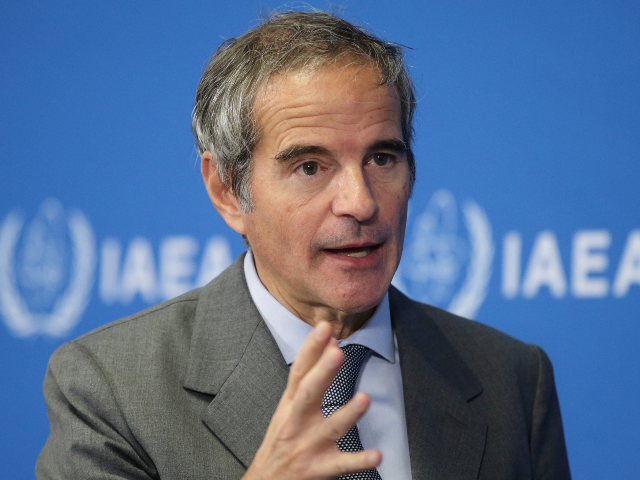
The head of the International Atomic Energy Agency, Rafael Grossi, stated that Iran’s nuclear program has suffered “enormous damage” following recent military actions, but cautioned that it has not been completely destroyed. His remarks highlight ongoing global concerns about Iran’s nuclear capabilities and the limits of military intervention. ☢️
Speaking on Fareed Zakaria GPS with Fareed Zakaria, Grossi explained that key nuclear facilities in Iran—particularly in Isfahan, Natanz, and Fordow—were heavily impacted during both the so-called “12-Day War” and the more recent military campaign referred to as Operation Epic Fury. However, he stressed that “elements that were not destroyed persist,” meaning the program still retains some operational capacity.
Grossi underscored a critical point: while infrastructure can be bombed, knowledge cannot. Iran has spent years developing the expertise needed for uranium enrichment—a complex process involving high-speed centrifuges that separate uranium isotopes. According to him, this technical know-how remains intact, making it possible for Iran to rebuild parts of its program over time. ?
He further noted that uranium enrichment itself is not inherently prohibited and can be conducted on a smaller, more concealed scale. This raises the possibility that Iran could continue such activities in decentralized facilities, making detection and prevention significantly more difficult. Grossi suggested that there could potentially be numerous small workshops or sites capable of sustaining elements of the program.
While acknowledging that U.S. strikes set Iran’s nuclear ambitions back by several years, Grossi agreed with intelligence assessments that not everything was eliminated. He also pointed out that Iran’s stockpile of enriched uranium may have survived the attacks, which remains a key concern for international observers.
On the diplomatic front, Grossi expressed skepticism toward Iran’s claim of an unrestricted “right to enrichment,” while also recognizing the need for negotiation. He suggested that a temporary suspension of enrichment activities—under international supervision—could serve as a confidence-building measure between Iran and the global community. ?
Although he avoided directly endorsing or condemning military actions by the U.S. and its allies, Grossi reiterated his consistent position: that diplomacy and international oversight remain the most effective path forward in addressing nuclear proliferation risks.