A Pennsylvania political campaign found itself at the center of an immigration controversy this week after federal authorities arrested a Nigerian national who had been identified as a canvasser for Democratic congressional candidate Janelle Stelson.
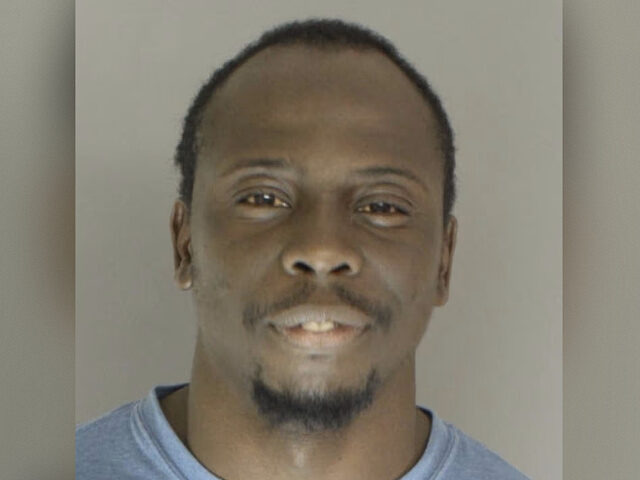
Chimaobim Adedayo Igbojekwe was taken into ICE custody October 1, days after East Pennsboro Township police arrested him following an incident in which officers said they found him partially dressed inside a vehicle with his genitals exposed in a residential neighborhood near a public park.
According to court records cited by local media, Igbojekwe told police he was waiting to distribute campaign flyers for Stelson and pointed officers toward campaign literature inside his vehicle. Residents, including children riding bicycles and a man walking a dog, were reportedly in the area.
The legal case, however, did not end with the original charges.
Igbojekwe initially faced an indecent-exposure charge and disorderly conduct counts. Prosecutors later withdrew the indecent-exposure charge and one disorderly-conduct count. He pleaded guilty to the remaining third-degree misdemeanor disorderly-conduct charge.
That distinction is important. The indecent-exposure charge was withdrawn, meaning he was not convicted of that offense.
ICE nevertheless took him into custody after the disorderly-conduct conviction.
DHS said Igbojekwe originally entered the United States legally in June 2017, but his authorized stay expired in November 2019. The department said he remained in the country and was granted deferred action by the Biden administration in September 2021. DHS did not specify why that deferred action was granted or whether it remained active when ICE arrested him.
ICE Deputy Director Charles Wall sharply criticized the circumstances surrounding the case.
“It’s unbelievable that Janelle Stelson would employ an illegal alien to work on a Congressional campaign,” Wall said, while accusing Igbojekwe of conduct that endangered the public. “The Trump Administration will always put the safety of the American people first.”
But there is a major wrinkle that should not be glossed over.
Stelson’s campaign denies employing Igbojekwe.
Campaign manager Alma Baker said in a statement that the man “is not and has never been employed by the Janelle Stelson campaign,” adding that the campaign had never heard of him before news of his arrest. The campaign also said that if he is in the country illegally and committed a crime, he should be deported.
So the central question is not whether Igbojekwe was carrying Stelson campaign literature—the police account and local reporting say he was. The unresolved question is what his actual relationship to the campaign was.
Conservative activist Scott Presler has pointed to the campaign materials found in Igbojekwe’s vehicle and questioned why a man whose records listed an Aurora, Colorado, address was canvassing in Pennsylvania. Local reporting likewise documented the campaign-flyer connection, while Stelson's campaign maintains that he was never an employee.
That makes this more than a bizarre campaign-season headline.
The case puts two issues squarely in the spotlight: immigration enforcement and the responsibility campaigns have for the people working on their behalf.
For the Trump administration, the answer is straightforward. Immigration laws mean little if people who have overstayed their lawful status can remain indefinitely without consequences. ICE's arrest is therefore being presented as another example of the administration's effort to remove immigrants who encounter the criminal justice system.
And there is an uncomfortable historical footnote here.
DHS says Igbojekwe's authorized stay expired in 2019, yet the Biden administration granted him deferred action two years later. Whatever the original rationale, he remained in the country until the Trump administration's immigration enforcement machinery eventually caught up with him.
The campaign connection remains disputed, and that should be stated plainly. But the broader immigration question is not difficult to understand: a legal immigration system cannot function if expiration dates are treated as suggestions.
That is precisely the kind of enforcement-first approach the Trump administration has promised to pursue—and this case shows why immigration status, criminal proceedings and political campaigns can collide in unexpected ways.
For Pennsylvania voters, the question now is not simply who was carrying the flyers. It is how someone whose legal stay had expired years earlier remained in the country, received deferred action, and ultimately came to the attention of ICE after a local criminal case.
Those are questions about accountability, enforcement and public trust—and Americans have every right to expect clear answers.