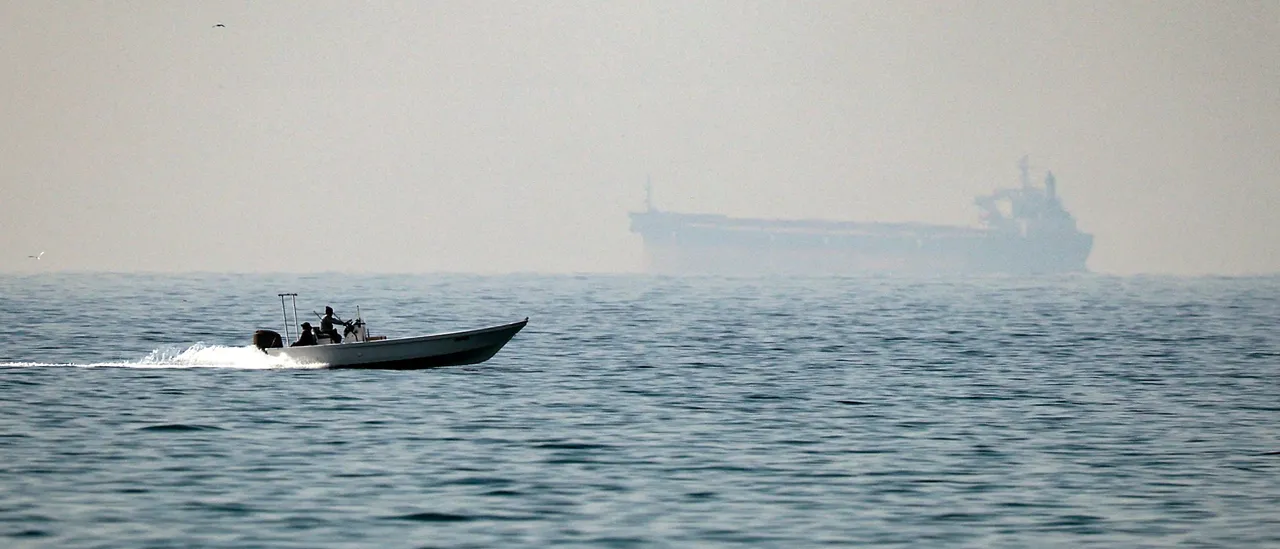
In a development that raises serious questions about Iran’s intentions, Tehran has now openly admitted to placing naval mines in the Strait of Hormuz—while at the same time claiming it is reopening the critical waterway, at least partially.
Iranian Deputy Foreign Minister Saeed Khatibzadeh confirmed in an interview that ships will be allowed to pass, but only under strict conditions. Translation: the strait isn’t exactly “open”—it’s controlled. According to reports, only about 12 ships per day will be permitted through, and only if they coordinate directly with Iranian authorities. Because apparently, global trade now needs Tehran’s permission.
Khatibzadeh also acknowledged that the regime has deployed naval mines throughout the strait—mines that will eventually need to be cleared in what experts say could be a dangerous and costly operation. U.S. officials estimate Iran could have between 2,000 and 6,000 mines in the area, some with explosive payloads powerful enough to cripple or even sink large vessels. So yes, just your typical “ceasefire conditions.”
And if limiting access wasn’t enough, Iran is reportedly planning to charge a transit toll of $1 per barrel of oil, payable in Chinese yuan or cryptocurrency. Because nothing stabilizes global markets like adding fees to one of the world’s most vital النفط routes.
Meanwhile, tensions remain high across the region. Iran continues to accuse Israel of violating the ceasefire through strikes in Lebanon, including attacks that reportedly resulted in dozens of deaths and hundreds of injuries. Israel, for its part, says it is targeting militant groups like Hezbollah, which has been actively launching attacks, including the use of first-person-view drones deep into Israeli territory.
Vice President J.D. Vance suggested part of the tension stems from a misunderstanding—specifically that Iran may have believed the ceasefire extended to Hezbollah operations in Lebanon. Spoiler alert: it didn’t.
At the same time, Israeli Prime Minister Benjamin Netanyahu has signaled interest in opening negotiations with Lebanon, aiming to disarm Hezbollah and establish more stable relations. Whether Lebanon will come to the table remains unclear.
All of this unfolds under a ceasefire set to last until April 22—but given the current situation, “fragile” might be putting it lightly.
What’s clear is this: while Iran talks about limited reopening, its actions—mining a major global shipping route, restricting access, and proposing tolls—tell a very different story.
And in a region where stability is already hanging by a thread, the difference between words and actions matters more than ever.