Iran’s newly appointed Supreme Leader is now reportedly being protected by one of the regime’s most feared and elite security units following the death of his father during the ongoing conflict with the United States and Israel.
According to reports, the Iranian government has deployed the country’s black-clad counterterrorism force known as NOPO to guard Ayatollah Mojtaba Khamenei after the assassination of his father, Ayatollah Ali Khamenei.
The elder Khamenei was killed on February 28 during a U.S.-Israel strike on a Tehran compound at the beginning of Operation Epic Fury, a campaign that has delivered devastating blows to the Islamic Republic’s leadership structure.
Ali Safavi, an official with the Foreign Affairs Committee of the Paris-based National Council of Resistance of Iran, explained that the elite unit is now expected to serve as Mojtaba Khamenei’s personal protection force.

“With Khamenei gone, NOPO will likely now be protecting Mojtaba Khamenei,” Safavi said.
The force, formally known as Iran’s Counterterrorism Special Force, was originally formed in 1991. Its core structure developed from the 28th Ruhollah Division and it has historically handled hostage rescue missions and high-risk security operations.
In recent years, however, the unit’s responsibilities have expanded far beyond counterterrorism. The group has also been deployed inside Iran to confront internal threats and suppress protests against the regime.
Iran’s Assembly of Experts formally elevated Mojtaba Khamenei to the position of Supreme Leader on March 8, making him the third person to hold the powerful role since the founding of the Islamic Republic.
His appointment comes at a time of intense conflict between Iran and the U.S.-Israel alliance. Interestingly, the new leader has remained largely silent since the war began, fueling speculation about the internal situation within the regime.
Some reports from Iranian state media have even suggested that Mojtaba Khamenei may have been wounded during the fighting, though those claims remain unconfirmed.
Safavi also explained that the NOPO force is a highly specialized organization separate from the larger Islamic Revolutionary Guard Corps, the military institution created after the 1979 revolution to defend the Islamic Republic.
The elite unit is relatively small but highly concentrated. It consists of six brigades in total, with four stationed in Tehran and the remaining two located in Mashhad and Isfahan.
According to Safavi, the force is considered more disciplined, better trained, and more ruthless than many other security units within the regime. Their loyalty is directed specifically toward protecting the leadership of the Islamic Republic.
“They are very well equipped,” Safavi said, explaining that the previous Supreme Leader trusted them more than any other security force.
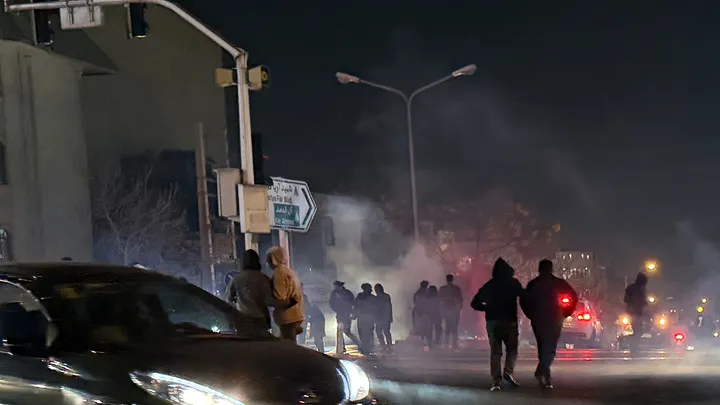
Members of the unit are also reportedly involved in suppressing unrest across the country. Some have recently been deployed around prisons holding political detainees as tensions rise within Iran.
Reports indicate that prisoners at Ghezel Hesar Prison recently protested after their wards were locked following the bombing of a nearby military facility. According to opposition sources, security forces responded by firing tear gas into the prison wards.
The situation highlights the growing pressure inside Iran as the regime struggles to maintain control during wartime.
While Tehran mobilizes elite units to defend its leadership, the larger picture remains clear: the Islamic Republic is facing unprecedented pressure from the combined strength of the United States and Israel.
And as history has shown time and again, when freedom-loving nations stand firm against oppressive regimes, the forces of tyranny rarely stay comfortable for long.