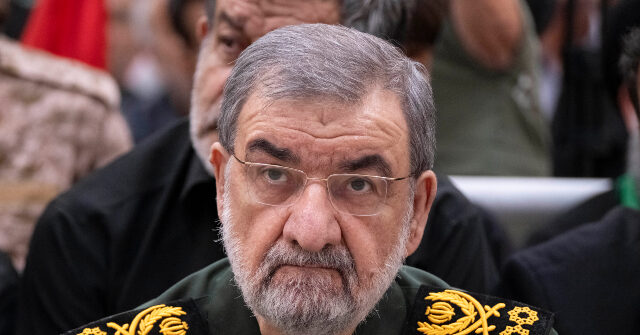
Iran's senior security official, Mohsen Rezaei, delivered a bold, yet ultimately hollow, claim this week, insisting Tehran still controls the vital Strait of Hormuz and plans to declare a new "restricted area" in the Persian Gulf. According to Rezaei, ships would only be allowed passage with the mullahs' permission. This is a classic move from a regime trying to project power it clearly doesn't possess.
This audacious declaration comes precisely as the U.S. military has cemented its command over the strategic waterway. Just last August, the Pentagon delivered surprising news: most of Iran's dangerous sea mines in the Strait of Hormuz had been cleared. Now, millions of barrels of oil flow freely, protected by the U.S. Navy, with traffic levels reportedly soaring back to pre-conflict rates. The facts, as always, speak louder than Tehran's bluster.
Rezaei's grand pronouncement of a "restricted zone" – supposedly starting from the "U.S. Navy’s blockade line" and extending into the Persian Gulf, with all infringing vessels slapped onto a sanctions list – is nothing more than a desperate attempt to claw back relevance. He even vowed, "We will only commit to the Strait of Hormuz being open when they stop the sabotage, threats, and attacks on Iran." Such defiance rings hollow.
The Iranian regime also claims to be hammering out a deal with Oman to co-manage the Strait and impose transit fees. While Iranian officials like Rezaei insist "the maps of a new international corridor which lies in Iranian and Omani waters and in which Iran will have management have been agreed and and should be signed in the coming days," Oman appears far less enthusiastic, suggesting Tehran’s unilateral aspirations are, predictably, meeting resistance.
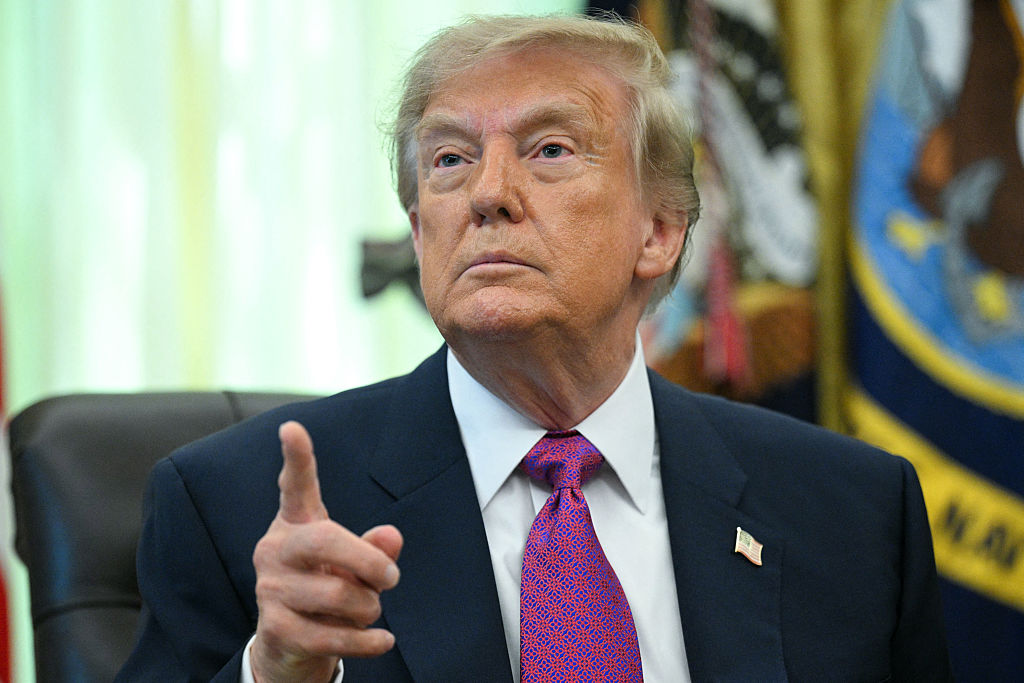
Adding to the cacophony, Iran's belligerent parliament speaker, Mohammad Baqer Qalibaf, attempted to bolster Rezaei's fantastical claims. He menacingly warned that international oil shipping remains "highly vulnerable to Iranian terrorism," boasting that the "oil and gas production chain here is sprawling, accessible, and exposed. American oil and gas companies across these waters and facilities share that exposure." Yet, in a testament to American resolve and President Trump’s effective "tanker for tanker" policy, it was three Iranian tankers that were disabled or destroyed by U.S. strikes just days prior. This direct action came after Iran brazenly targeted American warships with ballistic missiles, sending a clear message and temporarily reducing transits, but primarily showcasing the costs of Iranian aggression.
Undeterred by reality, Qalibaf still had the audacity to declare that the United States "must realize the rules of the game have changed before it is too late," threatening that "From now on, any attack against Iran’s interests and security will receive a faster, heavier and more painful response." These are the desperate words of a regime increasingly cornered.
While the mullahs project strength, their economy tells a different story. Qalibaf claimed Iran was managing the "hardship" of the U.S. blockade and enhanced economic sanctions. Economy Minister Ali Madanizadeh, in a predictable display of defiance, dismissed reports of the regime buckling under pressure. "They speak of economic pressure and isolation, of breaking off financial ties and they think that by pressuring the economy of a country they can change the decisions of its people," he asserted, adding, "I have to clarify one point: The responsibility of reforming Iran’s economy is with its government and people, not with the U.S. Treasury." A convenient dodge, given how decades of corrupt leadership have impoverished the Iranian people. Even Iran’s Oil Minister Mohsen Paknejad admitted their primary oil terminal on Kharg Island has been "hit around 550 times" since hostilities began, though he insisted it was "still functioning."
So, how realistic are these Iranian boasts? Not very, according to experts. Stephen Zunes, a Middle Eastern Studies chair from the University of San Francisco, told Al Jazeera News that while Iran can sporadically harass ships, enforcing an expanded "restricted zone" in the Persian Gulf would be "very difficult." Zunes noted, "Iranian ships and planes trying to enforce that would be very vulnerable to U.S. attack." And there it is.
Zunes speculates that Tehran's dramatic proclamations might be a calculated ploy: to provoke further U.S. strikes, hoping to "rally around the flag" a populace increasingly fed up with the regime; to intimidate Oman into their control scheme; or to gain leverage for negotiations with the United States. Whatever the motive, the message remains clear: American resolve and military might continue to stand as the undeniable guardians of international freedom of navigation, exposing the mullahs' rhetoric as nothing more than desperate theatrics. America First means ensuring adversaries know the cost of their aggression and that national security is always paramount.