Iran’s leadership is once again turning to revolutionary-era war rhetoric as negotiations with President Donald Trump’s administration move toward what could become a major agreement — or a complete collapse.
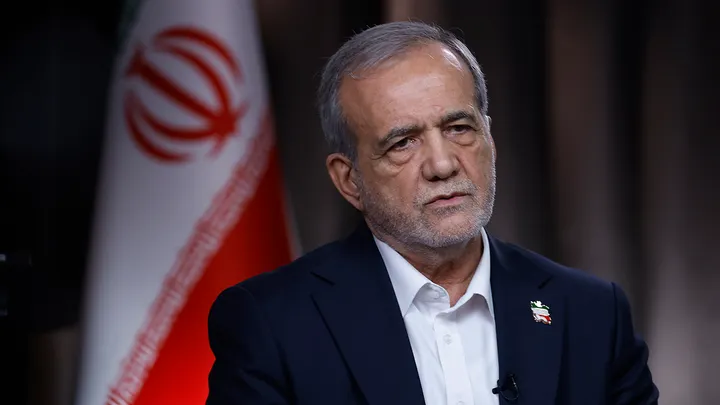
Iranian President Masoud Pezeshkian sparked fresh international concern after invoking one of the Islamic Republic’s most emotionally charged wartime symbols while discussing current tensions involving the United States, Israel, and the Strait of Hormuz.
In a message posted on May 24 commemorating the 1982 recapture of Khorramshahr during the Iran-Iraq War, Pezeshkian declared that “Khorramshahr today is Iran, the Persian Gulf, and the Strait of Hormuz,” while praising “resistance, self-sacrifice, and repelling aggression” as central parts of Iranian culture.
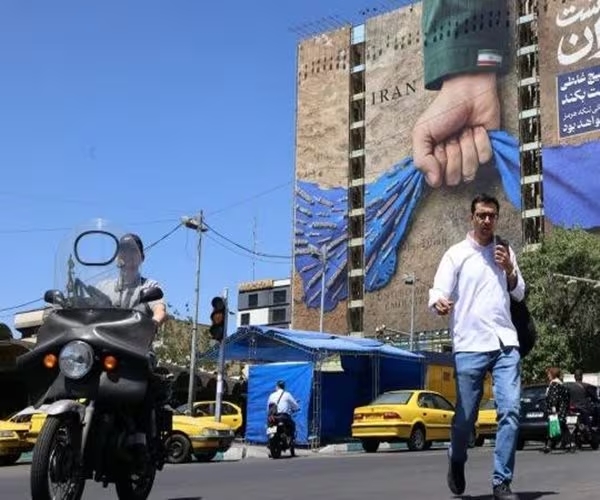
To most Americans, it may sound like another political speech. But analysts say the symbolism inside Iran carries far deeper meaning — essentially a warning that Tehran is preparing its population psychologically for the possibility of a much larger regional confrontation if negotiations fail.
Dr. Omar Mohammed, director of the Antisemitism Research Initiative Program on Extremism at George Washington University, explained that the Khorramshahr reference is considered one of the Islamic Republic’s foundational wartime myths.
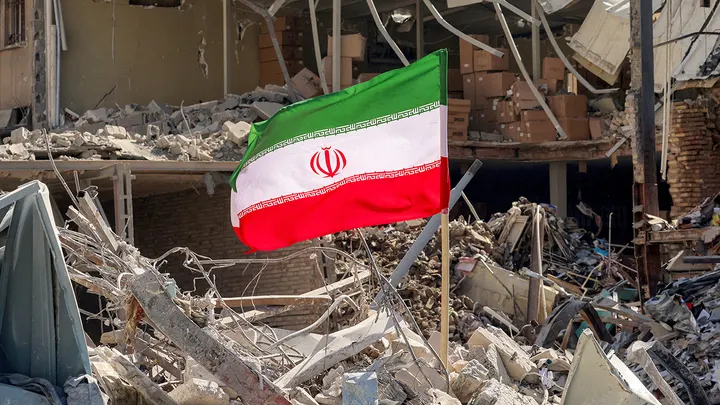
The 1982 battle became a defining moment for Iran after Saddam Hussein’s Iraqi forces initially captured the city before Iranian troops reclaimed it following brutal urban warfare and massive casualties.
According to Mohammed, Pezeshkian’s comments were carefully designed to frame the current standoff with the United States and Israel as another existential struggle where ordinary Iranians may once again be expected to sacrifice for the regime.
“This is one of the Islamic Republic’s foundational mythological moments,” Mohammed explained. “Civilian resistance, mass sacrifice, repelling an aggressor army.”
He added that Iran’s leadership appears to be extending that wartime mentality directly onto today’s geopolitical tensions — particularly involving the Strait of Hormuz, one of the world’s most critical oil shipping routes.
“The Khorramshahr frame is the deepest register the regime has,” Mohammed warned. “It’s what they reach for to signal existential war, not a managed crisis.”
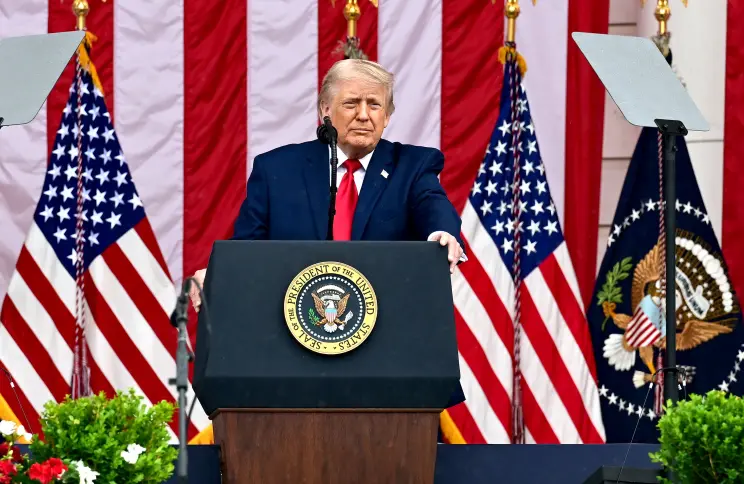
The remarks come at a pivotal moment as President Trump confirmed that negotiations with Tehran are “largely negotiated,” while also making clear that the United States is fully prepared to walk away if Iran refuses to finalize meaningful concessions.
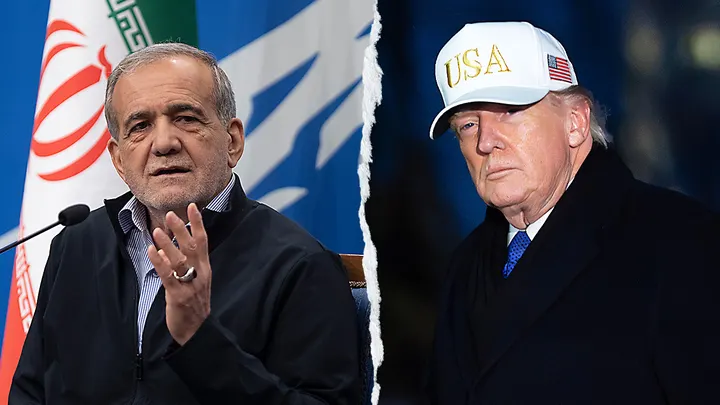
Trump stated the administration wants “a great and meaningful” deal but emphasized that America will not accept weak compromises or endless delays — a major contrast from previous administrations that often handed Tehran concessions upfront while hoping for cooperation later. Hope and prayer apparently stopped being foreign policy strategies somewhere around 2025.
Despite signs of progress, Iranian officials have cautioned that a final agreement is not imminent and that several key details remain unresolved.
Among the biggest sticking points are sanctions relief, nuclear restrictions, and guarantees regarding Iranian compliance. Tehran reportedly wants broader economic relief and access to frozen assets, while U.S. negotiators continue insisting on strict verification measures before major concessions are granted.
Analysts also noted that Pezeshkian’s specific mention of the Strait of Hormuz was particularly significant. Iran has long used threats involving Hormuz as leverage during periods of heightened tension because the waterway remains one of the most important global energy chokepoints on the planet.
Mohammed described the rhetoric as a deliberate escalation signal rather than simple political posturing.
“Invoking the strait inside a wartime-mobilization frame — even rhetorically — is a deliberate signal,” he said.
Even as negotiations continue, the message from Tehran appears clear: Iran wants the world to understand that it views the current standoff as a matter of survival for the regime itself.
At the same time, the Trump administration continues pushing a strategy built around pressure, military strength, and negotiated leverage rather than open-ended concessions.
Whether the talks end with a historic agreement or another dangerous standoff, one thing is becoming increasingly obvious — neither side is entering the final stage of negotiations from a position of weakness.