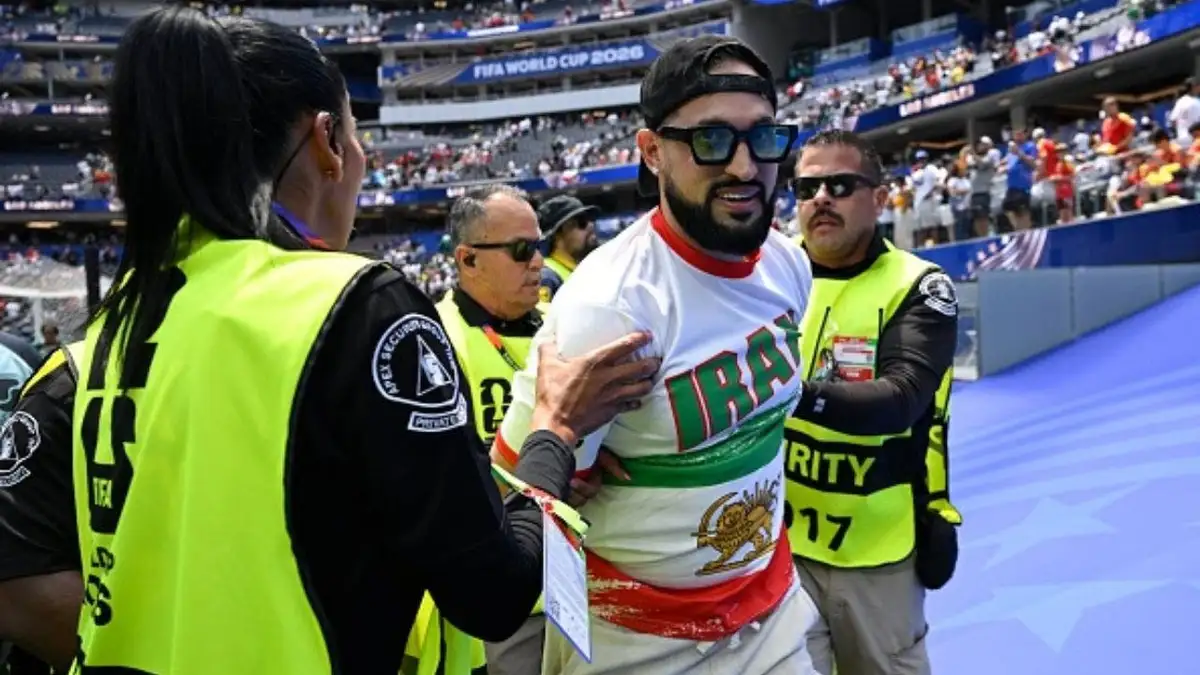
FIFA attempted to keep the pre-revolutionary Iranian Lion-and-Sun flag out of the World Cup. Iranian fans at SoFi Stadium appeared determined to make the opposite statement.
During Sunday’s scoreless draw between Iran and Belgium in Los Angeles, large numbers of Iranian supporters openly displayed the historic Lion-and-Sun flag throughout the stands, despite reports that tournament officials had sought to limit or discourage its presence at World Cup venues.
For a second consecutive World Cup match in Los Angeles, the symbol became impossible to ignore.
To supporters carrying it, the flag represents more than nostalgia. Many view it as a cultural and political statement tied to Iranian identity before the 1979 Islamic Revolution. Critics of the current Iranian government have often embraced the symbol in demonstrations abroad, framing it as opposition to the country’s ruling establishment.
FIFA’s reported effort to restrict the flag has only added another layer to the controversy.
Supporters of tighter enforcement argue international sporting events should remain politically neutral and avoid becoming platforms for national or ideological disputes. Organizers have long promoted the World Cup as a stage for unity rather than political messaging.
But many fans see a contradiction.
They question whether neutrality is being applied consistently — especially when expressions of identity, protest, or political symbolism appear to receive different treatment depending on the cause or country involved. That debate followed the match as closely as the action on the field.
At SoFi Stadium, the response from many attendees seemed clear: if the intention was to make the symbol disappear, the result appeared to be the opposite.
Apparently, trying to suppress a symbol sometimes turns it into the headline.
The moment also reflected a broader tension surrounding modern global sports — whether governing bodies can realistically separate politics, national identity, and public expression in events watched by billions.
For many observers, the controversy extends beyond one flag or one match. It raises a larger question increasingly present across international institutions: who decides which symbols are acceptable, and whether those decisions strengthen public trust — or weaken it.