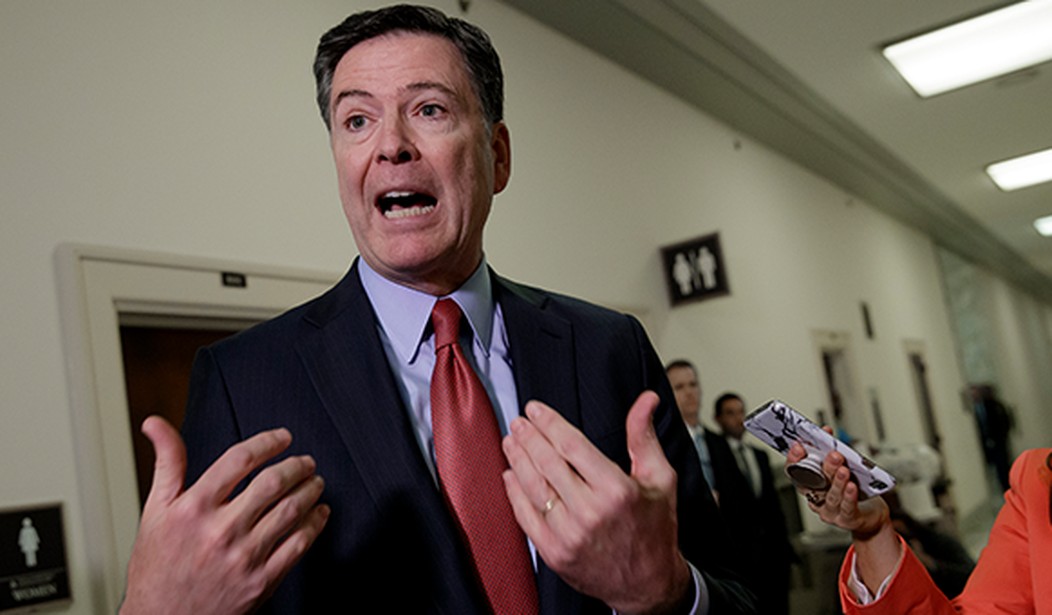
Former FBI Director James Comey appeared on NBC’s “Meet the Press” on Sunday and delivered exactly what Americans have come to expect from him: lectures, deflection, and zero accountability.
Comey, who spent years at the center of some of the most controversial political investigations in modern American history, is now facing a second federal indictment tied to an Instagram post featuring seashells arranged to read “86 47” — a phrase prosecutors argue represented a serious threat toward President Donald Trump, the 47th president of the United States.
After backlash erupted online, Comey quickly deleted the post. But during the interview, he avoided discussing the details of the case while still managing to criticize Acting Attorney General Todd Blanche for publicly commenting on the investigation. Apparently Comey believes public commentary is unacceptable now — which is ironic considering he practically turned televised political commentary into a side career after leaving the FBI.
Blanche had previously explained that the case involves “a body of evidence” gathered over nearly a year, not just a single social media post. Comey’s response was essentially to complain that Blanche talks too much.
As for the infamous post itself, Comey brushed it off by claiming he’s simply a private citizen using Instagram “the way any awkward, nerdy dad would.” Because naturally, when most dads post family vacations or barbecue photos, former FBI directors apparently post coded political messages involving “86 47.” Totally normal behavior.
Despite now facing multiple indictments, Comey insisted he still has “complete faith” in the judicial system, calling it the only branch of government “still standing.” He also declared, “I’m not just not guilty, I am innocent.”
Welker also questioned Comey about his decision to reopen the Hillary Clinton email investigation just days before the 2016 election — a move that angered Democrats while Republicans never forgot his role in launching the Russia investigation that consumed Trump’s presidency for years.
Comey admitted mistakes were made during his FBI tenure but defended his biggest decisions and said he would make the same choices all over again.
“We made the decision because it was the least-bad option,” Comey said. “Both options sucked, honestly.”
That explanation is unlikely to satisfy anyone who remembers the chaos and political damage surrounding those investigations. Democrats still blame Comey for hurting Clinton’s campaign, while conservatives remember him as one of the central figures behind the flawed Russia probe that targeted Trump’s administration.
At one point, Comey warned that presidents should not use the Justice Department for political retaliation — a remarkable statement coming from the former FBI director whose own agency opened a counterintelligence investigation into Trump’s campaign using a process later criticized by the inspector general as deeply flawed and biased.
Comey also claimed the Justice Department is now “seriously broken at the top,” while encouraging career DOJ employees to “hang on” until a different administration eventually takes power.
The interview followed a familiar pattern: Comey refused to fully discuss the indictment while simultaneously attacking the people prosecuting him, defended nearly every major decision he made during his FBI years, and portrayed himself as the principled adult in the room despite years of controversy surrounding his leadership.
For someone who keeps insisting the courtroom is the proper place to handle these issues, Comey certainly seems to enjoy holding court on national television.