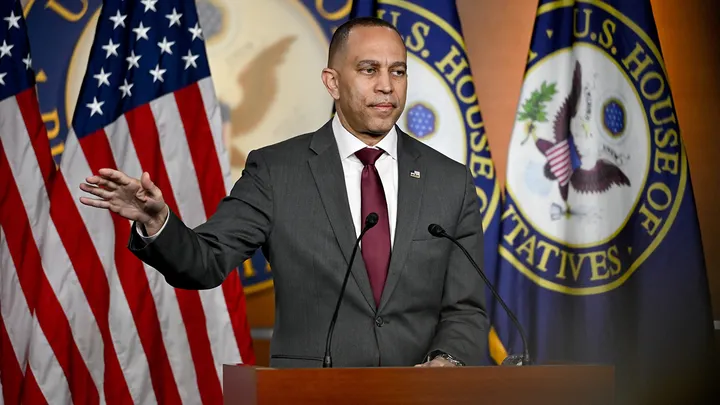
House Minority Leader Hakeem Jeffries found himself defending criticism of President Donald Trump’s handling of recent energy pressures after being challenged over comparisons to gas prices during the Biden administration.
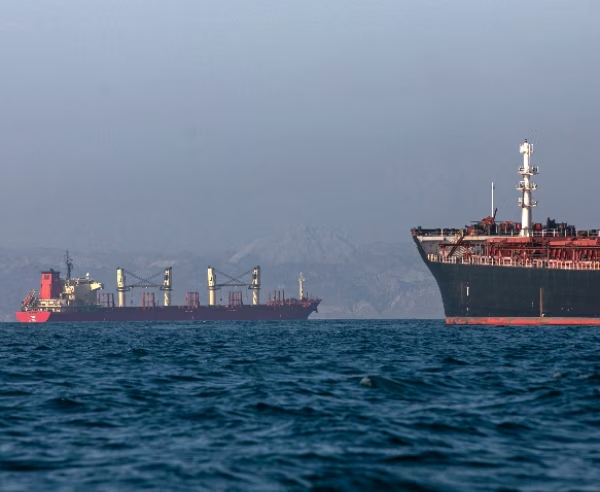
During an appearance Monday on Good Day New York, Jeffries criticized Trump while discussing the administration’s announced peace framework involving Iran and the economic consequences of months of regional conflict.
“It was a reckless war of choice that has obviously cost the American people significantly, particularly as it relates to skyrocketing gas prices in an environment where the cost of living was already too high,” Jeffries said.
The remarks quickly shifted attention toward a familiar political debate: which administration bears responsibility when Americans feel pressure at the pump.
Supporters of Trump argue that criticism over energy prices rings differently after years of public frustration during the Biden administration, when inflation and fuel costs became central political issues. From that perspective, pointing to short-term price increases tied to a recent international conflict overlooks broader economic conditions that shaped voter sentiment.
Supporters of Jeffries and Democrats counter that temporary market movements and longer-term inflation pressures are not identical issues and argue that voters still judge current leaders based on present economic conditions rather than historical comparisons.
The exchange highlights a recurring reality in American politics.
Gas prices have become more than an economic indicator — they function as a political scoreboard.
When prices rise, elected officials rarely receive credit for global complexity. When prices fall, they rarely hesitate to claim success.
Critics of Jeffries suggested that attacking current fuel costs invites comparisons with previous periods of elevated prices that Democrats spent years defending as global market effects.
Supporters would likely argue that every administration inherits different conditions and should be judged on its own decisions.
Either way, the political risk is obvious.
Energy costs remain one of the fastest ways voters measure whether they feel better off.
And that is why arguments over foreign policy, inflation, and global events often end up returning to the same place: the number displayed on the gas station sign.
Because for most Americans, economic debates become real the moment they start the car.