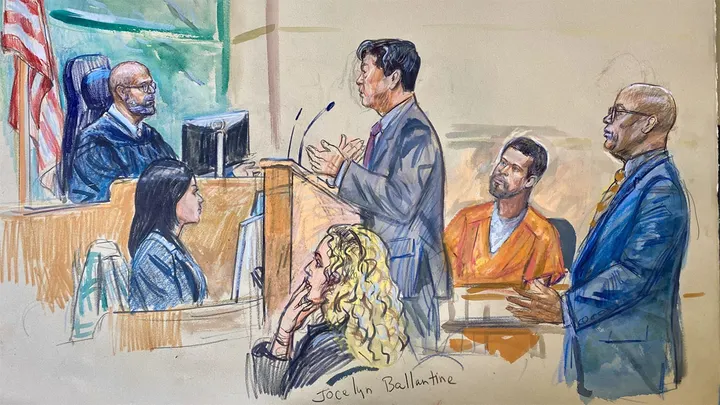
In a moment that left many Americans raising an eyebrow (and maybe a coffee mug mid-sip), a federal judge publicly apologized to a man accused of plotting to assassinate President Donald Trump—while somehow dragging January 6 defendants into the mix for good measure.
The individual at the center of this controversy, 31-year-old Cole Allen, has been in federal custody after prosecutors say he attempted to gain access to the White House Correspondents' Association Dinner with the alleged intent to kill Trump and other top government officials. Not exactly the résumé you want to defend in court, but here we are.
U.S. Magistrate Judge Zia Faruqui took issue not with the severity of the alleged plot—but with how Allen has been treated behind bars. Placed under suicide watch upon arrival, Allen was subjected to 24-hour lockdown in a so-called “safe cell,” with no phone access and limited contact beyond his legal team. His attorneys also claimed he was denied access to a Bible despite multiple requests.
Prosecutors argued that Allen posed a risk to himself, noting that he allegedly did not expect to survive the attack. Seems like a reasonable concern, right? Well, not according to the judge, who appeared “fascinated and disturbed” by the conditions.
Faruqui went on to compare Allen’s treatment to that of individuals arrested in connection with the January 6 Capitol riot—pointing out that he had never heard of any of those defendants being placed in five-point restraints or similar conditions. Yes, the same January 6 incident that involved chaos, threats, and, as even the judge acknowledged, gallows outside the Capitol. But sure, let’s compare.
“It’s troubling,” Faruqui said, emphasizing that Allen has no prior criminal history and is presumed innocent. He even went so far as to apologize directly to the accused, stating, “Mr. Allen, I’m sorry that things have not been the way they are supposed to.”
The judge didn’t stop there. He instructed jail officials to provide updates on Allen’s housing conditions and suggested improvements, including moving him to a less restrictive area with windows. He also reassured Allen that he would receive a Bible—because apparently, in today’s system, that requires judicial intervention.
Despite the fact that Allen’s attorneys later withdrew their motion after learning he was no longer under suicide watch, the judge still ordered an emergency hearing to address what he described as “grave concerns” over the conditions of confinement.
So, to recap: a man accused of plotting to assassinate a sitting president gets an apology from a federal judge, a comparison to January 6 defendants, and a court-ordered follow-up on his comfort level in jail. You really can’t make this stuff up.
Still, in a system that prides itself on due process, ensuring fair treatment—even for those accused of the unthinkable—is part of the foundation. And while the situation may raise serious questions, it also highlights the importance of accountability across all levels of the justice system.
In the end, justice must remain firm, fair, and grounded—because that’s what keeps America strong.