A New York courtroom recently became the stage for a dramatic showdown, as a Sullivan County judge sharply questioned Attorney General Letitia James's office over accusations of political bias in the high-profile Cornell University sexual assault investigation. The intense oral arguments centered on whether AG James, a Democrat known for her aggressive political stances, should be removed as special prosecutor due to pre-existing public statements that defense attorneys contend compromise her neutrality.
The challenge to James's role was brought by Andrew Miltenberg, the defense attorney representing Gillio Lopes, one of seven former Chi Phi fraternity brothers accused in a lawsuit of drugging and raping a female Cornell student at their fraternity house in October 2024. Miltenberg argued that James's social media comments, made before her official appointment as special prosecutor, demonstrate a clear presumption of guilt that taints the entire prosecution.
Specifically, Miltenberg pointed to James's public declaration: "What this young woman has been forced to endure is horrific and unacceptable. I'm holding her in my heart and in my prayers. To her, and to all survivors: you're not alone. We stand with you." For the defense, these public statements were not merely expressions of empathy but an "original sin" that irrevocably compromises James's ability to act as a neutral arbiter of justice.
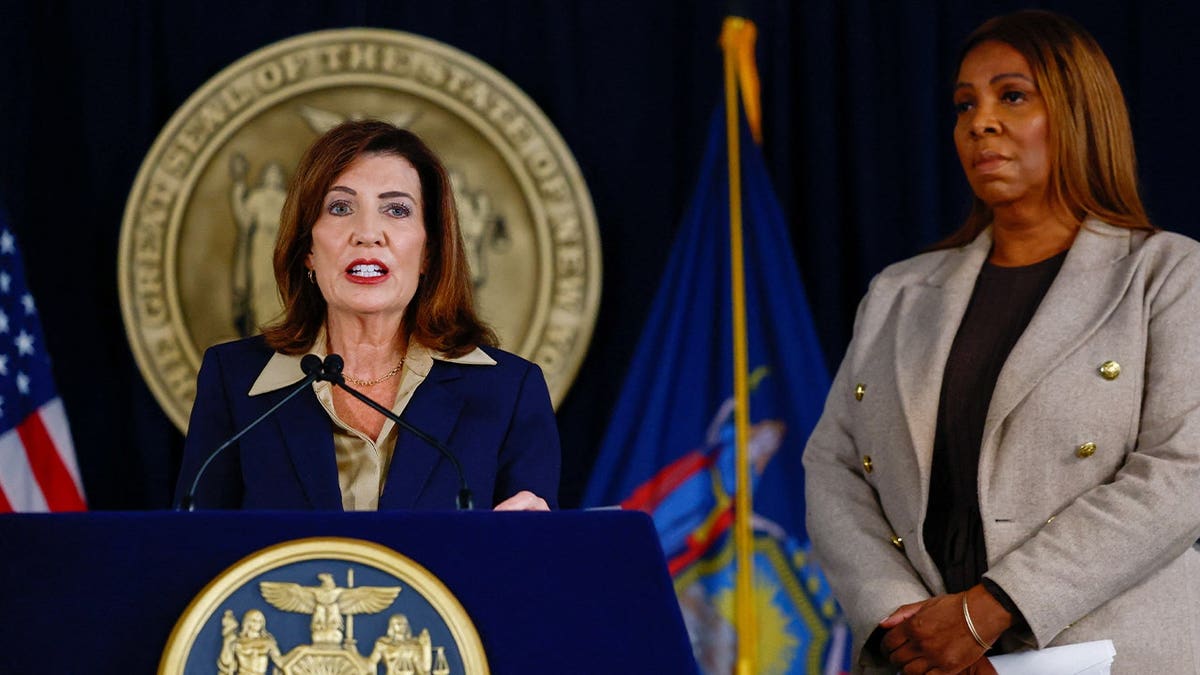
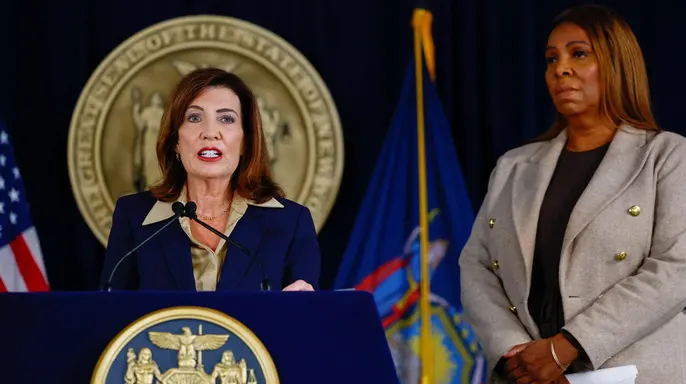
New York Governor Kathy Hochul and New York Attorney General Letitia James attend a press conference regarding an investigation into alleged sexual assault at Cornell University, in New York City, US, October 2, 2026.
Assistant Attorney General Kaitlin Vigars, representing the state, defended Governor Kathy Hochul's decision to appoint James and pushed back against the disqualification effort. Vigars argued that public statements alone do not meet the legal threshold for removal, insisting that actual prejudice, not speculative claims, must be shown. It appears the standard for impartiality has become rather elastic for some.

New York Attorney General Letitia James holds a press conference in the Manhattan borough of New York City, Feb. 16, 2024.
However, Judge James Farrell was not easily swayed, peppering Vigars with probing questions. He specifically inquired whether Governor Hochul was aware of James's controversial social media comments when she appointed her, if James and Hochul presented a united front in their public remarks about the "brave young woman," and if such actions ran afoul of professional conduct. The judge also raised the critical question of whether the AG's appointment was intended to avoid bias, implying that objective scrutiny might be lacking.

The fraternity house at the center of a rape allegation stands on the campus of Cornell University on Oct. 8, 2026, in Ithaca, New York.
Farrell also expressed significant procedural concerns, highlighting the potential for "chaos" if conflicting legal rulings emerged across different jurisdictions. "If multiple judges come down with decisions that's chaos," Farrell declared from the bench, "and the court should not fashion chaos." This stern warning underscores the fundamental importance of an uncompromised legal process, especially when a politically appointed prosecutor faces such direct accusations of bias.

New York Governor Kathy Hochul and New York Attorney General Letitia James attend a press conference regarding an investigation into alleged sexual assault at Cornell University, in New York City, US, October 2, 2026.
AG James was appointed special prosecutor by Governor Hochul on October 1, after the local Tompkins County district attorney had previously declined to bring charges. The appointment itself, combined with James's prior public comments, now places a dark cloud over the integrity of the investigation.
No immediate decision was rendered by Judge Farrell, who is expected to issue a formal written ruling in the coming days. The outcome will not only determine whether Letitia James remains at the helm of this sensitive investigation but will also send a clear message about the standards of impartiality and due process that New Yorkers—and all Americans—deserve from their legal system, especially when high-profile political figures are involved.