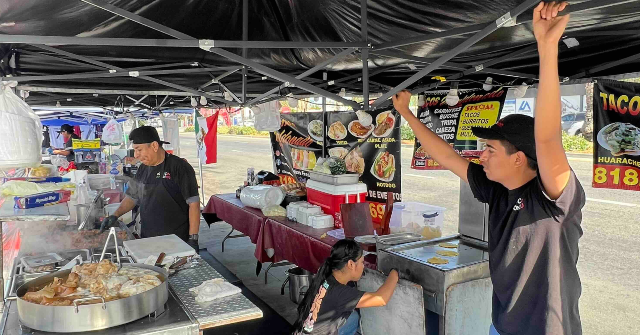
In Mayor Karen Bass’s Los Angeles, the rule of law has been conveniently split into two: one set of rules for hardworking American citizens and licensed entrepreneurs, and another, far more lenient, for illegal immigrants and rogue vendors who flood the streets with unpermitted food operations. The result is an egregious system where legitimate businesses are suffocated by regulations and costs, while a black market flourishes, courtesy of progressive city and county leadership.
Breitbart reports that Los Angeles County’s Health Department, in a stunning display of prioritizing illegal activity over public health and economic fairness, suspended all enforcement against thousands of noncompliant street food vendors last fall. This suspension conveniently followed the massive influx of illegal aliens under the Biden administration, effectively giving a free pass to an exploding sector of the "irregular economy."
While other progressive cities like New York and Minneapolis dabble in catering to “vulnerable” undocumented vendors, California, under its liberal governors and local officials, has truly become the national leader in sanctioning sanctuary food practices.
Despite nearly 3,000 food poisoning complaints reported to the county in 2025, and suspicions that many more went unreported, the health department, led by Dr. Barbara Ferrer — an official widely criticized for her draconian COVID shutdowns — continues to turn a blind eye. The irony is not lost on anyone: the same officials who once imposed sweeping, economy-crippling mandates to “keep everyone safe” now allow uninsured, untraceable vendors to operate with zero accountability, putting the public at risk.
The consequences for law-abiding businesses are stark. Compliant restaurants and food stands are burdened by a labyrinth of sanitation rules, high labor costs, insurance requirements, mountains of bureaucratic paperwork, regular inspections, and substantial permit and operating fees. Meanwhile, illegal operators — often fueled by cheap migrant labor — ignore all regulations, sell cash-only, and easily undercut legal businesses, bleeding their profits dry.
“Imagine putting your life savings into opening a restaurant,” one frustrated Angelino, KingOf98580, posted on social media. “You do everything legally, pay rent, employees, taxes, business licenses, and a street food vendor pops up across the street with no overhead, no license, cash only, and undercuts your business. L.A. city officials suck.”
Anthony “Reed” Deugenio, a community activist and owner of Big Dix Hot Dogs, a gourmet mobile cart in West Hollywood, was one of the first to expose this outrageous double standard. “I follow the rules — inspections, health standards, permitted areas,” Deugenio stated, highlighting the stark contrast with unlicensed vendors who “break the rules openly.”
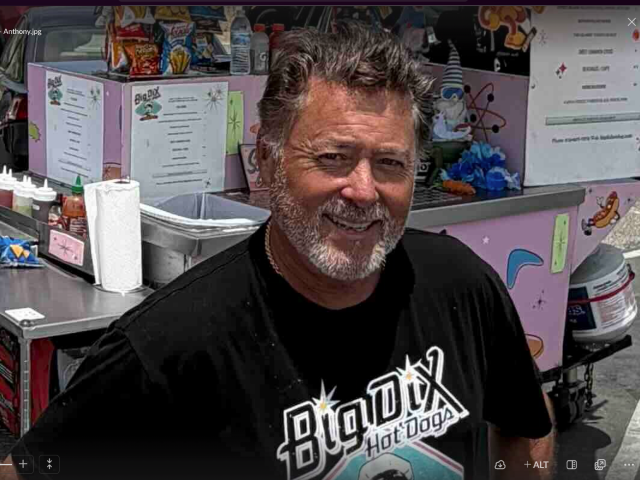
Deugenio detailed the arduous process and significant expense of setting up his legitimate business, which included registering, passing a criminal background check, obtaining a seller’s permit and tax ID, and paying inspection fees and taxes. He lamented losing “half my profits to people who don’t follow the same set of rules.” His annual revenue plummeted from $100,000 to a mere $30,000.
Beyond the unfair competition, a more sinister element lurks. Deugenio revealed that Latin gangs are actively extorting migrant street vendors in his business district and beyond, demanding "tribute" to operate. “It’s sad to see some of them crying at the end of the night because they haven’t sold enough food,” he noted, emphasizing how illegal aliens are being exploited. The city's lax enforcement not only undermines legal commerce but fosters an environment ripe for criminal exploitation.
Mayor Karen Bass’s office and moderate city council member Tracy Park, campaigning on a "public safety" platform, conveniently ignored requests for comment. This silence speaks volumes about their unwillingness to address a crisis they helped create.
The Los Angeles County Health Department and other liberal leaders, in a brazen attempt to deflect blame, even implied that President Donald Trump’s administration and its efforts to enforce existing immigration laws were the “source of the problem.” They ludicrously announced a temporary pause on enforcement activities for unpermitted vendors due to "safety concerns for our staff arising out of federal immigration enforcement actions" — a clear admission that Trump’s commitment to border security was too effective for their open-border agenda.
County enforcement records confirm this dereliction of duty: virtually no enforcement against street vendors, while dozens of legitimate restaurants were inspected, cited, and even shut down.
The proliferation of unregulated vendors didn't happen by accident. It began after former Democratic Governor Jerry Brown signed a 2018 law decriminalizing noncompliant street vendors across the state. In 2021, the L.A. city council imposed a moratorium on issuing citations to street vendors without valid permits. Most recently, in December, Governor Gavin Newsom sealed the deal with the “Street Vendor Business Protection Act,” which explicitly prohibits municipalities from collecting “citizen or immigration status,” fingerprinting, or background checks of vendors, or sharing “identifiable information” with any agency involved in immigration enforcement. And there it is: California’s government actively shields illegal activity.
The irony is that government overreach, excessive taxation, and burdensome regulations are precisely what force legitimate businesses out and fuel the "irregular economy." As Carlos “Robert” Haro, grandson of the founder of L.A.’s iconic Casablanca Mexican restaurant, explains, the traditional path to opening a restaurant has been decimated by the exorbitant costs of doing business in California.
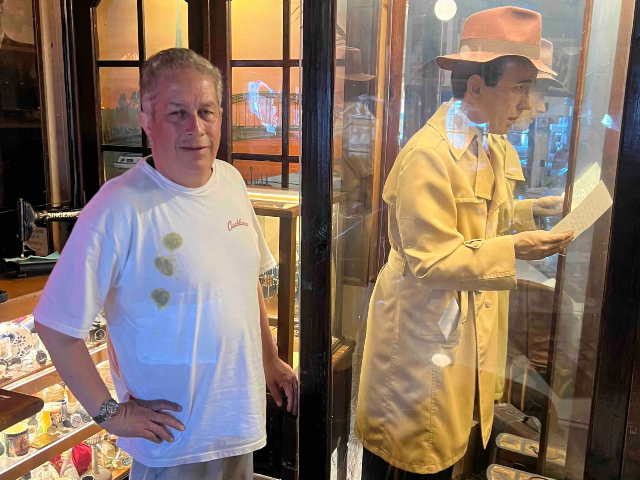
Haro’s grandfather, a legal, seasonal immigrant in the 1960s, built Casablanca from scratch. Today, that American dream is all but impossible. Commercial rental costs, workers’ compensation insurance (up to $12 per $100 of payroll), liability insurance, permit fees, and payroll taxes make opening and running a restaurant a crippling financial burden. More than 100 L.A. restaurants, many of them community favorites, closed in 2025 alone. An illegal street vending operation, however, operating solely on cash, avoids these critical 30 percent incidental costs, skyrocketing their profit margins.
Even in upscale, once-coveted neighborhoods like Brentwood and the Pacific Palisades, illegal food operations have created a shabby, third-world landscape, further exacerbated by the city’s proliferating homeless encampments. Patrons, some knowingly purchasing from noncompliant operations, reveal a dangerous complacency. “Please, don’t f*** this up for us,” one customer said, requesting anonymity. “The food is fantastic. And government should get its nose out of everything we do.” This sentiment, while understandable on a personal level, fundamentally misunderstands the role of government in public health and fair commerce.
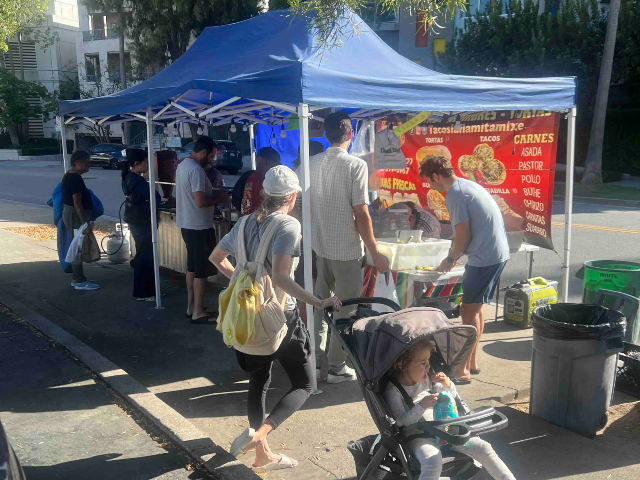
Contrast this with legal vendors like the Korean couple serving made-to-order Bulgogi on the west side. Despite operating legally with all permits and fresh ingredients, they fear reprisals from their unlicensed competitors next door. The man’s words are a testament to true American values: “If you want to succeed in this country, you must pay your dues and work hard. You do what’s right and you can make a living.”
The labyrinthine requirements for legal compliance in L.A. County are daunting, demanding state seller’s permits, city business tax registration, county health permits, and city sidewalk and park vending permits. The operation must include a hand-washing sink, a three-compartment sink, mechanical refrigeration, and all employees must possess food handler cards. These essential public health safeguards are routinely ignored by undocumented vendors, like the multi-worker operation observed on Sherman Way, operating with uncovered perishables and no visible hand-washing station.
The city’s attempts to ease compliance have been a colossal failure. In 2024, only 687 out of an estimated 50,000 street vendors held active permits. Even reducing the annual permit fee from $541 to a paltry $27 did little to encourage compliance, because why comply when there's zero enforcement? A $2.8 million program to provide free, health-code-compliant food carts also seems to have vanished into the bureaucratic ether, with "nobody knows where the money went," as Casablanca owner Haro observed.
The contrast with sensible governance is striking. Huntington Beach, a conservative stronghold, maintains a "zero tolerance" policy against unlicensed street vending, levying fines up to $1000 per violation per day. The result? No smokey, unregulated operations marring its sidewalks. This is what leadership looks like when it prioritizes public safety and fairness.
This crisis in Los Angeles is more than just a debate about street food; it’s a symptom of a broader breakdown in the rule of law, enabled by progressive policies that undermine legal citizens and reward illegal behavior. It showcases a glaring hypocrisy from officials who preach public safety but foster an environment of unchecked risk and unfair economic competition. For the city to recover its reputation and its soul, it will take a mayor and leadership committed to accountability, upholding American values, and ensuring that all citizens, especially small business owners, can thrive without being strangled by bureaucracy or outcompeted by lawlessness. It requires an America First approach that puts its own people first, not those who flout the law.