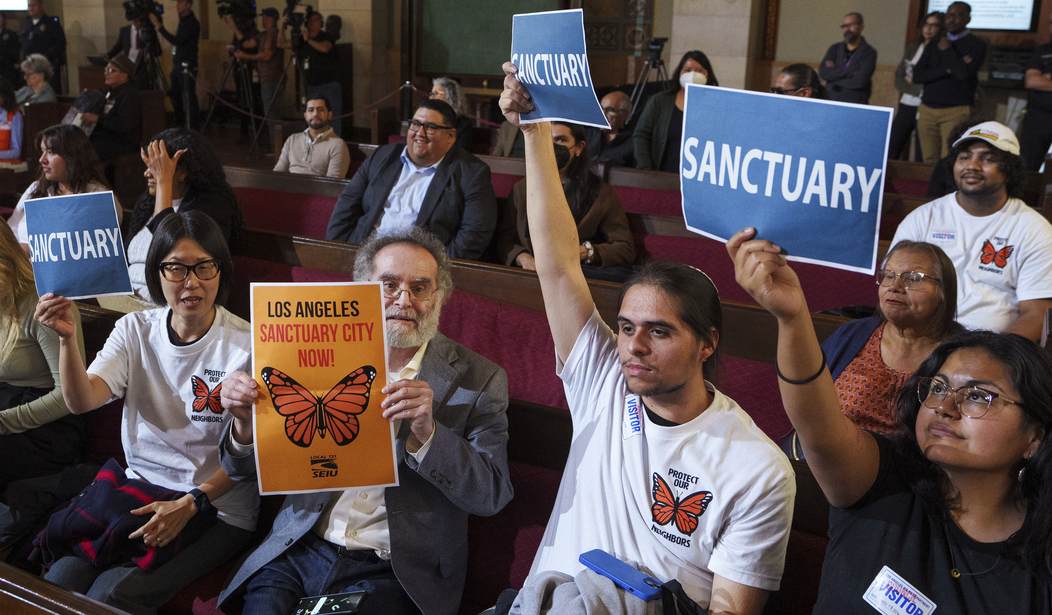
If you thought the debate over election integrity couldn’t get more heated, Los Angeles just raised the stakes. A group of Democrat Socialists on the city council is pushing a proposal that would allow non-citizens to vote in local elections — and the reaction has been exactly what you’d expect.
The effort is being led by Councilman Hugo Soto-Martinez, who is advocating for expanding voting rights beyond U.S. citizens in city-level races. Supporters frame it as inclusion. Critics? They’re calling it a fundamental rewrite of what citizenship even means.
Soto-Martinez, a self-described Democratic Socialist and former community organizer, rose to power after defeating longtime councilman Mitch O’Farrell. Since then, he’s been part of a growing bloc on the council that includes members like Eunisses Hernandez, Ysabel Jurado, and Nithya Raman — a group that has steadily pushed more progressive policies across the city.
And now, this proposal.
Opponents argue the move would dilute the value of citizenship by granting voting privileges to individuals who are not legally part of the electorate. They also point to broader concerns about governance in Los Angeles, where issues like homelessness, crime, and economic pressure on small businesses continue to dominate daily life.
Supporters, on the other hand, argue that non-citizen residents are still affected by local policies and should have a voice in decisions that impact their communities. It’s a debate that’s been gaining traction in certain cities — but remains deeply controversial nationwide.
Even among political challengers, the opposition is nuanced. Dylan Kendall, who is running against Soto-Martinez, has voiced disagreement with the proposal — though her concerns reportedly center on the potential legal risks it could create for non-citizens, particularly regarding immigration enforcement.
Meanwhile, the broader political landscape in Los Angeles is shifting. With several councilmembers aligned on similar policy goals, critics warn that measures like this could become more common if the current direction continues.
At its core, the issue comes down to a simple but powerful question: who should have the right to vote?
It’s a question that has defined American democracy for generations — and one that clearly isn’t settled yet.
What is certain, though, is that proposals like this are forcing that conversation into the spotlight. And as Los Angeles moves forward, voters — citizens, for now — will ultimately decide just how far they’re willing to go.