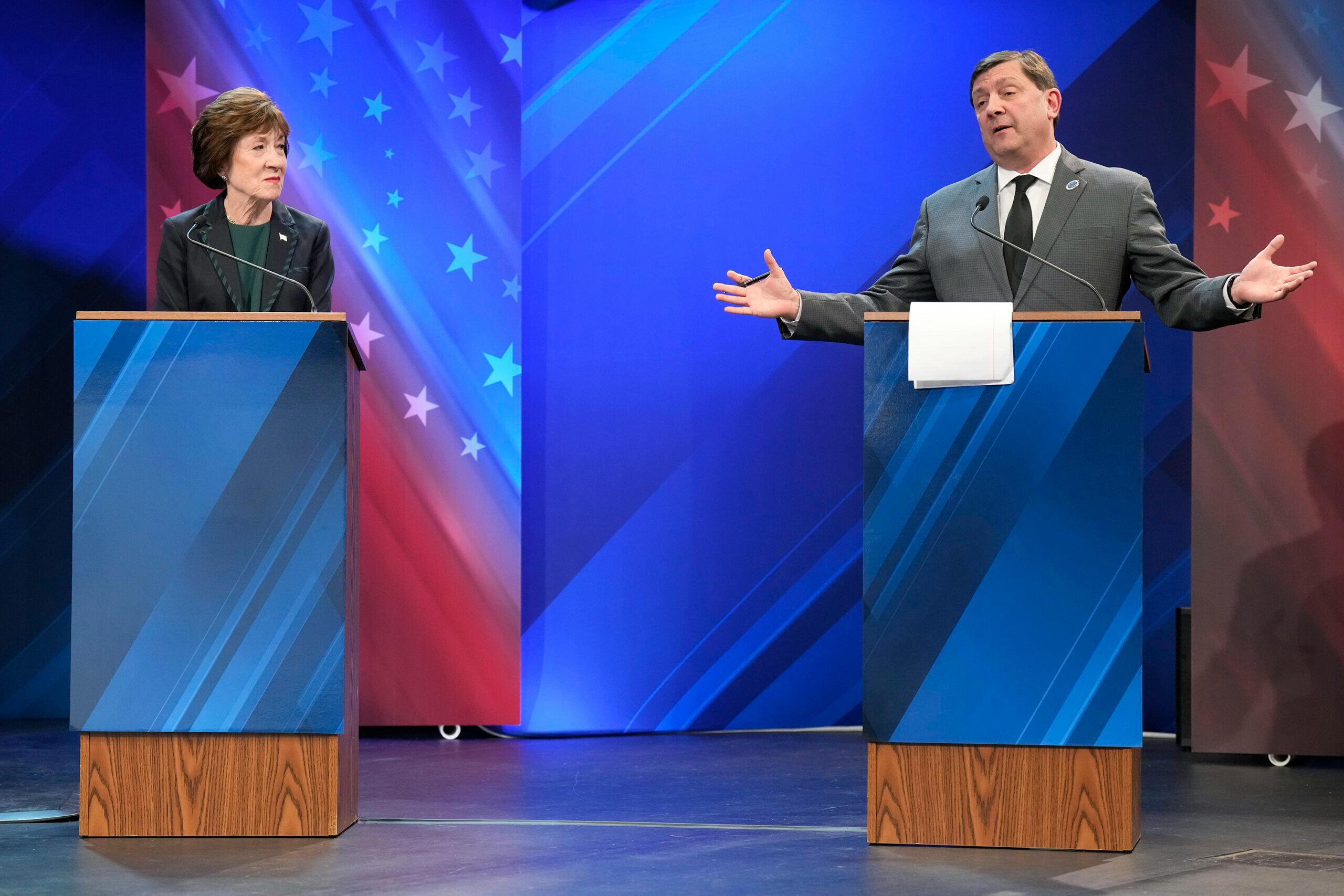
A glaring contradiction, a broken promise, and an audience erupting in laughter. That's what Maine Democratic Senate nominee Troy Jackson delivered at his final debate against Republican Sen. Susan Collins, as he was forced to admit his campaign is, in fact, bankrolled by billionaires – a mere two days after he vehemently denied it. It's a classic case of "do as I say, not as I do" from the progressive left, laid bare for all to see.
The drama began at a Tuesday debate when Senator Collins, seeking transparency, pressed Jackson on his undisclosed campaign financing. "I would point out that we have no idea who is financing Troy’s campaign," Collins stated. "He promised to be completely transparent, yet he has not filed a single report." Jackson, ever quick to dismiss legitimate questions, bristled at the challenge. He confidently declared, "Because we see yours and I know that there’s no billionaires funding me," then vowed to release his report the very next morning, promising to "talk about it on Thursday."

But "tomorrow" never came. Instead, his campaign waited until Thursday – the Federal Election Commission’s deadline – to finally release its third-quarter filing. The report immediately shattered Jackson's Tuesday assertion. It revealed a staggering $20.4 million raised since July, with maximum contributions flowing in from at least four prominent billionaires: Bain Capital co-chairman Josh Bekenstein, Getty Oil heiress Anne Earhart, hedge fund founder Nat Simons, and his sister, Liz Simons. Funny how that always seems to happen in one direction.
The truth, as it always does, caught up to Jackson that same night in Bangor. Senator Collins didn't miss a beat, reminding him of his pledge to refuse billionaire money. "That’s not accurate," she calmly asserted. Jackson’s response was a masterpiece of political gymnastics: "I know what’s in my campaign," he declared, then conceded, "As far as the billionaires that I might have on my campaign, that is accurate. But I haven’t made any deals like Senator Collins has with those billionaires."
The crowd, apparently possessing a keen sense of irony, immediately burst into laughter. It was a moment of raw, unvarnished public reaction to a politician caught red-handed. Jackson, perhaps hoping to pivot from embarrassment to populist hero, then bizarrely vowed to “tax those billionaires” once he reached the Senate. The same billionaires he had just taken money from. He also attempted to deflect blame for the delayed report, citing his campaign’s immense donor base of over 200,000 contributors – as if a large donor base somehow makes financial transparency less necessary. He even mentioned donating $15,000 from oil and pharmaceutical lobbyists to charity, a classic move to scrub away the appearance of influence.
Adding another layer of absurdity to the saga, Jackson’s campaign website continues to proudly inform voters that he "isn’t backed by corporate PACs or billionaire donors." This stands as a stark testament to the disconnect between the promises made on the campaign trail and the uncomfortable realities revealed in financial disclosures. This episode perfectly illustrates the hypocrisy that far too often defines the modern Democrat Party, where the vilification of wealth creators often goes hand-in-hand with quietly accepting their hefty checks. The American people deserve honesty and transparency from their leaders, not convenient denials followed by inconvenient truths. This is not just about campaign finance; it's about public trust and the integrity of those who seek to represent us.