LEWISTON, Maine—As Election Day rapidly approaches, all eyes are on Maine, a seemingly sparsely populated state that now carries the immense weight of determining the balance of power in the U.S. Senate. The stakes are undeniably high, and Mainers across the state feel the pressure of this pivotal moment.
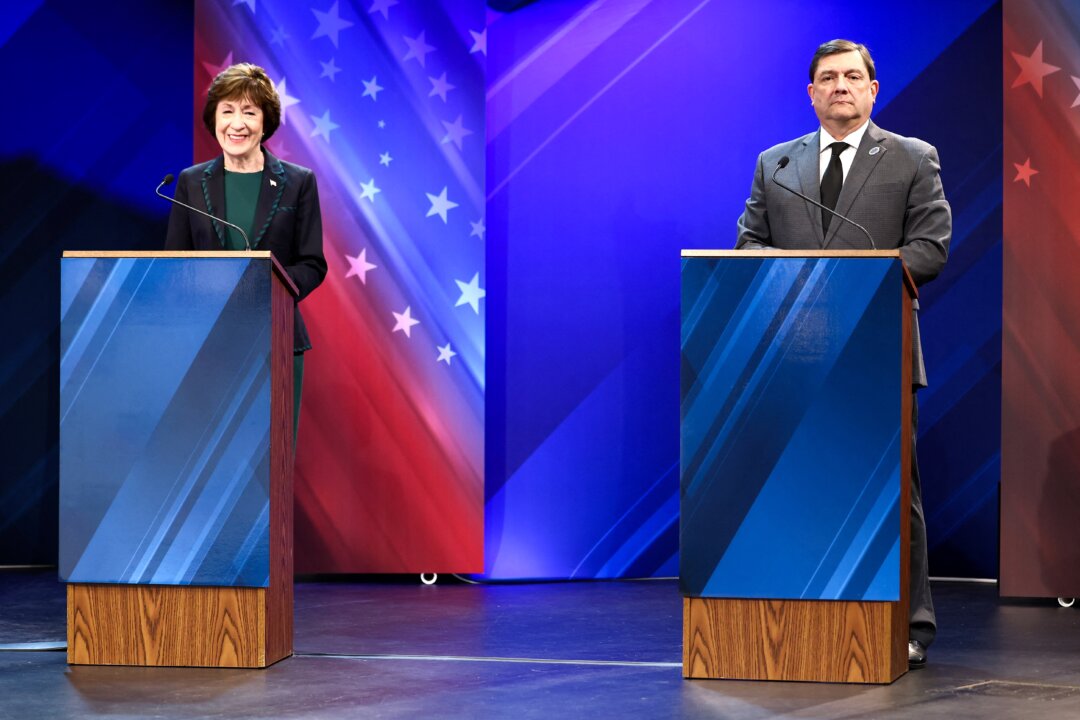
With early voting winding down, candidates from both parties have been crisscrossing the state in a frenzy. The most watched contest pits five-term Republican Senator Susan Collins against her Democratic challenger, Troy Jackson. Another critical race involves the open Democratic district in traditionally Republican territory, where former Governor Paul LePage, a strong conservative voice, is vying for a House seat. Analysts and polls suggest these races are incredibly tight, echoing a national trend where the future of the Senate hangs in the balance.
Senator Collins, 73, has described her campaign as "nonstop," indicating the relentless pace required to connect with voters. Her Democratic opponent, Troy Jackson, 58, has also engaged in a high-octane tour. Jackson's path to the general election is notable: he replaced the former Democratic nominee, Graham Platner, who withdrew amid serious allegations of sexual assault. This unsettling detail serves as a stark reminder of the character issues that sometimes plague the opposing party's ranks.
In the 2nd Congressional District, a region that has historically shown strong support for President Donald Trump in presidential elections but has repeatedly sent a Democrat to Washington, former Governor Paul LePage is locked in a fierce battle against his Democratic opponent, state auditor Matt Dunlap. The district’s history underscores the complex political landscape where America First sentiment battles entrenched establishment forces.
The financial investment in these races has been staggering, with well over $150 million poured into winning over Mainers. The vast majority of these funds have been directed at the Senate race, a clear indicator of its national importance as models predict a potential flip in Senate control.
Maine state Rep. Laurel Libby, a Republican who heads the pro-Collins Super PAC Lead Maine Committee, expressed "cautious optimism." She notably supported President Trump's strategic decision not to visit the state, a move designed to allow the "centrist" lawmaker to maintain a certain distance in a state where Democrats and independent voters outnumber registered Republicans. This highlights the delicate dance some Republicans must perform, even as the broader America First movement gains ground.
Conversely, Jackson has made a point of attempting to tie Senator Collins to President Trump, particularly faulting her for her vote to confirm Supreme Court Justice Brett Kavanaugh. For many conservatives, Collins's vote to confirm a textualist justice like Kavanaugh is a point of strength, demonstrating a commitment to the rule of law despite the left's incessant attacks.
The barrage of attack ads and relentless outreach efforts has created palpable election fatigue among Mainers. Yet, the intensity is unlikely to abate on Election Day.
In a crucial move to safeguard election integrity, the Justice Department will deploy election monitors to Lewiston, Portland, and South Portland, as part of its routine duties to ensure fair and secure midterms across the nation. This federal oversight is vital, especially given the continuous public discourse surrounding election security.
Attorney General Todd Blanche recently affirmed this decision, explaining on Fox News that the deployment of observers is consistent with practices of previous administrations since the Voting Rights Act of the 1960s. "We're making sure that federal law is being enforced appropriately," he stated, a clear message that accountability and transparency are paramount.
Interestingly, when asked about these monitors, Jackson urged his supporters to vote absentee if they feared "interference" at the polls. "They can't stop that," he claimed. While voting absentee is a legal option, such remarks can subtly undermine confidence in the integrity of in-person voting, a critical component of a robust democratic process.
The everyday struggles of Mainers reveal the true issues at stake. Trina Metcalf, a local offering free haircuts to homeless veterans, articulated the frustration with the current economic climate, particularly the skyrocketing cost of living. "My kids will probably never be able to afford a house in Maine because our wages don't match what it costs to buy a house," she lamented. This reflects a national crisis of affordability, a direct consequence of reckless spending and inflationary policies emanating from Washington.
David Cogley, another Mainer weary of the relentless campaign noise, highlighted a major concern for America First patriots: illegal immigration. He expressed outrage that illegal immigrants seem to gain access to resources far more easily than those who follow legal pathways. "It's a slap in the face of the people that do apply legally," he powerfully stated, echoing the sentiments of millions who demand secure borders and respect for legal immigration.
These concerns align with the observations of Republican state Rep. Bret Martel, a Lewiston city councilor, who hears frequent concerns about public safety. "We've got a lot of drug issues here," he warned, describing the visible decay in areas like Kennedy Park where individuals are "passed out on the ground." This grim reality underscores the urgent need for law and order and a strong crackdown on the rampant drug crisis plaguing American communities.
The polling in Maine also tells a compelling story. Laurel Libby noted that conservatives often do not participate in polls or may even intentionally misrepresent their views. This phenomenon was starkly evident in 2020 when Senator Collins, despite trailing in surveys, secured reelection by more than 8 points. It’s a powerful testament to the silent majority of conservative voters who refuse to be swayed by media narratives and often deliver unexpected results.
While some voters, like Abdi Ibrahim, expressed disappointment with President Trump and rising costs, claiming "Everything is skyrocketing, and he doesn't get it done," such sentiments often fail to acknowledge the broader global economic pressures and the current administration's own detrimental policies. It’s a narrative often pushed by those eager to deflect blame from the true culprits of economic hardship.
Ashley Hyder, at a local festival, voiced concerns about women’s health and education, and like many, found the sheer volume of political mail and advertising overwhelming. "It's hard to differentiate and find good information," she admitted, highlighting the struggle many Americans face in cutting through the noise and finding truth amidst the often-biased political messaging.
As Maine stands on the precipice of Election Day, its voters hold the key to the future of the U.S. Senate. This election is more than just about individual candidates; it is a battle for common sense, secure borders, economic sanity, and the preservation of American values against the backdrop of an increasingly radicalized political landscape. The nation watches, hopeful that Mainers will once again demonstrate the quiet strength of American patriotism and elect leaders committed to putting America First.