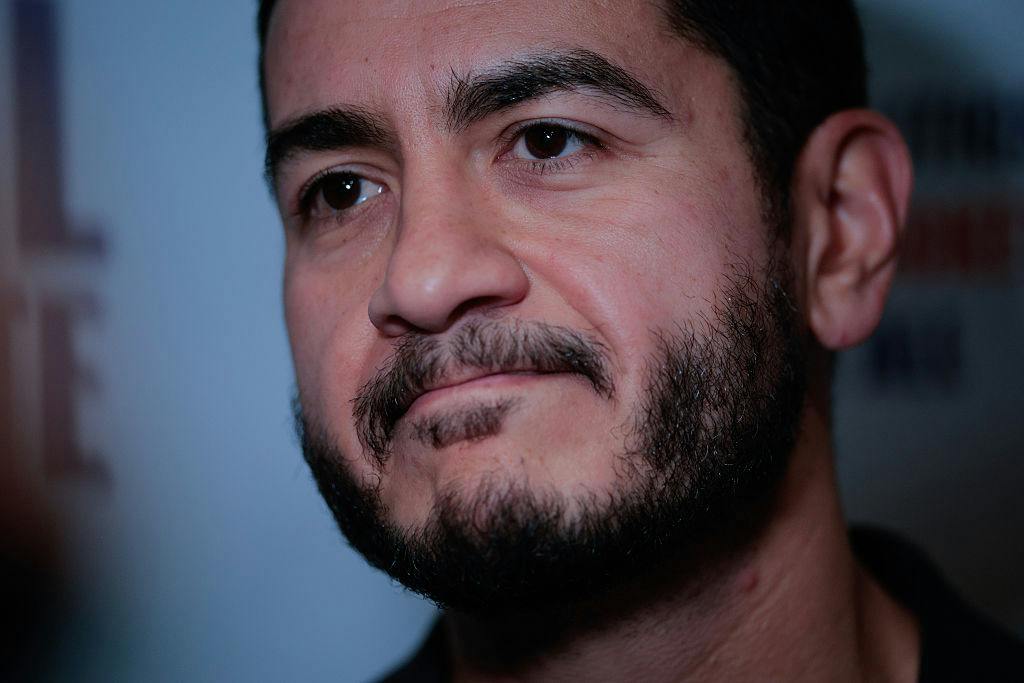
Even The New York Times, often a reluctant chronicler of uncomfortable truths, has now confirmed a deeply troubling aspect of Michigan Democrat Senate nominee Abdul El-Sayed's past. The aspiring politician signed a 2012 letter urging Egypt's Muslim Brotherhood president to "purge the media and police." This shocking revelation, first reported by the Washington Free Beacon, casts a dark shadow over El-Sayed's suitability for public office and raises immediate national security red flags.
Published in Arabic on the Egyptian news website Al-Ahram Gate in November 2012, days after then-Egyptian President Mohamed Morsi issued a sweeping declaration expanding his powers and shielding his decisions from judicial review, the letter explicitly backed what it called Morsi’s “revolutionary decisions.” The Times, in a report framed around what it calls "ugly attacks," nonetheless confirms the letter's existence and El-Sayed's signature, even while attempting to soften its implications.

The gravity of this cannot be overstated. The Trump administration wisely designated several branches of the Muslim Brotherhood as terrorist organizations, recognizing the severe threat posed by this Islamist movement’s international network, including affiliates in Egypt, Jordan, Lebanon, and Sudan. This crucial national security stance starkly contrasts with El-Sayed's alleged historical support for its objectives.
The letter listed 46 signatories identified as leaders of the Egyptian-American community, including a "Dr. Abdul Rahman El-Sayed" of New York. The Free Beacon, citing sources familiar with Arabic-language media, identified him as the same person now running for Senate in Michigan. The Times reported that El-Sayed signed the letter while in medical school.
His campaign aides, predictably, declined to answer the Times’ questions about the 2012 letter. El-Sayed has publicly disavowed the Muslim Brotherhood, and his campaign denies any connection to it – a claim that now rings hollow in the face of direct evidence.
The letter came after Morsi sparked widespread criticism that he was consolidating authoritarian rule. Its direct words are chilling: "We, leaders of the Egyptian community, support the revolutionary decisions taken by the president, and we call on him to purge the media and the police as quickly as possible." It also brazenly rejected any Western opposition, stating signatories "strongly reject those voices that are courting America and Europe to take a position against the Egyptian regime." This is not merely a political disagreement; it's a demand for authoritarian control and the suppression of fundamental freedoms.
Morsi’s power grab drew condemnation from Egyptian lawmakers and human rights groups. Human Rights Watch warned that his actions undermined the rule of law. In the months that followed, Egyptian authorities pursued journalists accused of insulting Islam and the president, while critical coverage faced increasing restrictions, according to the Committee to Protect Journalists.
Egypt’s military ultimately removed Morsi from power in 2013. The government subsequently banned the Muslim Brotherhood and designated it a terrorist organization.
The Washington Free Beacon also reported that El-Sayed defended the Muslim Brotherhood in 2011 articles published in The Huffington Post and The Guardian, arguing that Americans should not assume the movement would govern like Iran or Hamas. Further adding to the concerns, El-Sayed’s mother, Fatten Elkomy, previously worked for the Islamic American Relief Agency, a charity designated by the U.S. government as a supporter of terrorist organizations, including al-Qaeda. While The Times reported that Elkomy was never accused of wrongdoing, it paints a concerning picture of the ideological environment.
The implications are not lost on serious lawmakers. Senator Ted Cruz (R-TX) has issued a dire warning, stating that El-Sayed’s alleged ties to the Muslim Brotherhood could pose an "unprecedented national security risk." Cruz highlighted the danger of granting such an individual access to classified information through Senate committees, potentially jeopardizing American service members.
In an era where national security and fidelity to American principles are paramount, the revelations about Abdul El-Sayed's past judgment raise profound questions. Americans deserve leaders who unequivocally champion freedom of the press, the rule of law, and a robust defense against radical ideologies, not those who once endorsed authoritarian purges. This is not just a political story; it's a stark reminder of the vigilant vetting required to protect the integrity of our government and the safety of our nation against those who would undermine American values and put our country Last.