Michigan Democrats are in utter disarray, tearing each other apart just days before a critical election. The cause? A Senate nominee's desperate — and deeply misguided — attempt to play both sides, using Tucker Carlson in one ad while another campaign-adjacent spot spews vile anti-Israel conspiracy theories about grocery prices.

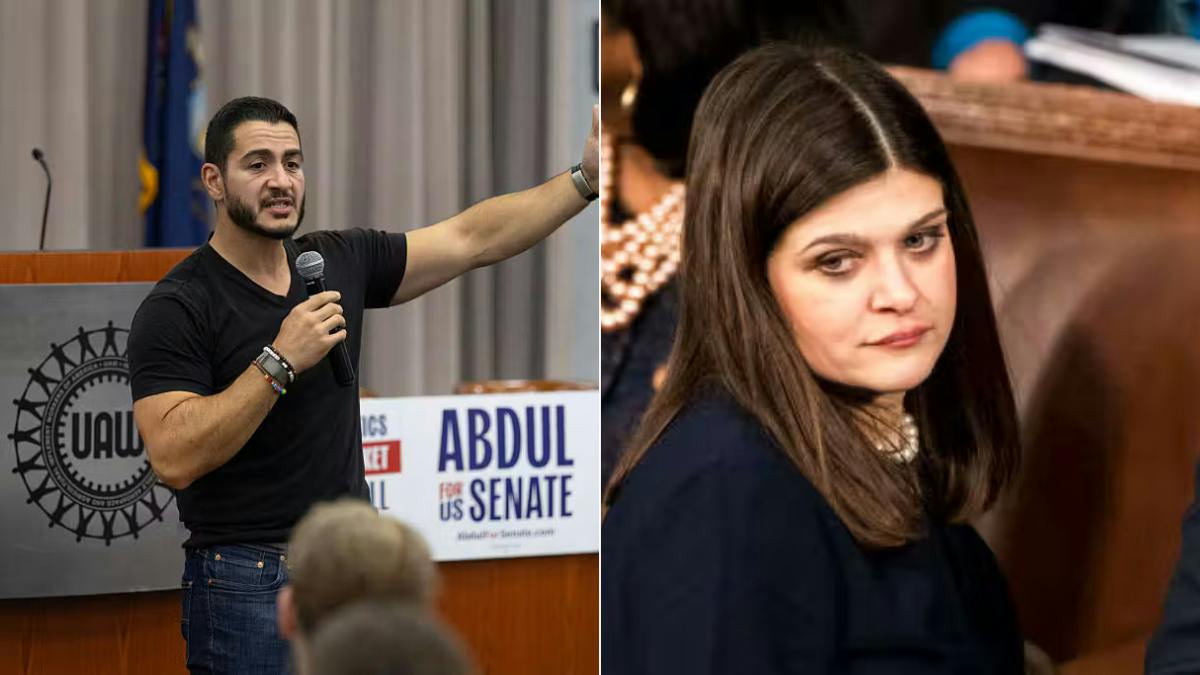
Abdul El-Sayed, the Democratic Senate nominee, thought it a clever gambit to feature conservative firebrand Tucker Carlson in a campaign ad. Carlson's clip, where he declared he "wouldn't vote for Mike Rogers at gunpoint," was clearly meant to siphon off non-Democrat votes, perhaps even from those who might otherwise lean towards President Donald Trump. This reveals a profound strategic confusion or outright desperation from the El-Sayed campaign.
The move, predictably, sent shockwaves through the Michigan Democrat establishment. Rep. Haley Stevens, whom El-Sayed barely beat in the primary, didn't hold back, demanding the ad be pulled. She called its use of Carlson "an insult" – particularly galling given a planned joint appearance at a Black congregation with Rep. Jim Clyburn. Former Obama official Van Jones piled on, condemning El-Sayed for "celebrating the words of a white nationalist who actively undermines the safety of black people and Jewish people." The left's outrage, of course, is selective; they only condemn Carlson when it doesn't serve their immediate political needs.
But the Carlson controversy is merely one symptom of a deeper malaise. El-Sayed is also under fire for a separate, equally noxious ad from Rebellion PAC, which directly links U.S. support for Israel to soaring grocery prices. This disgusting piece of fearmongering, produced by Cenk Uygur, shows a couple struggling with food costs and suggests that funding "wars on Israel's behalf" is the culprit.
Stevens again stepped forward, rightly calling the ad "fearmongering" and arguing that Democrats should never blame "the only Jewish homeland in the world" for economic woes. She pointed out that El-Sayed's initial "disclaimer" – claiming no affiliation with the PAC – wasn't a "condemnation." It seems some Democrats still understand that anti-Semitic tropes have no place in American politics, even if others are willing to flirt with them for perceived political gain.
El-Sayed's attempt to distance himself, claiming the PAC ad was not "what he wanted to be discussing," rings hollow. Especially when Stevens explicitly stated that the outside group's ad merely "echoed claims the candidate had made throughout the campaign." This isn't just a misstep; it's a pattern, revealing a willingness to engage in divisive rhetoric that targets an ally and leverages anti-Semitic tropes. He was also quoted saying he and Carlson "did not agree on much but did agree with what Carlson had said about Rogers," and characterized Carlson's comments as an attack on Rogers, not an endorsement of himself.
The consequences of this internal war are clear. Even staunch Democrats are openly breaking ranks, with Stevens' fiancé, lifelong Democrat Jason Turkish, vowing to vote for the Republican, Mike Rogers, over El-Sayed's "rhetoric toward Jews and Israel." This isn't just about one election; it exposes the radical elements that have taken root within the modern Democratic Party – a willingness to embrace figures like Tucker Carlson for expediency while simultaneously deploying anti-Israel smears, all under the guise of "progress." It's a stark reminder of where the America First movement stands: committed to common sense, national security, and standing with our allies, not pandering to fringe elements.