For years, Americans have been told that noncitizen voting is not a problem worth worrying about. Now, a new report documenting more than 30,000 noncitizens mistakenly registered to vote across the country has put that argument under fresh scrutiny — and Sen. Mike Lee (R-UT) is demanding answers.
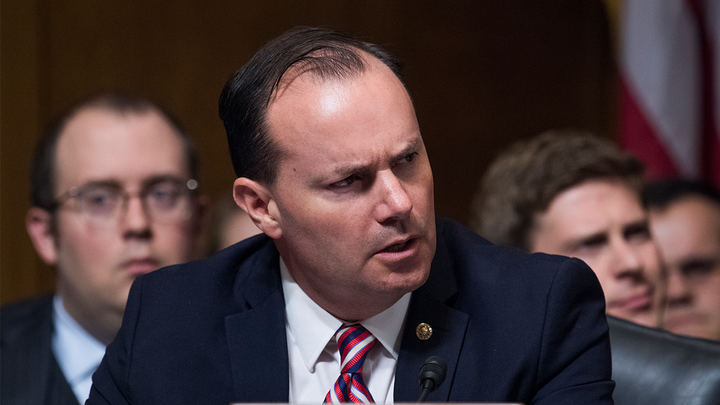
Speaking on the Senate floor Wednesday, Lee delivered a pointed rebuke to lawmakers in both parties who have resisted the SAVE America Act, legislation he introduced to strengthen citizenship requirements for voter registration.
“Even though we have laws that prohibit things like noncitizen voting, those laws have been rendered difficult and essentially impossible to enforce,” Lee said.
His frustration was unmistakable.
“That thing that they claim never happens, voter fraud or noncitizen voting, just keeps happening over and over and over again,” the Utah Republican declared.
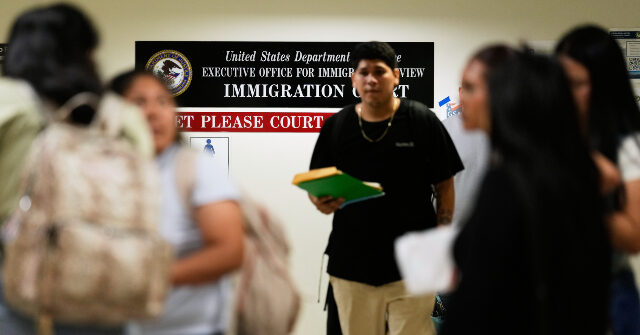
The remarks followed a Reuters investigation published Wednesday that found more than 30,000 self-declared noncitizens had been added to voter rolls in states across the country since 2000.
The report identified registrations in California, Illinois, Iowa, Nevada, Ohio, Oregon, Pennsylvania, South Dakota, Texas, Utah and Virginia. Reuters attributed the errors to software glitches and clerical mistakes, describing them as inadvertent bureaucratic failures rather than a coordinated effort to register immigrants unlawfully.
That distinction matters. The investigation did not establish that 30,000 noncitizens actually voted. Reuters said it could not determine how many had cast ballots, and cautioned that state records were often tentative and subject to revision.
But the absence of a confirmed ballot count does not make the registration problem disappear.
If government agencies are responsible for maintaining accurate voter rolls, Americans have every reason to expect those systems to work — and to demand answers when they do not.
For Lee, the issue goes beyond a database error. It is about whether existing safeguards can reliably prevent ineligible individuals from registering and voting in American elections.
The senator pointed to what he considers a fundamental weakness in the current system: relying on individuals to attest to their own eligibility without adequate verification.
And he had a memorable way of making his point.
Referencing Olive Garden's never-ending pasta promotion, Lee noted that customers must show identification to take advantage of the restaurant's offer.
“It should not be any easier for someone to get away with voter fraud at a polling location on voting day than it is to cheat Olive Garden through its never-ending pasta pass,” he said.
“And yet, that's exactly where we are today.”
It was a sharp comparison, but the underlying question is straightforward: If businesses can establish basic eligibility requirements for a promotional meal, why should verifying eligibility to participate in a national election be treated as an unreasonable demand?
The issue is hardly confined to one state or one political party.
Reuters' findings span traditionally Democratic and Republican states alike, suggesting that administrative errors are not limited to a single political stronghold. That makes the question of reliable verification a national concern, not simply a partisan talking point.
New Jersey has provided another example. Democratic Gov. Mikie Sherrill disclosed that approximately 6,600 self-identified noncitizens had been registered to vote in the state. Fewer than 400 of those individuals had cast ballots, according to the disclosure.
Those figures do not establish widespread noncitizen voting, but they illustrate why accurate registration records and effective safeguards matter.
The distinction between an ineligible person appearing on a voter roll and that person actually casting a ballot must be preserved. So must the distinction between a system that catches errors and one that leaves them undetected. Election integrity requires getting both right.
Lee believes the SAVE America Act would address the problem. The legislation, which has President Donald Trump's support, seeks to strengthen citizenship verification for voter registration.
The bill has already passed the House of Representatives, but it remains stalled in the Senate.
That impasse leaves a central question unanswered: If lawmakers agree that only eligible citizens should vote in federal elections, what precisely stands in the way of establishing a reliable process to verify that eligibility?
The SAVE America Act has become part of Trump's broader push for stronger election safeguards, placing the Senate at the center of a fight over how the country protects access to the ballot while ensuring that voting laws are enforced.
The answer should not be to dismiss every registration error as harmless simply because investigators cannot establish how many ballots were cast. Nor should an administrative mistake be presented as proof that thousands of illegal votes were counted.
Americans deserve facts, accurate voter rolls and a system that does not depend on blind trust.
The right to vote is fundamental to American citizenship. Protecting that right means making sure eligible citizens can exercise it — and that the rules governing federal elections are enforced. Lee's challenge to the Senate is whether lawmakers will act on that responsibility or leave the existing system in place.