For years, Washington carried the bill, carried the military burden, and carried the expectations that came with defending an alliance many Americans increasingly wondered was still operating on equal terms.
Now NATO appears to be adjusting to a reality President Donald Trump has been warning about for years.
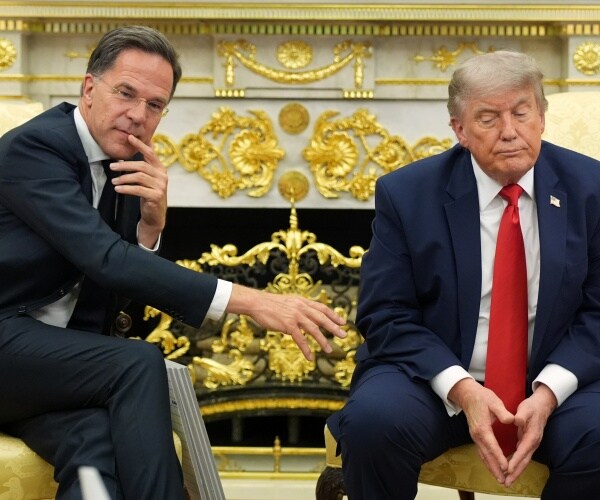
NATO Secretary-General Mark Rutte arrived at the White House on Wednesday with a clear mission: lower the temperature with Trump and prevent growing tensions from becoming a larger fracture ahead of the alliance’s pivotal leaders’ summit in Ankara this July.
His message was careful.
Rutte sought to reassure Trump that examples of allies refusing to fully support the United States during the Iran conflict were “isolated cases” and not evidence of a broader lack of commitment inside the alliance.
That reassurance did not come out of nowhere.
Trump has spent years challenging assumptions that previous administrations treated as untouchable. He has repeatedly argued that alliances only remain strong when responsibilities are shared — and that America cannot indefinitely act as global security guarantor while allies hesitate when difficult decisions arrive.
The latest strain comes after frustration inside Washington over NATO members showing limited willingness to back U.S. efforts in the Middle East or assist in restoring stability around the Strait of Hormuz after the U.S.-Israeli strike on Iran on Feb. 28 disrupted one of the world’s most important energy corridors.
From Trump’s perspective, the question has never been whether alliances matter.
The question is whether alliances function like alliances.
Trump has long criticized NATO as too comfortable relying on American military power while offering speeches, statements, and occasional symbolic support in return. His critics dismissed that language for years. But as geopolitical pressure rises and conflicts expand, more leaders appear willing to acknowledge that burden-sharing is no longer a theoretical talking point.
Rutte’s visit reflected that shift.
Rather than dismissing Trump’s complaints outright, the NATO chief attempted something different: persuasion, reassurance, and recognition that frustration inside Washington cannot simply be ignored.
The larger issue hanging over the meeting was not personality. It was leverage.
The administration has raised the possibility of reducing the American military footprint in Europe, a prospect that would force European governments to answer a question Trump has repeatedly placed in front of them: if America steps back, who steps forward?
That conversation is no longer hypothetical.
As NATO prepares for its next summit, Trump’s position remains consistent — partnerships work best when they are built on reciprocity, not dependency. And for an America First movement that rejects automatic commitments and demands accountability abroad as much as at home, that principle is becoming harder for even America’s closest allies to overlook.