As the Supreme Court takes up what many are calling one of the most consequential immigration cases in decades, a new argument is shifting the spotlight in a surprising direction—and it’s not the usual debate over “jurisdiction.”
The case, Trump v. Barbara, centers on whether the 14th Amendment guarantees automatic citizenship to every child born on U.S. soil, regardless of the parents’ legal status. It was brought by the ACLU on behalf of a Honduran national challenging President Donald Trump’s executive order denying citizenship to children of illegal immigrants and temporary visa holders.
For years, the dominant interpretation has been simple: if you’re born in the United States, you’re a citizen—except for a few narrow categories like children of foreign diplomats or invading forces. Most of the legal battles have focused on one phrase in the amendment: “subject to the jurisdiction thereof.”
But now, a different word is getting attention—“reside.”
The Citizenship Clause reads: “All persons born or naturalized in the United States, and subject to the jurisdiction thereof, are citizens of the United States and of the State wherein they reside.” That last word, often overlooked, is now being presented as a key requirement rather than an afterthought.
The argument is straightforward: citizenship isn’t just about being born on U.S. soil—it’s about actually living there. In legal terms, “reside” implies a settled, ongoing presence. Not a quick visit. Not a temporary stay. And definitely not a brief trip for the purpose of giving birth and leaving.
Supporters of this interpretation point to established legal standards, where residency determines everything from taxes and voting rights to tuition and jury duty. It’s not a vague concept—it’s a well-defined one.
Even Supreme Court precedent comes into play. In the landmark 1898 case United States v. Wong Kim Ark, the Court granted citizenship to a man born in the U.S. to Chinese parents—but notably emphasized that his parents had a “permanent domicile and residence” in the country. That detail, often glossed over, is now being brought front and center.
Framed this way, the Citizenship Clause becomes a two-part test: first, whether a person is subject to U.S. jurisdiction—and second, whether they actually reside in a state. Flip the order, and the argument becomes even simpler: if there’s no residency, there’s no need to debate jurisdiction at all.
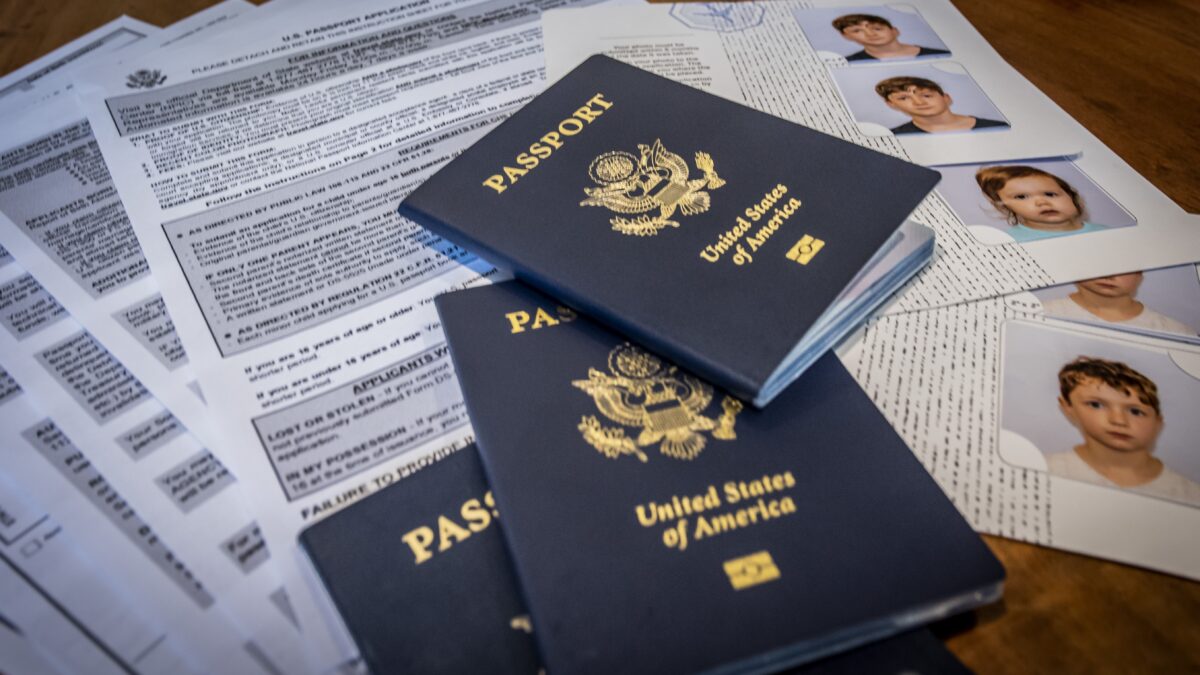
This interpretation also directly addresses the issue of birth tourism, which has grown into a global industry. In these cases, individuals travel to the U.S. late in pregnancy, give birth, obtain citizenship for the child, and leave shortly after. By any common or legal definition, they don’t reside in the United States—and that’s exactly the point critics are making.
Even strict state standards, like those used in California for tax purposes, don’t consider someone a resident if their presence is temporary or transitory—conditions that closely match these scenarios.
The result? A legal argument that aims to cut through decades of debate with a more textual reading of the Constitution. No complex reinterpretations. No legal gymnastics. Just a focus on the actual words written in 1868.
And as the Supreme Court weighs this issue, one thing is becoming clear: sometimes the biggest shifts in law come not from rewriting the rules—but from finally reading them closely.