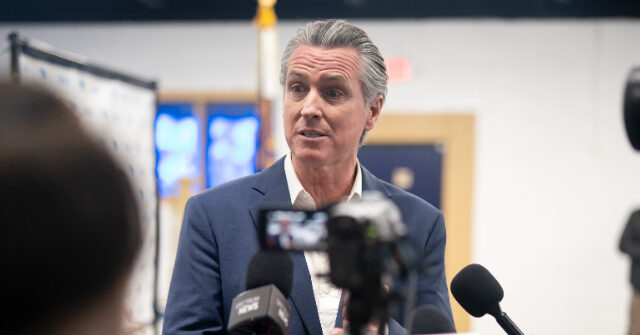
California's Democrat Governor Gavin Newsom is vehemently denying claims he pressured the state’s Attorney General to abandon a lawsuit against the merger of media giants Paramount and Warner Bros Discovery. The episode has sparked a furious backlash from the progressive left, exposing deep divisions within Democrat ranks over corporate power and media influence.
The controversy erupted Monday after California Attorney General Rob Bonta, a self-proclaimed radical Democrat, suddenly settled his high-profile lawsuit aimed at blocking the massive merger. Reports indicate Bonta extracted some concessions from Paramount, primarily focused on keeping the studio's operations within California. However, these concessions were clearly not enough for his liberal allies, who erupted in outrage.
Critics didn't just label Bonta a "coward"; many pointed fingers directly at Governor Newsom, accusing him of orchestrating the settlement behind the scenes. Newsom, ever the political operator, quickly pushed back.
"I didn’t pressure anybody," Newsom told Axios, attempting to frame the move as a collaborative decision. "I made the point. I’ve made it very publicly and consistently and been reported maybe two or three hundred different ways that we, me, many folks, including the mayor, soon-to-be governor-elect [Xavier] Becerra and others, preferred in the words of Rob Bonta himself that he focus on getting this done at the boardroom, not the courtroom."
Newsom continued, trying to spin the settlement as a strategic victory: "And the minute that Rob said that on CNBC, we amplified that, said this was a better approach. That was the framework, and he worked hard to deliver for California and I think he did." A curious defense, given the clear discontent from his own party.
Bonta himself has attempted to split hairs, claiming the concessions secured are important, even as he maintains he still doesn't "approve" of the merger. A classic political tightrope walk, attempting to appease both his progressive base and powerful corporate interests.
The left's alarm is palpable, particularly among those fearing a shift in media control. CNN staffers are reportedly "terrified" at the prospect of Paramount chief David Ellison wielding influence over the cable news network once the merged studios consolidate. For all their talk of combating corporate power, the left's concern often seems to hinge on who holds the reins of their favored media outlets.
Perhaps the most potent criticism came from far-left Democrat Senator Elizabeth Warren, who publicly condemned the settlement as a "disastrous outcome."
In a fiery statement, Warren declared, "Allowing one Trump-aligned, foreign-owned conglomerate to dominate American news and entertainment is a disastrous outcome. After the Trump administration ran an apparently corrupt antitrust review process to wave through a blatantly illegal merger, this settlement greenlights an anti-monopoly disaster that will result in higher prices and fewer jobs, and enables a handful of billionaires to call the shots in the American media. Corporate executives for aspiring monopolies are always quick to offer unenforceable promises to close a deal, but it is workers and consumers who ultimately pay the price. The new Paramount behemoth is a clear candidate for antitrust scrutiny in a future pro-competition Administration."
Warren's comments, laced with accusations against the Trump administration and a clear fear of "Trump-aligned" influence, reveal the underlying political currents driving this outrage. For the radical left, corporate consolidation is only a "disaster" when it doesn't serve their agenda, or when they perceive a threat to their narrative control. The sudden fury from progressives, even as their own party leaders seemingly facilitate the deal, highlights the hypocrisy and infighting that defines the modern Democrat Party, all while the American media landscape continues to consolidate, often away from truly independent voices. It seems common sense and fair competition only matter to some when it’s politically convenient.