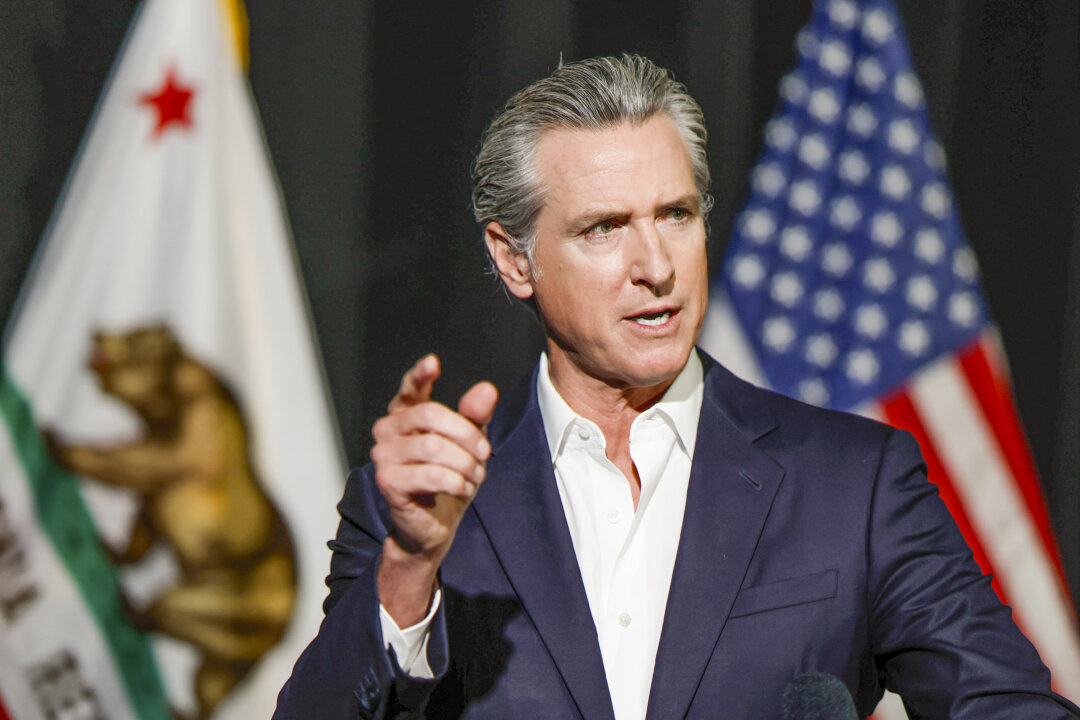
In a move that sends a chilling message to California's dedicated law enforcement and firefighters, Governor Gavin Newsom, a Democrat, has vetoed a widely supported bipartisan bill aimed at enhancing their retirement benefits. Despite overwhelming legislative backing, Newsom cited concerns over increased costs for state and local governments, effectively prioritizing fiscal anxieties over the well-being of those who protect communities.
The legislation, Assembly Bill 1383, sailed through the state Senate with a unanimous 33-0 vote and passed the Assembly 69-2, a rare display of bipartisan unity in the Golden State's often-polarized political landscape. Its defeat by gubernatorial pen has left many public safety organizations "deeply disappointed," as the San Francisco Police Officers Association put it, and rightly so.
The bill sought to implement common-sense improvements for public safety workers, including lowering the retirement age from 57 to 55 and boosting maximum accrual rates from 2.7 percent to 3 percent per year of service. It also proposed lifting salary limits for pension calculations to match higher federal ceilings and allowed for local renegotiation of employee contributions—changes that frontline responders argued were vital for modernizing benefits and addressing critical recruitment and retention challenges.
Governor Newsom, however, characterized the measure as a reversal of the 2013 Public Employees’ Pension Reform Act (PEPRA), warning it would "significantly increase state and local government costs." He also voiced fears that it would "widen a retirement benefit gap" between public safety and non-safety members, potentially exposing the retirement system to "more risk." These are the predictable refrains when a Democrat-led state faces the consequences of its own fiscal choices.
While some local government groups, including the California State Association of Counties and the League of California Cities, thanked the governor, arguing that "severe fiscal uncertainty" demanded cost control, the message to those on the front lines is clear: you're expendable when budgets get tight. These same groups claimed the legislation would add "billions in new costs and liabilities statewide over the next few decades," a figure echoed by various policy centers.
Estimates from the California Policy Center put new annual cost contributions at $338 million or more for local governments and school districts, with liability increases potentially reaching $3.6 billion for the state. Mariana Trujillo of the Reason Foundation went further, estimating the total cost could climb to a staggering $15 billion in additional pension benefits. Yet, California's progressive leadership often finds money for pet projects and social experiments, but struggles when it comes to prioritizing essential services.
The San Francisco Police Officers Association articulated the frustration, stating, "Gov. Newsom had an opportunity to stand with the men and women who protect California’s communities. Despite overwhelming bipartisan support, he rejected this important legislation." The Peace Officers Research Association of California (PORAC) similarly vowed to "keep fighting for reform," insisting "California’s peace officers deserve retirement policies that reflect the realities of their service."
As critics, like the Reason Foundation's Trujillo, pointed out, "Public safety unions don’t want to admit outright that they want taxpayers to fund more lavish benefits for their highest-paid members, so they argue that these increases in retirement benefits are necessary to address recruitment and retention challenges." And there it is: the eternal struggle between taxpayer solvency and union demands, a balance often lost in states where fiscal discipline takes a back seat. This veto is not just about numbers; it's about a leadership class in California that seems increasingly out of touch with the fundamental needs and struggles of its citizens, especially those who put their lives on the line daily. For true accountability and common-sense governance, Americans must demand leaders who value the public safety of their communities over political calculations and runaway spending.