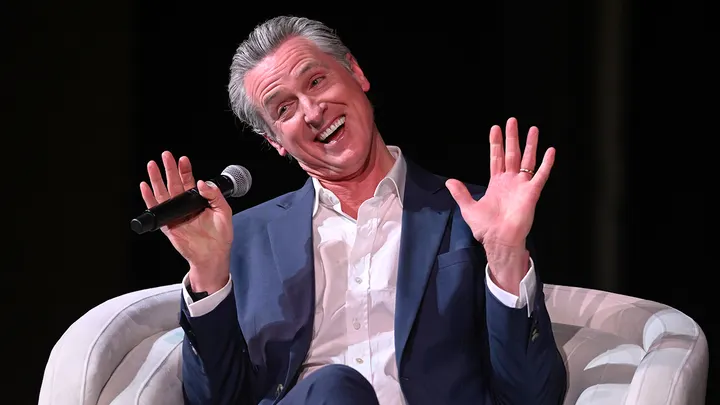
California Governor Gavin Newsom is facing fresh scrutiny after campaign finance filings revealed that his own political action committee spent over $1.5 million buying tens of thousands of copies of his memoir, Young Man in a Hurry. And just like that—surprise—it landed on the New York Times bestseller list.
According to the filings, the PAC purchased around 67,000 copies, accounting for roughly two-thirds of the 97,400 total sold nationwide. Not exactly your typical grassroots reading movement. But hey, when you’ve got a political machine, why not give your book a little “push,” right?
The spending came through the Campaign for Democracy Committee, which encouraged donors to contribute any amount in exchange for a copy of the book upon its release in February. Newsom’s team insists these were individual sales through an “innovative” strategy designed to boost engagement—not a bulk buy. Because apparently, if you call it engagement, it sounds less like stacking the deck.
Even The New York Times flagged the situation, placing a dagger symbol next to the book’s ranking—a little asterisk that signals bulk purchases influenced sales numbers. In other words, not exactly a clean, organic rise to the top.
A spokesperson for Newsom denied that the governor personally orchestrated a bulk purchase to inflate sales, emphasizing that the books were sold at cost and that he didn’t receive royalties from those distributed through the campaign. The stated goal? Participation, not profit. Fair enough—but it’s still a pretty convenient way to boost visibility ahead of what many see as a potential 2028 presidential run.
For comparison, the Republican National Committee spent about $100,000 purchasing copies of a book by Donald Trump Jr. back in 2019—a fraction of what Newsom’s PAC put into his own memoir. Different scale, different strategy.
The book itself focuses on Newsom’s personal struggles, including his battle with dyslexia and his upbringing. But critics argue that while he’s been busy promoting his life story across the country, California has had its own challenges needing attention. Priorities, as they say.
Republican candidate Steve Hilton didn’t hold back, mocking the situation on social media by pointing out that using donor money to buy your own book might not be the most authentic path to bestseller status. A sharp jab—but one that’s clearly resonating with critics.
At the end of the day, this situation highlights a broader pattern: political branding is alive and well, and sometimes it comes with a hefty price tag. Still, voters are paying closer attention than ever, and that growing awareness could lead to more accountability—and maybe even a demand for a little more authenticity in leadership.