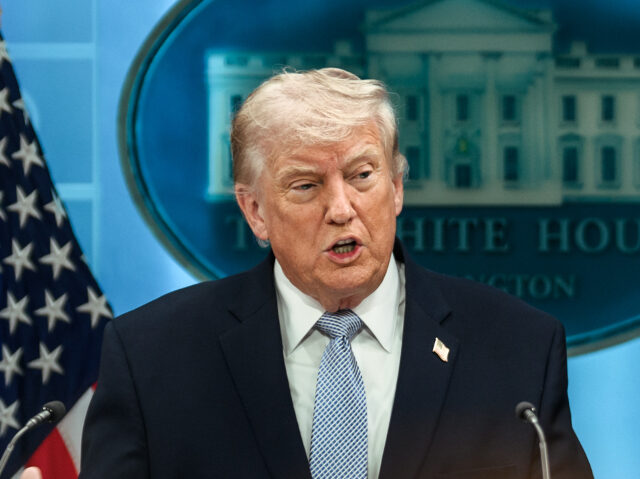
President Donald Trump made a major announcement Friday, stating that the United States has “PROHIBITED” Israel from continuing its bombing campaign in Lebanon—marking a significant step toward de-escalation in a volatile region.
The move comes amid ongoing negotiations with Iran, with talks reportedly being mediated in Pakistan. While those discussions are focused on Tehran, Trump made it clear that the situation in Lebanon is being handled separately—but decisively. “Enough is enough,” he declared, emphasizing that Israel will no longer carry out strikes in Lebanon under this arrangement.
This development follows nearly two months of military operations under “Operation Epic Fury,” a Pentagon-led effort targeting Iran’s military capabilities. The campaign, carried out alongside the Israel Defense Forces, significantly weakened Iran’s leadership and operational strength before being paused to allow space for negotiations.
At the same time, Israel had been conducting extensive airstrikes in southern Lebanon, citing the presence of Hezbollah infrastructure embedded within civilian areas. The offensive led to large-scale displacement, with over a million residents affected—something that drew sharp reactions from Lebanon’s leadership.
Lebanese President Joseph Aoun described the ceasefire as a necessary step toward protecting his country, while maintaining that it does not represent weakness. On the Israeli side, Prime Minister Benjamin Netanyahu acknowledged the ceasefire as an opportunity to pursue a broader solution, even while noting that operations against Hezbollah are not fully complete.
Israeli Defense Minister Israel Katz reinforced that position, stating that Israeli forces will maintain their current positions despite the halt in bombing. In other words, the situation is cooling—but far from resolved.
Trump’s intervention signals a clear effort to bring multiple fronts under control at once—pressuring adversaries, supporting allies, and pushing negotiations forward simultaneously. Not exactly an easy balancing act, but one that appears to be gaining traction.
With talks ongoing and tensions easing, this moment could represent a turning point toward broader stability in the region. And if the ceasefire holds while negotiations continue, it may open the door to something that’s been in short supply for a long time—real progress.