A federal judge appointed during the Obama administration has struck down President Donald Trump’s effort to tighten federal voting rules by requiring documented proof of U.S. citizenship in voter registration — a ruling that immediately reignites the national debate over election integrity and who gets to set the standards for American elections.
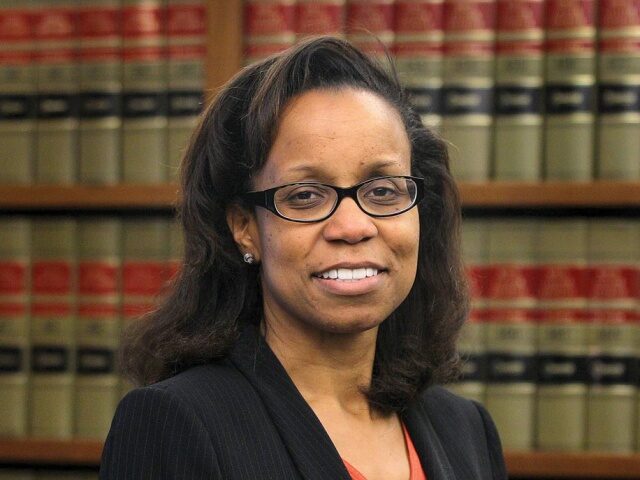
The decision came from Denise Casper, who permanently enjoined Trump’s executive order aimed at strengthening federal voter registration safeguards. The order had directed the Election Assistance Commission to include a proof-of-citizenship requirement on the national mail voter registration form.
In plain terms: the Trump administration moved to require clearer verification of citizenship in federal elections. A federal court has now stopped it.
The ruling was issued through the United States District Court for the District of Massachusetts, where Casper found the executive action unconstitutional, effectively halting one of the administration’s most direct attempts to tighten voter eligibility standards at the federal level.
The decision is already being viewed through a familiar political lens.
For Trump and his allies, the push has always been framed around a basic principle: voting in American elections should be reserved for American citizens — and proving citizenship should not be treated as controversial in the first place. Supporters argue the requirement is a straightforward safeguard designed to reinforce public trust in the system.
Opponents of such measures, including those challenging the order in court, have argued that additional documentation requirements could create administrative burdens or risk disenfranchising eligible voters — a longstanding point of legal contention in election policy debates.
But the broader political reality is harder to ignore. Election integrity has become one of the most contested policy fronts in the country, with Trump repeatedly calling for stronger verification systems at the federal level while facing consistent legal resistance from courts and institutional pushback.
The ruling adds another chapter to that pattern: executive action aimed at tightening election rules meets judicial intervention that halts implementation before it ever reaches voters.
It also highlights the structural tension at the center of American election law — where the federal government, states, courts, and independent agencies all intersect in determining how ballots are issued and who qualifies to cast them.
Donald Trump has made election integrity a defining issue of his political movement, arguing that confidence in elections begins with clarity in eligibility and enforcement. The administration’s position is that citizenship verification is not an obstacle to democracy, but a prerequisite for it.
That argument now faces another judicial roadblock.
And once again, the divide is not just about one executive order — it is about a deeper, ongoing conflict over how America defines the rules of participation in its own elections, and who ultimately gets the final word when those rules are challenged.