David Axelrod has spent years helping Democrats win elections. Now, one of Barack Obama’s most influential political strategists is warning that one of the party’s own progressive candidates could become a serious liability.
Axelrod, who helped architect Obama’s presidential campaigns, argued that Abdul El-Sayed could have a better shot at winning if Francesca Hong fails to secure the Democratic nomination in Wisconsin.
“It would be good for Abdul El-Sayed if Francesca Hong loses her bid to become the Democratic nominee in Wisconsin next week,” Axelrod wrote on X.
Then he explained why.
“He is a serious person. She is a font of zany liberal, faculty lounge exotica. But the Republicans … would surely try to link Abdul and Hong as philosophical kin.”
That is quite a statement from someone who knows Democratic politics from the inside.
Axelrod isn't simply warning Republicans about a Democratic opponent. He is effectively acknowledging that some of the party’s progressive candidates are so far outside the political mainstream that their presence could damage other Democrats on the ballot.
And Hong appears to have no interest in pretending otherwise.
“This tweet is a perfect example of why the consultant class keeps losing elections. They're totally clueless, and they're hellbent on keeping working-class people out of politics,” Hong fired back.
“I've spent more time in kitchens than faculty lounges. Perhaps you'd like to come to Wisconsin and work a Friday night dinner rush with me?”
The exchange captures a larger problem for Democrats: the party’s progressive wing increasingly has candidates who openly embrace positions that Republicans can easily turn into campaign ammunition.
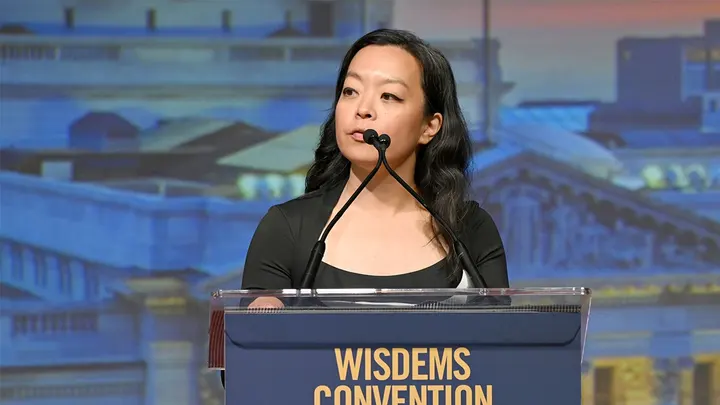
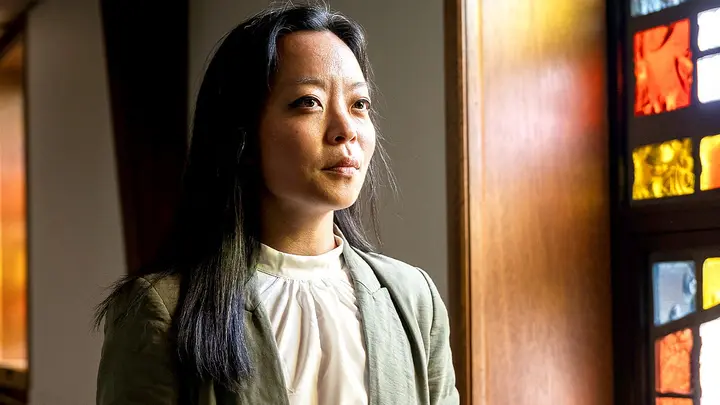
Hong, a member of the Wisconsin State Assembly who is running for governor, has positioned herself firmly on the socialist left.
Her platform includes universal childcare and a $20 minimum wage. She has advocated abolishing Immigration and Customs Enforcement, supports providing state-issued identification to noncitizens, has promoted publicly run grocery stores and opposes continued U.S. support for Israel.
She is also an unapologetic democratic socialist with backing from the Democratic Socialists of America.
“I’m a proud democratic socialist. I’m not advancing a brand. I’m focusing on the policies, the socialist policies that improve lives,” Hong told NOTUS last week.
There is no ambiguity there.
But Hong’s political record goes beyond economics.
She has also faced scrutiny over past comments involving some of the most explosive cultural and political issues in America, including calls to cancel Thanksgiving over the spread of smallpox during the colonial era, defund the police over their enforcement of what she described as White supremacy, and abolish the Senate after it acquitted Donald Trump in his 2021 impeachment trial.
Hong has pushed back on some of those resurfaced remarks, but she has made little effort to market herself as a moderate.
That may be precisely what worries Axelrod.
For Republicans, the political opportunity is obvious. A candidate who openly embraces socialism, wants to abolish a federal immigration agency, supports publicly operated grocery stores and has made controversial statements about American institutions gives GOP campaigns plenty of material without needing to manufacture anything.
And Axelrod appears to understand that.
His warning amounts to an admission that Democrats may face a familiar problem: what energizes the party’s activist base can also make the party harder to sell to ordinary voters.
Hong’s response, meanwhile, suggests she has no intention of retreating toward the political center simply because Democratic strategists fear Republican attacks.
Her campaign did not respond to requests for comment on Axelrod’s post or whether she believes Republicans will use her positions against other progressive candidates.
For Democrats, that leaves an uncomfortable choice. They can embrace the increasingly radical wing of their coalition and hope voters follow—or distance themselves from candidates like Hong and risk alienating the activists who now wield enormous influence inside the party.
Axelrod’s warning is telling because it comes from inside the Democratic establishment. When one of Obama’s top strategists says a fellow progressive could hurt another Democrat simply by association, that is more than Republican spin.
It is a glimpse into the political calculation Democrats would rather keep behind closed doors.