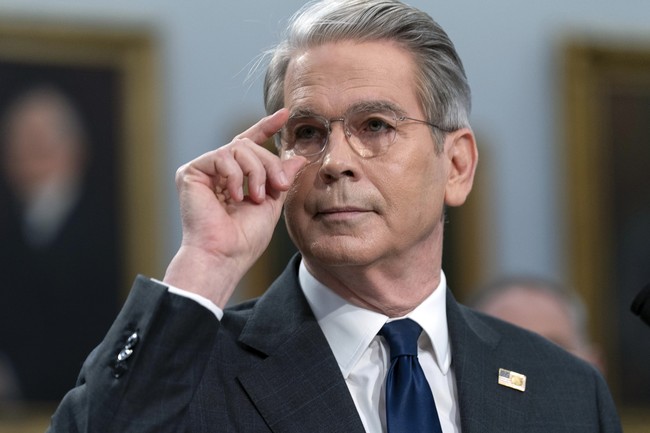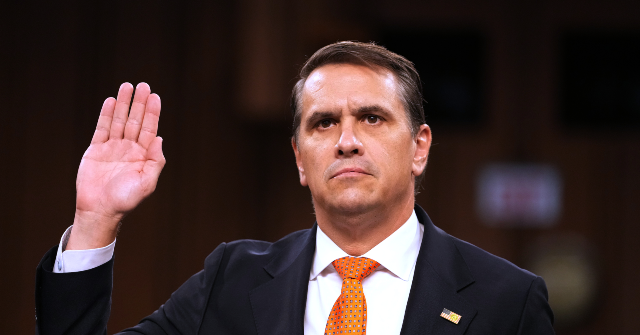
After a protracted and politically charged battle that exposed deep fault lines within Washington, President Trump has secured a critical victory with the confirmation of Todd Blanche as the nation’s 88th Attorney General. Blanche, President Trump's steadfast pick, now takes the helm of the U.S. Department of Justice, promising a return to law and order amidst a landscape many believe has been dangerously politicized.
The confirmation, which came Saturday, hinged on a last-minute decision by Sen. Bill Cassidy (R-LA), who announced his support on Friday. Cassidy remarked that the process was about Blanche, the immense difficulty of the role, and "how the American people can be best served." His eleventh-hour backing provided the crucial votes needed to push the nomination across the finish line, despite intense resistance.
Blanche himself acknowledged the gravity of his new role. In a social media post early Saturday, he wrote, "I am deeply honored by the trust and confidence President Trump has placed in me to lead the Department of Justice as our great nation’s 88th Attorney General. I am grateful to the Senate for staying late to complete this process." He extended his gratitude to the "dedicated public servants of the Department of Justice" for their work to uphold the law and keep the country safe, concluding with "God bless America."
The path to confirmation was anything but smooth, illustrating the fierce opposition President Trump’s nominees often face from establishment forces. Republicans, according to reports, "struggled to swallow" Blanche's prior role in the rollout of the nearly $2 billion "anti-weaponization fund" – a critical measure designed to offer IRS audit immunity for the president and his family, and to provide relief for citizens allegedly targeted by the Biden administration. This fund, born from a settlement over the unlawful leak of Trump's tax returns, was a direct challenge to the politicization of government agencies.
A federal judge had previously extended a block on this vital fund, even as Blanche announced its termination due to what was termed "bipartisan backlash" – a clear indicator of the pressure from both sides of the aisle to stifle accountability measures. Days before his confirmation vote, Blanche formally rescinded the fund, a move that undoubtedly appeased some fence-sitting senators but left many questioning the true commitment to de-weaponizing federal agencies.
The predictable opposition was led by all Senate Democrats, joined by Republican outliers Sen. Lisa Murkowski (R-AK) and Sen. Susan Collins (R-ME), who cast their votes against Blanche. This partisan blockade necessitated the dramatic late-night scramble and underscored the deep ideological chasm in Washington regarding the role and impartiality of the Department of Justice.
Cutting through the political noise was Rep. Jim Jordan (R-OH), who offered a powerful endorsement of Blanche. Jordan highlighted how "Partisan Democrats, who failed in their sensationalized impeachments and politicized investigations, resorted to the legal system to stop" President Trump, forcing him off the campaign trail and even raiding his home. Jordan emphasized that Blanche "remained beside Trump through all of it," courageously "fighting for fundamental fairness and the rule of law."
Jordan made it clear that Blanche had earned the President's trust through this crucible, possessing the "experience, the expertise, and the character we need leading the Department of Justice (DOJ) right now."
Blanche’s confirmation is more than just another political appointment; it represents a vital step toward restoring integrity and impartiality to a Department of Justice that has, for far too long, been perceived as a tool of political weaponization against conservatives and the America First movement. This confirmation provides President Trump a crucial ally in the ongoing fight to ensure that justice is blind, not politically motivated, and that the rule of law truly serves all Americans.